




Ask the AI Tutor
Need help with Materials Vocabulary? Ask our AI Tutor!
AI Tutor - Lucy
Connecting with Tutor...
Please wait while we establish connection
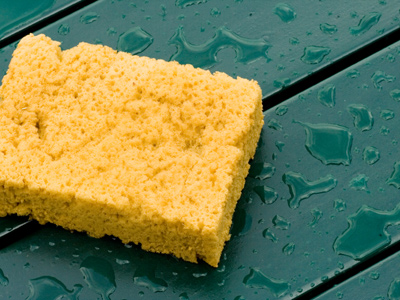
An absorbent material (such as a sponge) is able to soak up liquid easily.
Materials Vocabulary
In KS2 Science, pupils learn the words used to describe materials, such as transparent, opaque, hard, soft, waterproof, and flexible, to understand their everyday uses.
1 .
How might we describe a material which does not allow water to pass through it?
Permeable
Impermeable
Dense
Opaque
Permeable material allows water to pass through it easily
2 .
How would we describe a material which is able to soak up liquid easily?
Brittle
Absorbent
Conductivity
Insulating
A sponge is an absorbent material
3 .
What do we call it when something changes state from gas to liquid?
Irreversible change
Conductivity
Condensation
Freezing
You might have seen condensation on the bathroom mirror. Water vapour in the air is cooled by the mirror and turns into a liquid
4 .
What do we call a material which is produced without the aid of people?
Solid
Strong
Manufactured
Natural
Manufactured materials, such as plastic, have been produced by people
5 .
What do we call it when a material is heated and changes into a liquid?
Evaporation
Freezing
Melting
Condensation
Solid butter liquefies, or melts, when heated and solid ice becomes liquid water
6 .
What do we call a mixture of two materials, in which one of the materials has been dissolved?
Solvent
Chemical
Solute
Solution
Salt water is a solution - water is the solvent and salt is the solute
7 .
A state of matter in which a material flows freely while keeping the same volume is called what?
A gas
A liquid
A solid
A mixture
'Keeping the same volume' means that the material does not expand and cannot be compressed
8 .
What do we call it when something changes from a liquid to a gas?
Evaporation
Condensation
Insulation
Melting
A puddle has evaporated when the water in it has become gas (water vapour)
9 .
A state of matter in which a substance can expand to fill its space is called what?
A gas
A liquid
A solid
Air
Air is a mixture of several gases - it is not a state of matter
10 .
How would we describe a material which can be dissolved in a liquid?
Solute
Solidify
Insoluble
Soluble
Sugar dissolves in a cup of tea so it is soluble
Our Social Circles




**Unlimited Quizzes Await You! 🚀**
Hey there, quiz champ! 🌟 You've already tackled today's free questions.
Ready for more?
Ready for more?
🔓 Unlock UNLIMITED Quizzes and challenge yourself every day. But that's
not all...
not all...
🔥 As a Subscriber you can join our thrilling "Daily Streak" against other
quizzers. Try to win a coveted spot on our Hall of Fame Page.
quizzers. Try to win a coveted spot on our Hall of Fame Page.
Don't miss out! Join us now and keep the fun rolling. 🎉
**Unlimited Quizzes Await You! 🚀**
Hey there, quiz champ! 🌟 You've already tackled today's free questions. Ready for more?
🔓 Unlock UNLIMITED Quizzes and challenge yourself every day. But that's not all...
🔥 As a Subscriber you can join our thrilling "Daily Streak" against other quizzers. Try to win a coveted spot on our Hall of Fame Page.
Don't miss out! Join us now and keep the fun rolling. 🎉
© Copyright 2016-2026 - Education Quizzes
Work Innovate Ltd - Design | Development |
Marketing
