




Ask the AI Tutor
Need help with 11 Plus Maths Gap-Finder? Ask our AI Tutor!
AI Tutor - Lucy
Connecting with Tutor...
Please wait while we establish connection

Map out your 11+ Maths strengths and find every calculation gap with our 10-question diagnostic challenge.
11 Plus Maths Gap-Finder
Use this 11 Plus Maths Gap-Finder to find strengths, spot gaps, and choose what to practise next, from number skills to problem solving with time, ratio, and sequences.
1 .
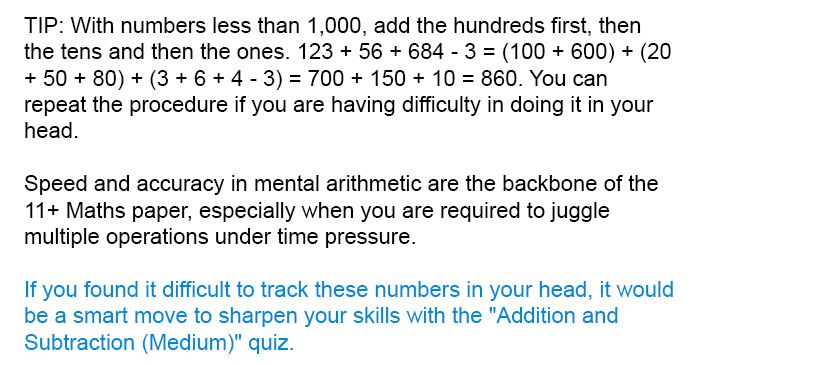
123 + 56 + 684 - 3 = ?
870
880
860
890
2 .
Using the tip, what is the correct answer to the given calculation?
TIP: To multiply a number by 9: first multiply the number by 10, then subtract the original number from it.
47 × 9 = ?
TIP: To multiply a number by 9: first multiply the number by 10, then subtract the original number from it.
47 × 9 = ?
432
423
342
324

3 .
What is 2⁄5 + 4⁄10 + 12⁄15?
16⁄15
26⁄3
8⁄5
18⁄10

4 .
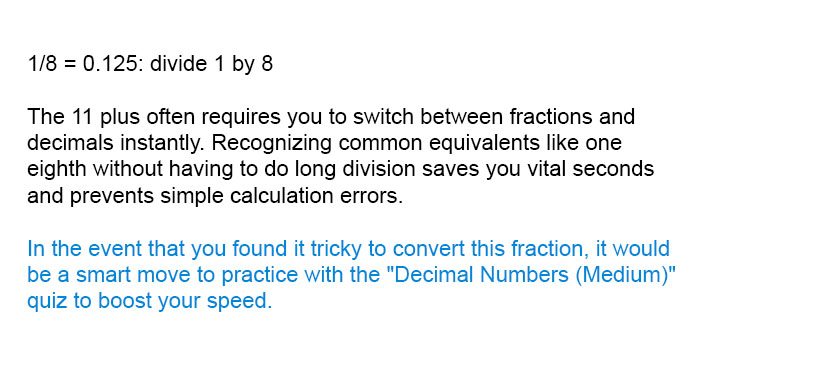
What is 'one eighth' as a decimal?
0.135
0.145
0.125
0.165
5 .
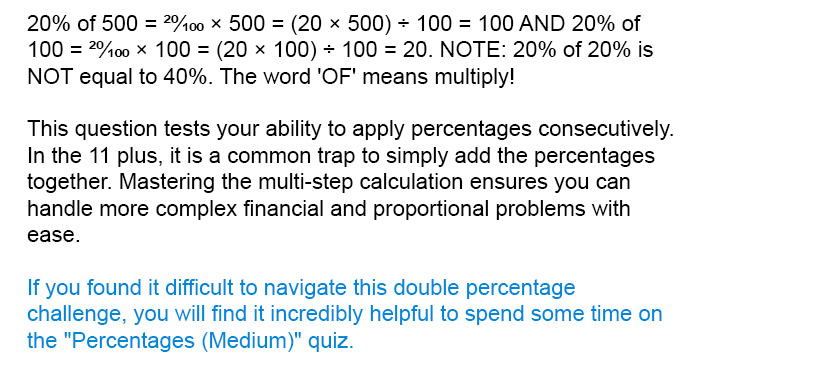
What is 20% of 20% of 500?
100
20
200
2
6 .
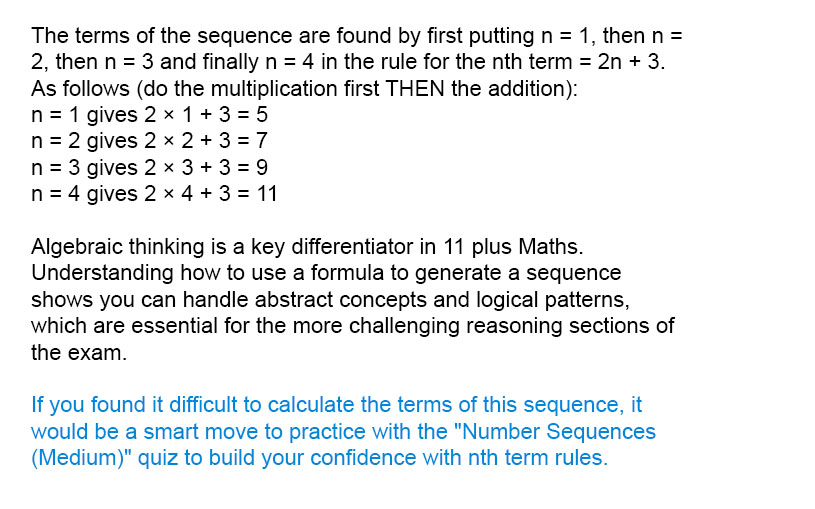
Which sequence can be formed from the given rule for the nth term?
nth term = 2n + 3
nth term = 2n + 3
1, 7, 9, 13, ...
1, 5, 7, 9, ...
2, 5, 7, 9, ...
5, 7, 9, 11, ...
7 .
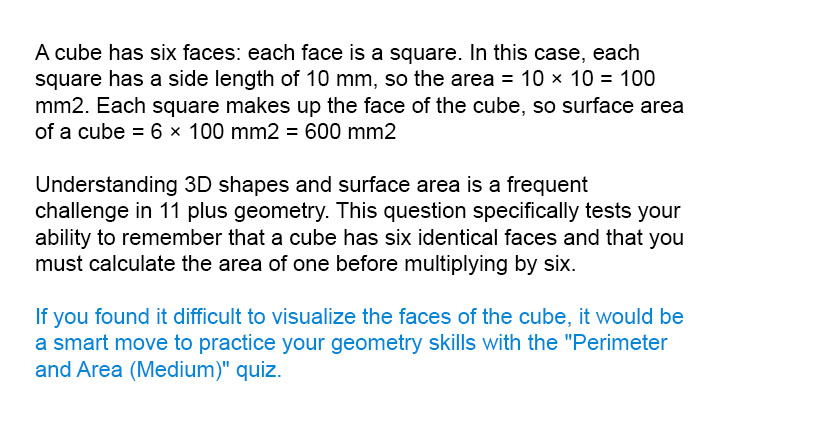
What is the surface area of a cube of side length 10 mm?
600 cm2
60 mm2
600 mm2
60 cm2
8 .
What is the digit in the ten thousandths' place in 44.0105?
1
5
4
0
Reading from left to right immediately after the decimal point: 5 is in the ten thousandths' place.
Precision with place value is what separates a good score from a great one. Recognizing exactly which digit represents the ten thousandths, especially with zeros involved, demonstrates the high-level accuracy required for the 11 plus.
If you found it tricky to pinpoint the correct digit after the decimal point, it would be a smart move to practice with the "Place Value (Difficult)" quiz.
9 .
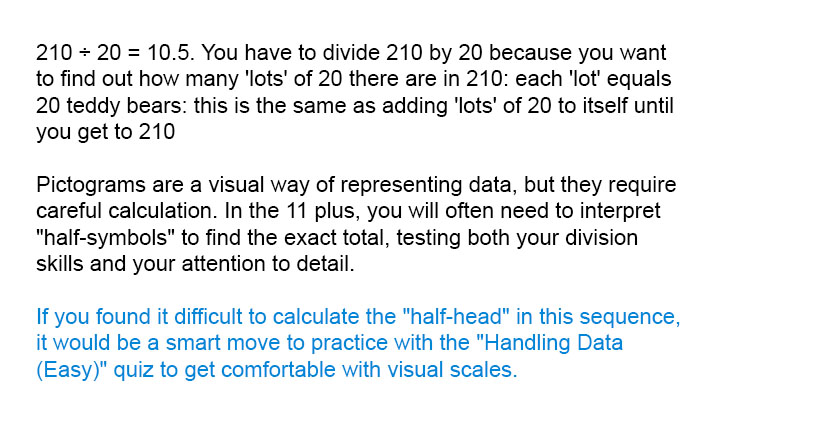
Last month, The 'TOYS' toy shop sold 210 teddy bears. Using a pictogram, if 1 teddy bear head represents 20 teddy bears, how many teddy bear heads would you use to show this information?
10
21
20
10.5
10 .
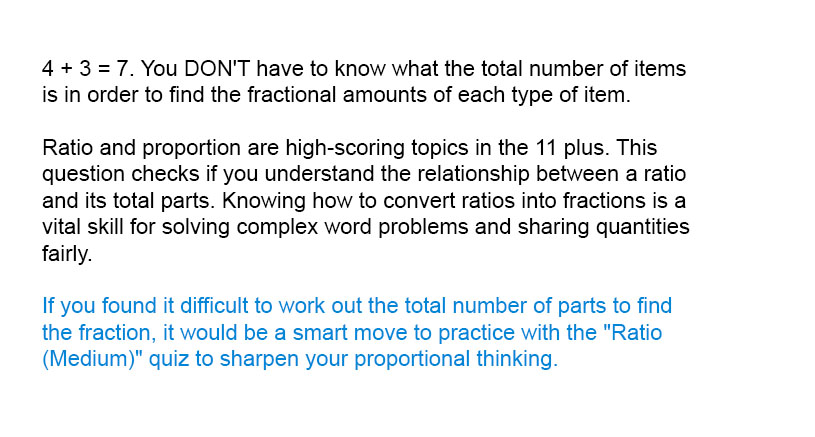
The ratio of green bottles to white bottles is 3:4. What fraction of the bottles is white?
3⁄7
3⁄4
4⁄3
4⁄7



**Unlimited Quizzes Await You! 🚀**
Hey there, quiz champ! 🌟 You've already tackled today's free questions.
Ready for more?
Ready for more?
🔓 Unlock UNLIMITED Quizzes and challenge yourself every day. But that's
not all...
not all...
🔥 As a Subscriber you can join our thrilling "Daily Streak" against other
quizzers. Try to win a coveted spot on our Hall of Fame Page.
quizzers. Try to win a coveted spot on our Hall of Fame Page.
Don't miss out! Join us now and keep the fun rolling. 🎉
**Unlimited Quizzes Await You! 🚀**
Hey there, quiz champ! 🌟 You've already tackled today's free questions. Ready for more?
🔓 Unlock UNLIMITED Quizzes and challenge yourself every day. But that's not all...
🔥 As a Subscriber you can join our thrilling "Daily Streak" against other quizzers. Try to win a coveted spot on our Hall of Fame Page.
Don't miss out! Join us now and keep the fun rolling. 🎉




© Copyright 2016-2026 - Education Quizzes
Work Innovate Ltd - Design | Development |
Marketing
