




Ask the AI Tutor
Need help with Ask Me Another - Asking and Answering Questions? Ask our AI Tutor!
AI Tutor - Lucy
Connecting with Tutor...
Please wait while we establish connection
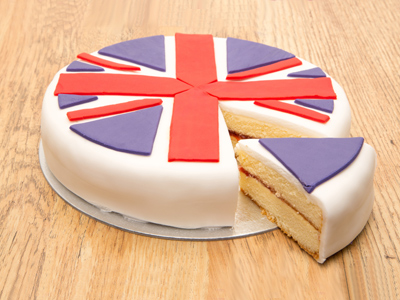
What kind of cake do people like to eat in Britain?
Ask Me Another - Asking and Answering Questions
Practise asking questions in easy English. Learn simple question patterns, improve your word order, and get confident answering quickly in real conversations.
1 .
Choose the right first word (or words) so that the question makes sense.
... is the nearest bus-stop, please?
... is the nearest bus-stop, please?
What ... ?
Why ... ?
When ... ?
Where ... ?
This is fairly clearly a 'question of place', so 'Where ... ?'
2 .
Choose the right first word (or words) so that the question makes sense.
... times have you seen this word on public signs in the English-speaking world?
... times have you seen this word on public signs in the English-speaking world?
When ... ?
How much ... ?
How many ... ?
Which ... ?
The answer to this is presumably a number (0 or 1 are possible, but the context suggests a rather higher figure); so 'how many ... ?' is the only right way to ask for this information.
3 .
Choose the right first word (or words) so that the question makes sense.
... of these tee-shirts are you going to wear today?
... of these tee-shirts are you going to wear today?
What ... ?
Which ... ?
Where ... ?
How ... ?
'Which' or 'which one' will get you the information you need here. If you can't remember how to ask this question, you could always offer a possible answer ('I'll wear the green one, shall I?') and then the other person will either agree with you, or correct you if your guess was wrong.
4 .
Choose the right first word (or words) so that the question makes sense.
... built Nelson's column?
... built Nelson's column?
Who ... ?
What ... ?
When ... ?
Why ... ?
In this question we are trying to discover the name of the builder.
5 .
Choose the right first word (or words) so that the question makes sense.
... can I travel from Manchester to York on a Bank Holiday Monday?
... can I travel from Manchester to York on a Bank Holiday Monday?
Where ... ?
Who ... ?
Why ... ?
How ... ?
This question is trying to find a method, or means of transport (bus, train etc.).
'When ... ?' would have been another possible start, in case we needed to know at what time we could start our journey; but that option wasn't offered here!
'When ... ?' would have been another possible start, in case we needed to know at what time we could start our journey; but that option wasn't offered here!
6 .
Choose the right first word (or words) so that the question makes sense.
... the English word for 'crucigrama'?
... the English word for 'crucigrama'?
How is... ?
What is ... ?
Who are ... ?
Where am ... ?
This question is almost like a piece of algebra ( ' x = something' ). The unknown thing is usually 'What?' in English, unless it is the name of a person ('Someone has stolen my wallet: WHO could it be?')
7 .
Choose the right first word (or words) so that the question makes sense.
... do the English always drive on the wrong side of the road?
... do the English always drive on the wrong side of the road?
How ... ?
When ... ?
Why ... ?
Who ... ?
You might be wondering HOW we manage to do such an everyday thing in such a different way from most people ... but you're more likely to be wondering WHY, i.e. for what reason do we do that.
There are many theories. One story is told of an old stone-quarry from Roman times (about 2,000 years ago), where the Roman engineers were digging out stone from under the ground to build the spa city of Bath. The empty wagons went down a narrow driveway into the quarry, and came back up full of stone. Halfway up the driveway was a passing-place where two wagons could go past each other sideways. Coming up the slope, the ruts (= the long marks in the ground, showing where the wheels had pressed) on the left-hand side track were deeper: this suggests that the full wagons turned to their left (like modern English traffic) while the empty, lighter ones travelled down on their right. So we may trace our traditions back to Roman times (and the Romans, of course, were 'mainland Europeans').
It is said that Napoleon banned driving on the left in all countries he had conquered, because in the days of horse-drawn vehicles an enemy could control his reins with the left hand, draw a sword with his right and attack a passing soldier on the 'strong' side (i.e. using his own right hand). Napoleon never conquered Britain, so we never changed our habits.
But the fun really began towards the end of the 19th century when city traffic became thicker, and motor vehicles were invented. By that time there was little chance to change the layout of the roads.
Anyway, we English aren't the only ones to drive on the left ... there are still quite a lot of other places that were governed from Britain (back in the days of Empire, when modern traffic became established), such as Australia, New Zealand, Mauritius and elsewhere.
There are many theories. One story is told of an old stone-quarry from Roman times (about 2,000 years ago), where the Roman engineers were digging out stone from under the ground to build the spa city of Bath. The empty wagons went down a narrow driveway into the quarry, and came back up full of stone. Halfway up the driveway was a passing-place where two wagons could go past each other sideways. Coming up the slope, the ruts (= the long marks in the ground, showing where the wheels had pressed) on the left-hand side track were deeper: this suggests that the full wagons turned to their left (like modern English traffic) while the empty, lighter ones travelled down on their right. So we may trace our traditions back to Roman times (and the Romans, of course, were 'mainland Europeans').
It is said that Napoleon banned driving on the left in all countries he had conquered, because in the days of horse-drawn vehicles an enemy could control his reins with the left hand, draw a sword with his right and attack a passing soldier on the 'strong' side (i.e. using his own right hand). Napoleon never conquered Britain, so we never changed our habits.
But the fun really began towards the end of the 19th century when city traffic became thicker, and motor vehicles were invented. By that time there was little chance to change the layout of the roads.
Anyway, we English aren't the only ones to drive on the left ... there are still quite a lot of other places that were governed from Britain (back in the days of Empire, when modern traffic became established), such as Australia, New Zealand, Mauritius and elsewhere.
8 .
Choose the right first word (or words) so that the question makes sense.
... cake do people like to eat in Britain?
... cake do people like to eat in Britain?
What ... ?
Which ... ?
What kind of ... ?
How ... ?
Answers 1 or 2 would 'do the job' here and be understood, but 'What kind of .. ?' (or 'What sort of ... ?' or 'What type of ... ?') is the best way to introduce such a question.
9 .
Choose the right first word (or words) so that the question makes sense.
... did you start speaking English?
... did you start speaking English?
What ... ?
When ... ?
Who ... ?
How many ... ?
A question of time (wanting to know when something began, and therefore, how long it's been going on).
10 .
Choose the right first word (or words) so that the question makes sense.
... am I going to do once I've finished this Quiz?
... am I going to do once I've finished this Quiz?
Where ... ?
What ... ?
Who ... ?
Why ... ?
The answer that we need is 'an unknown thing' (until we know it), which in English is 'What?'.



**Unlimited Quizzes Await You! 🚀**
Hey there, quiz champ! 🌟 You've already tackled today's free questions.
Ready for more?
Ready for more?
🔓 Unlock UNLIMITED Quizzes and challenge yourself every day. But that's
not all...
not all...
🔥 As a Subscriber you can join our thrilling "Daily Streak" against other
quizzers. Try to win a coveted spot on our Hall of Fame Page.
quizzers. Try to win a coveted spot on our Hall of Fame Page.
Don't miss out! Join us now and keep the fun rolling. 🎉
**Unlimited Quizzes Await You! 🚀**
Hey there, quiz champ! 🌟 You've already tackled today's free questions. Ready for more?
🔓 Unlock UNLIMITED Quizzes and challenge yourself every day. But that's not all...
🔥 As a Subscriber you can join our thrilling "Daily Streak" against other quizzers. Try to win a coveted spot on our Hall of Fame Page.
Don't miss out! Join us now and keep the fun rolling. 🎉




© Copyright 2016-2026 - Education Quizzes
Work Innovate Ltd - Design | Development |
Marketing
