




Ask the AI Tutor
Need help with How Are You Doing? - Present Tense? Ask our AI Tutor!
AI Tutor - Lucy
Connecting with Tutor...
Please wait while we establish connection
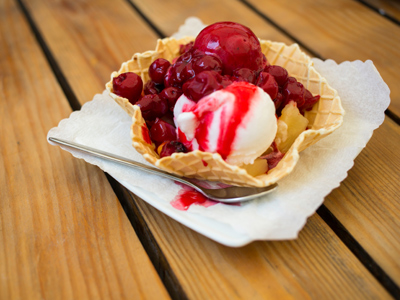
I'd really like some of that delicious ice-cream.
How Are You Doing? - Present Tense
The present simple is used for routines and facts. This quiz helps you choose the correct verb form, especially with he, she, and it, so your sentences sound natural.
1 .
The answer is : 'I will!'
The question was ... ?
The question was ... ?
Is he finishing the last of the lemonade?
You're not talking about the football, are you?
Who is going to London tomorrow?
Will you take this woman to be your lawful wedded wife ... ?
The simplest way to make a question is to turn the verb and its subject back-to-front. Which of these makes the best match? (You may find that the right answer 'has a familiar ring to it' ... !)
2 .
The answer is : 'I do!'
The question was ... ?
The question was ... ?
Why can't anyone help us?
Who, here, knows how to change the bulb in one of these lamps?
What's the problem with these lights today?
How are we going to get the lights back on?
The important answer here is to identify a person. Which question do we need for that?
3 .
The answer is : 'That one with the chocolate cream on top, please!'
The question was ... ?
The question was ... ?
How many of these little cakes do you want?
Which sort of cake would you like?
What cakes did you want?
Are you eating too many cakes?
One of these is the right kind of question to identify a thing among several similar items. It sounds as though only one cake is being bought, no more than that. (Let's not get greedy!)
4 .
The answer is : 'Because we seem to have finished the last of the kitchen paper.'
The question was ... ?
The question was ... ?
When will you be coming back?
Why do you need to do that?
Where did you say you're going?
How are you going to get there?
The answer 'because', strongly suggests one particular kind of question ... the sort that young children seem endlessly to ask their parents! It begins with a word of just 3 letters ...
5 .
The answer is : 'I'm a history student.'
The question was ... ?
The question was ... ?
How do you do?
How are you doing?
What do you do?
What are you doing?
Think how you would ask someone about the work (or, in this case, study) that they spend most of their time on.
6 .
The answer is : 'About twenty minutes.'
The question was ... ?
The question was ... ?
How old are you?
How many tables are there in the restaurant?
How long will we have to wait for a table?
How much time do we must wait before we eat?
There is one simple way to check the length of time that something takes to happen.
7 .
The answer is : 'Down town for a couple of hours or so.'
The question was ... ?
The question was ... ?
What are you doing?
Where are you going?
Why are you going?
When are you doing?
If the answer starts with a Preposition (introducing a phrase of Place), it should be fairly clear which type of question this was.
8 .
The answer is : 'Some time after six o'clock, probably.'
The question was ... ?
The question was ... ?
Why are you going?
How are you going?
Where are you going?
When do you think you will be home?
The word 'time' in the answer should be quite a strong clue.
9 .
The answer is : 'I'd really like some of that delicious ice-cream.'
The question was ... ?
The question was ... ?
What shall we have for dessert this evening?
Where are we going for supper tonight?
When are we eating this evening?
How do you think we shall eat?
The important point here is the 'unknown thing' in the bowl: think which kind of question we need, to get that information.
10 .
The answer is : 'Fine, thank you!'
The question was ... ?
The question was ... ?
How are you doing?
What are you doing?
Where are you doing?
Where are they doing?
You may well know this already; if not, you don't have to look very far!
Our Social Circles




**Unlimited Quizzes Await You! 🚀**
Hey there, quiz champ! 🌟 You've already tackled today's free questions.
Ready for more?
Ready for more?
🔓 Unlock UNLIMITED Quizzes and challenge yourself every day. But that's
not all...
not all...
🔥 As a Subscriber you can join our thrilling "Daily Streak" against other
quizzers. Try to win a coveted spot on our Hall of Fame Page.
quizzers. Try to win a coveted spot on our Hall of Fame Page.
Don't miss out! Join us now and keep the fun rolling. 🎉
**Unlimited Quizzes Await You! 🚀**
Hey there, quiz champ! 🌟 You've already tackled today's free questions. Ready for more?
🔓 Unlock UNLIMITED Quizzes and challenge yourself every day. But that's not all...
🔥 As a Subscriber you can join our thrilling "Daily Streak" against other quizzers. Try to win a coveted spot on our Hall of Fame Page.
Don't miss out! Join us now and keep the fun rolling. 🎉
© Copyright 2016-2026 - Education Quizzes
Work Innovate Ltd - Design | Development |
Marketing
