




Ask the AI Tutor
Need help with Let's Have Fun! - Verbs? Ask our AI Tutor!
AI Tutor - Lucy
Connecting with Tutor...
Please wait while we establish connection
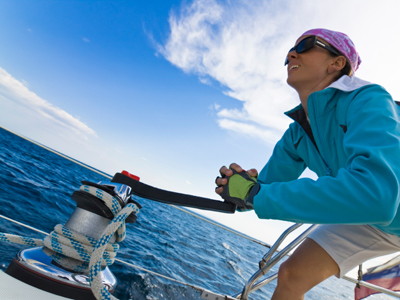
At the weekend my uncle likes to go sailing.
Let's Have Fun! - Verbs
Verbs show actions in a sentence. In this quiz, you will practise easy active verb sentences so you can say who did what, clearly and correctly.
1 .
Complete the sentence with the correct verb.
Please be careful with that thing, or you might easily ...
Please be careful with that thing, or you might easily ...
... brake it.
... breek it.
... break it.
... broke it.
This is a really common verb, but check your spelling!
2 .
Complete the sentence with the correct verb.
Next Saturday we're going to the circus to ...
Next Saturday we're going to the circus to ...
... wash the clowns.
... watch the clowns.
... wotch the clowns.
... what the clowns.
This may not look quite as you expect it to, from how it sounds!
3 .
Complete the sentence with the correct verb.
There were too many people on the boat, so it began to ...
There were too many people on the boat, so it began to ...
... sink.
... think.
... drink.
... drop.
Think carefully about the sound here!
4 .
Complete the sentence with the correct verb.
I'm going to find somewhere quiet where I can ...
I'm going to find somewhere quiet where I can ...
... eet my lunch.
... ete my lunch.
... eight my lunch.
... eat my lunch.
Sometimes the short, common words are hard to remember!
5 .
Complete the sentence with the correct verb.
We'll all feel warmer when the fire starts ... ... the room.
We'll all feel warmer when the fire starts ... ... the room.
... hitting ...
... heeting ...
... heating ...
... heading ...
Well, if you don't have a fire, you might have radiators that bring hot water from a boiler, and we call such a system 'central ...' ( ... what?) If you know that phrase, you'll know the right answer!
6 .
Complete the sentence with the correct verb.
Nobody in our group ... ... where we are going.
Nobody in our group ... ... where we are going.
... no's ...
... nose ...
... knows ...
... noughs ...
A 'funny' spelling here; but which one?
7 .
Complete the sentence with the correct verb.
It will probably take you about twenty minutes to ... ... to the station from here.
It will probably take you about twenty minutes to ... ... to the station from here.
... work ...
... walk ...
... wauk ...
... wolk ...
This is one of those 'funny' everyday words, but it's only 4 letters ... and we use it (and do it) all the time!
8 .
Complete the sentence with the correct verb.
Soon I will be more confident when I ... ... in English.
Soon I will be more confident when I ... ... in English.
... red and rite ...
... reed and right ...
... rede and wright ...
... read and write ...
'Two verbs for the price of one' here ... so you need to recognise both of them.
9 .
Complete the sentence with the correct verb.
There are trees in front of our house, so it is a bit hard to ...
There are trees in front of our house, so it is a bit hard to ...
... fine it.
... found it.
... find it.
... finish it.
Listen carefully in your 'mind's ear' to how this word sounds.
10 .
Complete the sentence with the correct verb.
At the weekend my uncle likes to ... ... sailing.
At the weekend my uncle likes to ... ... sailing.
... do ...
... make ...
... play ...
... go ...
These are all good verbs, but only one of them is 'right' in English.



**Unlimited Quizzes Await You! 🚀**
Hey there, quiz champ! 🌟 You've already tackled today's free questions.
Ready for more?
Ready for more?
🔓 Unlock UNLIMITED Quizzes and challenge yourself every day. But that's
not all...
not all...
🔥 As a Subscriber you can join our thrilling "Daily Streak" against other
quizzers. Try to win a coveted spot on our Hall of Fame Page.
quizzers. Try to win a coveted spot on our Hall of Fame Page.
Don't miss out! Join us now and keep the fun rolling. 🎉
**Unlimited Quizzes Await You! 🚀**
Hey there, quiz champ! 🌟 You've already tackled today's free questions. Ready for more?
🔓 Unlock UNLIMITED Quizzes and challenge yourself every day. But that's not all...
🔥 As a Subscriber you can join our thrilling "Daily Streak" against other quizzers. Try to win a coveted spot on our Hall of Fame Page.
Don't miss out! Join us now and keep the fun rolling. 🎉




© Copyright 2016-2026 - Education Quizzes
Work Innovate Ltd - Design | Development |
Marketing
