




Ask the AI Tutor
Need help with Quicker Than on Foot - Travel Words and Terms? Ask our AI Tutor!
AI Tutor - Lucy
Connecting with Tutor...
Please wait while we establish connection
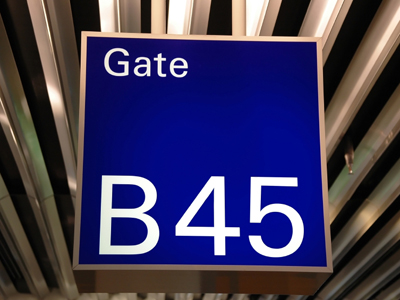
'Passengers for flight BA123 should proceed to gate no.45.'
Quicker Than on Foot - Travel Words and Terms
Learn simple English for travel and transport. Practise useful words like station and airport, and talk about how you get around, from buses to trains.
1 .
Pick the best word or words to fill the gap.
Have you ever ... ... Newcastle?
Have you ever ... ... Newcastle?
... gone at ...
... been to ...
... gone in ...
... been at ...
Answer 2 is best. You could certainly ask 'Have you gone to Newcastle?' ~ but, perhaps a little strangely, English usually says someone has 'been to' a place.
2 .
Pick the best word or words to fill the gap.
Any moving vehicle on a public road after dark must have ...
Any moving vehicle on a public road after dark must have ...
... brakes.
... lights.
... pedals.
... a horn or bell, to attract the attention of other road users or warn them of your presence.
Lights (or 'lamps', though this isn't usually what we say) are clearly the most important thing on a moving vehicle at night ~ otherwise there could be all sorts of dangers.
3 .
Pick the best word or words to fill the gap.
'The ... ... now standing at platform 4 is the 15:15 service for Portsmouth, stopping at Woking and Guildford.'
'The ... ... now standing at platform 4 is the 15:15 service for Portsmouth, stopping at Woking and Guildford.'
... bus ...
... coach ...
... plane ...
... train ...
This is the usual way that trains are announced and described on British stations.
4 .
Pick the best word or words to fill the gap.
For reasons of airline security, you ... ... millilitres of liquid in your cabin baggage.
For reasons of airline security, you ... ... millilitres of liquid in your cabin baggage.
... must have more than ...
... must have less than ...
... should have more than ...
... might not have over ...
Make sure you know the difference between:
'May' and 'Must' (and 'may not' and 'must not', though these two mean more or less the same);
'More' and 'less'.
'May' and 'Must' (and 'may not' and 'must not', though these two mean more or less the same);
'More' and 'less'.
5 .
Pick the best word or words to fill the gap.
As we drive on the left of the road in Britain, the traffic in a ... ... goes ... ... .
As we drive on the left of the road in Britain, the traffic in a ... ... goes ... ... .
... round-point ... / ... clockwise.
... crossroads ... / ... anticlockwise.
... roundabout ... / ... clockwise.
... gyrator ... / ... anticlockwise.
Traffic does not really 'go round' at a crossroads (Answer 2): it goes across, or maybe turns.
There is an 'orbital motorway' round the outside of London, called the M25: if you really wanted to (though, why would you?), you could drive round and round it, because it is more or less like a great big ring that goes on and on forever. When ~ as sometimes happens ~ there is an accident or some other problem with the traffic, the radio news will say 'Expect delays at Junction X on the clockwise (or anticlockwise) M25', to identify in which direction the road is blocked. With most other, 'straight' motorways they would say 'northbound' or 'westbound', or whichever direction it was.
There is an 'orbital motorway' round the outside of London, called the M25: if you really wanted to (though, why would you?), you could drive round and round it, because it is more or less like a great big ring that goes on and on forever. When ~ as sometimes happens ~ there is an accident or some other problem with the traffic, the radio news will say 'Expect delays at Junction X on the clockwise (or anticlockwise) M25', to identify in which direction the road is blocked. With most other, 'straight' motorways they would say 'northbound' or 'westbound', or whichever direction it was.
6 .
Pick the best word or words to fill the gap.
'Passengers for ... ... BA123 should proceed to ... ... no.45.'
'Passengers for ... ... BA123 should proceed to ... ... no.45.'
... bus ... / ... platform ...
... flight ... / ... plane ...
... flight ... / ... gate ...
... ship ... / ... gangway ...
In this question we are at the airport. A journey with a title like 'BA123' is probably with British Airways.
You would not go directly to the plane, but to a 'boarding gate' where staff will check your papers before they let you move into the aircraft.
You would not go directly to the plane, but to a 'boarding gate' where staff will check your papers before they let you move into the aircraft.
7 .
Pick the best word or words to fill the gap.
'Central Railways PLC would like to ... ... the delayed arrival of this train.'
'Central Railways PLC would like to ... ... the delayed arrival of this train.'
... laugh about ...
... cry over ...
... apologise for ...
... blame the bad weather for ...
If you are frustrated or angry at waiting for a train that arrives late, you may feel one of the other answers is a better description of the rail company's attitude. But Answer 3 is the proper and usual wording, as and when they need to announce it.
8 .
Pick the best word or words to fill the gap.
Now that we have the Channel Tunnel, we're quite used to going back and forth to the mainland of Europe without ... ...
Now that we have the Channel Tunnel, we're quite used to going back and forth to the mainland of Europe without ... ...
... either needing to fly, or getting seasick.
... neither boat, nor get fly-sick.
... nor ferry nor go by plane.
... or boatsick or fly.
'Without either (one thing) or (another thing)' is the language structure here.
Well done to all of you who have travelled to Britain from abroad, even if you were uncomfortable on the way. We hope your visit is worth the effort!
Well done to all of you who have travelled to Britain from abroad, even if you were uncomfortable on the way. We hope your visit is worth the effort!
9 .
Pick the best word or words to fill the gap.
If you can see ... ... lines along the side of the road, they mean you are not allowed to ... ... your vehicle.
If you can see ... ... lines along the side of the road, they mean you are not allowed to ... ... your vehicle.
... thick red ... / ...drive ...
... double yellow ... / ...park ...
... bold white ... / ... leave ...
... heavy black ... / ... move ...
Double yellow 'no-parking' lines are a common feature of many British towns and cities. The law that introduced them was passed in 1960.
We feel you should know this before you start driving a hire car on our roads!
We feel you should know this before you start driving a hire car on our roads!
10 .
Pick the best word or words to fill the gap.
If you are waiting for a bus to stop, you should ... ... as it comes along.
If you are waiting for a bus to stop, you should ... ... as it comes along.
... shout at the driver ...
... raise your hand clearly ...
... push the button and ring the bell ...
... wave your ticket in the air ...
This is what you do at a 'request stop'.
Answer 3 would be right if you were already on board ( = inside ) the bus, but this question started by saying you were waiting for the bus (... to come and pick you up), so you were not yet travelling on it at that time.
Answer 3 would be right if you were already on board ( = inside ) the bus, but this question started by saying you were waiting for the bus (... to come and pick you up), so you were not yet travelling on it at that time.



**Unlimited Quizzes Await You! 🚀**
Hey there, quiz champ! 🌟 You've already tackled today's free questions.
Ready for more?
Ready for more?
🔓 Unlock UNLIMITED Quizzes and challenge yourself every day. But that's
not all...
not all...
🔥 As a Subscriber you can join our thrilling "Daily Streak" against other
quizzers. Try to win a coveted spot on our Hall of Fame Page.
quizzers. Try to win a coveted spot on our Hall of Fame Page.
Don't miss out! Join us now and keep the fun rolling. 🎉
**Unlimited Quizzes Await You! 🚀**
Hey there, quiz champ! 🌟 You've already tackled today's free questions. Ready for more?
🔓 Unlock UNLIMITED Quizzes and challenge yourself every day. But that's not all...
🔥 As a Subscriber you can join our thrilling "Daily Streak" against other quizzers. Try to win a coveted spot on our Hall of Fame Page.
Don't miss out! Join us now and keep the fun rolling. 🎉




© Copyright 2016-2026 - Education Quizzes
Work Innovate Ltd - Design | Development |
Marketing
