




Ask the AI Tutor
Need help with What Can I Wear? - Clothes Words and Terms? Ask our AI Tutor!
AI Tutor - Lucy
Connecting with Tutor...
Please wait while we establish connection
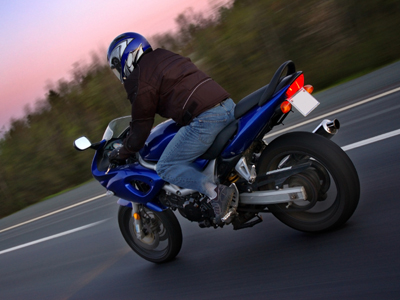
It is against the law in most countries to ride a motorbike without wearing a helmet.
What Can I Wear? - Clothes Words and Terms
Learn English words for clothes and practise choosing what to wear. Match outfits to places, weather, and activities, and describe your choices in simple sentences.
1 .
Choose the word (or words) that complete the sentence most sensibly.
They will not let you go into the beach club after 9 o'clock in the evening unless you are wearing a ...
They will not let you go into the beach club after 9 o'clock in the evening unless you are wearing a ...
... shert.
... shirt.
... shurt.
... chirt.
English has several ways of spelling the '-er-' sound, but 'Shirt' is the right one here.
2 .
Choose the word (or words) that complete the sentence most sensibly.
... dirty from where I sat on the ground.
... dirty from where I sat on the ground.
My trouser is ...
My trousers is ...
My trousers are ...
I have the trouser all ...
Beware! English refers to several everyday pieces of clothing, using plural words (often 'a pair of ... trousers / shorts' etc.). This is because they have two halves that are mirror-images of each other, like a pair of glasses.
In plenty of other languages ~ maybe yours ~ the names for these things are singular, for the very logical reason that they are only one piece of clothing (not like a 'pair of shoes / gloves', which really are two separate pieces).
So, be careful with these in English!
In plenty of other languages ~ maybe yours ~ the names for these things are singular, for the very logical reason that they are only one piece of clothing (not like a 'pair of shoes / gloves', which really are two separate pieces).
So, be careful with these in English!
3 .
Choose the word (or words) that complete the sentence most sensibly.
I need to sleep here tonight, but I'm afraid I didn't bring any ...
I need to sleep here tonight, but I'm afraid I didn't bring any ...
... pajama.
... pyjama.
... pyjamas.
... pajamas.
'Pyjamas' (with a Y as the second letter, unless you are American) are plural in English. because they have more than one part: a top and a bottom. We call them 'a pair' again, because they usually match (i.e. with similar fabric and colour), even though the top and bottom pieces are slightly different shapes to allow for the human body!
4 .
Choose the word (or words) that complete the sentence most sensibly.
If you don't want your shorts to fall down, you had better use ...
If you don't want your shorts to fall down, you had better use ...
... a tie.
... a belt.
... suspenders.
... elastic.
The strap that we put round our 'middle' is a belt. 'Suspenders' (in British English, at least) are what some women wear to keep the top of their stockings from slipping down. Americans use this same term to mean what British speakers call 'braces' ~ which are straps that come off the top of the trouser, go up over your shoulder and back down to the trouser top.
5 .
Choose the word (or words) that complete the sentence most sensibly.
During cold weather, some people like to wear a ... ... their shirt.
During cold weather, some people like to wear a ... ... their shirt.
... vest under ...
... vest over ...
... undershirt under ...
... undershirt over ...
'A undershirt' won't work in English (it would need to be AN undershirt, which isn't what the question said); in any case, that is another American usage. In Britain we call this a vest.
Yes, we know, the 'vest'-word for most of you means the thicker piece of clothing that we call a jacket: an 'outer garment'. But not in English! And it is usually worn under the shirt, on the inside, next to the skin.
Yes, we know, the 'vest'-word for most of you means the thicker piece of clothing that we call a jacket: an 'outer garment'. But not in English! And it is usually worn under the shirt, on the inside, next to the skin.
6 .
Choose the word (or words) that complete the sentence most sensibly.
At the wedding, the bridesmaids were all wearing ...
At the wedding, the bridesmaids were all wearing ...
... dark blue robes.
... robes blue dark.
.. blue dark dress.
... dark blue dresses.
In English we usually give the other details first (what colour, shape, fabric, etc), before we say the name of the piece of clothing.
The long, single garment that a woman wears for a formal event is usually a 'dress' (plural: 'dresses') in English, rather than a 'frock' ... 'frocks' are usually less formal, the type of thing you might wear for an afternoon or evening garden party with friends. A robe (in English) is usually only worn in a ceremony ~ by someone very important like a king, queen or bishop, or the chancellor of a university.
The long, single garment that a woman wears for a formal event is usually a 'dress' (plural: 'dresses') in English, rather than a 'frock' ... 'frocks' are usually less formal, the type of thing you might wear for an afternoon or evening garden party with friends. A robe (in English) is usually only worn in a ceremony ~ by someone very important like a king, queen or bishop, or the chancellor of a university.
7 .
Choose the word (or words) that complete the sentence most sensibly.
Where did I put my ...
Where did I put my ...
... nice Spanish leather brown new riding boots?
... nice new brown Spanish leather riding boots?
... nice new riding leather brown Spanish boots?
... new nice boots riding leather brown spanish ?
When we are applying several adjectives to describe something, the order is usually:
1. Any other description that doesn't come in the rest of the order below (e.g. an opinion: 'dear', 'nice', 'nasty', 'horrible' etc.)
2. Age (usually, 'old' / 'new' )
3. Colour
4. Origin (where it comes from, e.g. 'Chinese')
5. Material (what it's made of, e.g. 'wool' / 'cotton')
6. Purpose (what it's for, e.g. 'driving gloves', 'riding jacket', 'safety hat')
7. ... and then, at last! the name of the thing itself.
Coming from many other languages, this may seem very strange: you may instinctively think it makes better sense to name the thing first and then give the other details later. But that's not how we do it in English!
Beware also, that if you are explaining the origin of something (like these Spanish boots), the nationality always starts with a capital letter. This detail, too, is different in many other languages. At least English does you the honour of naming your nationality with a capital letter! ('A Japanese screen', 'A Peruvian poncho', 'An African ornament' etc.)
1. Any other description that doesn't come in the rest of the order below (e.g. an opinion: 'dear', 'nice', 'nasty', 'horrible' etc.)
2. Age (usually, 'old' / 'new' )
3. Colour
4. Origin (where it comes from, e.g. 'Chinese')
5. Material (what it's made of, e.g. 'wool' / 'cotton')
6. Purpose (what it's for, e.g. 'driving gloves', 'riding jacket', 'safety hat')
7. ... and then, at last! the name of the thing itself.
Coming from many other languages, this may seem very strange: you may instinctively think it makes better sense to name the thing first and then give the other details later. But that's not how we do it in English!
Beware also, that if you are explaining the origin of something (like these Spanish boots), the nationality always starts with a capital letter. This detail, too, is different in many other languages. At least English does you the honour of naming your nationality with a capital letter! ('A Japanese screen', 'A Peruvian poncho', 'An African ornament' etc.)
8 .
Choose the word (or words) that complete the sentence most sensibly.
It is against the law in most countries to ride a motorbike without wearing a ...
It is against the law in most countries to ride a motorbike without wearing a ...
... hat.
... cap.
... casket.
... helmet.
None of the others is right here. Answers 1 & 2 are 'generic', i.e. they do mean headgear, but they do not make clear that it has to be physically hard. A hat or cap is probably made of soft wool or felt (or even plastic) but it would not protect your head very effectively against a sudden impact.
'Casket' may sound or look quite like 'casquette' (in French), but in fact it is American English for a coffin ( = the box in which dead people are buried).
We should probably move on from this rather sad and serious topic!
'Casket' may sound or look quite like 'casquette' (in French), but in fact it is American English for a coffin ( = the box in which dead people are buried).
We should probably move on from this rather sad and serious topic!
9 .
Choose the word (or words) that complete the sentence most sensibly.
If an invitation asks you to wear 'Evening Dress', men should wear a ...
If an invitation asks you to wear 'Evening Dress', men should wear a ...
... frock and cravat.
... smoking and butterfly.
... dinner jacket and bow-tie.
... collar and cravat.
Answer 3 is the right one (even if you are not going to eat dinner; you might be going to an important play, concert or meeting). You would also wear a white shirt (sometimes known as 'a dress shirt' ~ which may seem confusing, but it means the kind of shirt you put on when you are dressing for such a formal occasion), and a bow-tie.
Women, meanwhile, would probably wear a long dress or 'gown', and maybe a few pieces of 'dress jewellery' (necklace, brooch, tiara etc. if it were a really smart occasion!)
Women, meanwhile, would probably wear a long dress or 'gown', and maybe a few pieces of 'dress jewellery' (necklace, brooch, tiara etc. if it were a really smart occasion!)
10 .
Choose the word (or words) that complete the sentence most sensibly.
Ever since she married him, he has still kept his ...
Ever since she married him, he has still kept his ...
... sweater rugby old university horrid blue-and-green.
... horrid old blue-and-green university rugby sweater.
... horrid old university blue-and-green rugby sweater.
... sweater old university horrid blue-and-green rugby.
See the note to Question 7 for help with untangling this one!



**Unlimited Quizzes Await You! 🚀**
Hey there, quiz champ! 🌟 You've already tackled today's free questions.
Ready for more?
Ready for more?
🔓 Unlock UNLIMITED Quizzes and challenge yourself every day. But that's
not all...
not all...
🔥 As a Subscriber you can join our thrilling "Daily Streak" against other
quizzers. Try to win a coveted spot on our Hall of Fame Page.
quizzers. Try to win a coveted spot on our Hall of Fame Page.
Don't miss out! Join us now and keep the fun rolling. 🎉
**Unlimited Quizzes Await You! 🚀**
Hey there, quiz champ! 🌟 You've already tackled today's free questions. Ready for more?
🔓 Unlock UNLIMITED Quizzes and challenge yourself every day. But that's not all...
🔥 As a Subscriber you can join our thrilling "Daily Streak" against other quizzers. Try to win a coveted spot on our Hall of Fame Page.
Don't miss out! Join us now and keep the fun rolling. 🎉




© Copyright 2016-2026 - Education Quizzes
Work Innovate Ltd - Design | Development |
Marketing
