




Ask the AI Tutor
Need help with Yes Please - Politeness Words and Terms? Ask our AI Tutor!
AI Tutor - Lucy
Connecting with Tutor...
Please wait while we establish connection
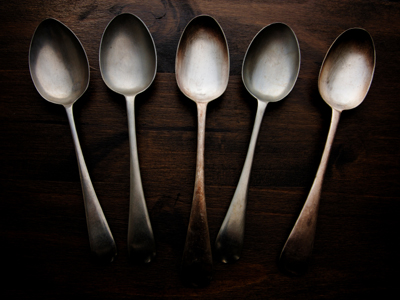
Excuse me, but could we borrow one of your spoons?
Yes Please - Politeness Words and Terms
Practise polite English for accepting offers and asking for things. Learn useful phrases like “Yes, please” and “No, thank you” for friendly everyday conversations.
1 .
You are looking for the Youth Hostel. Which is the best way to ask someone?
Oy, mate, where's the Youth Hostel?
Would you please be so kind as to tell me how I might be going to the Youth Hostel?
Please could you tell me where to find the Youth Hostel?
Thank you for telling me where is the Youth Hostel.
If you want someone to help, you need to be clear and polite (but not say TOO much!)
2 .
Once they have told you the directions, what would you then say to them?
We are thanking you very greatly for your kindness.
Ta-ra, mate, see you!
Well, that's really been extremely helpful.
Many thanks; goodbye, then!
Again, you need to 'strike the right balance' between being clear and polite.
3 .
In a busy street, you turn round to look at something, and - quite by accident - you bump someone with your back-pack. What do you say?
Oh, I am most frightfully sorry about that. Are you hurt at all? I'm afraid it must have been entirely my fault.
I'm so sorry; are you all right?
Excuse me!
Get out of it, you stupid idiot!
Once again, keep it clear and simple (without being so short, that you seem rude all over again).
4 .
You are hoping to find a seat in a busy bus or train, and think you've found one where nobody is sitting. What do you say to the person in the next seat?
Excuse me, is this seat taken?
Would you please mind telling me whether anyone's already going to be sitting in this seat?
Can I sit here, OK?
Hello, I'll sit here if you don't mind.
You probably need to attract the person's attention before you ask about the seat.
5 .
On the terrace of a cafe, you need a spoon because the waiter didn't bring you one. What do you say to the people at the next table?
Please can we have that spoon?
Excuse me, but could we borrow one of your spoons?
Aren't the staff rude in here? We need another spoon.
Hello, I want a spoon.
As usual, try to keep it polite but clear ... and not TOO direct, in good social English.
6 .
Unfortunately, there is a small problem where you are staying. How do you best explain it, without being rude?
Why didn't you put enough paper in the bathroom?
There wasn't enough paper in the bathroom.
I'm afraid we seem to have run out of paper in the bathroom; could we have some more, please?
Please give me more paper now.
As ever, try and keep it clear but polite (especially on this subject). There are ways to ask clearly, but it could be embarrassing if you accuse someone directly of being inefficient, careless or rude.
7 .
You are ordering food in a busy pub, and need to check there's no problem about your friend who has an allergy. What do you say, to make certain?
My friend can't eat nuts. Could you please make quite sure that won't be a problem? Thank you so much.
That doesn't have any nuts in it all, does it?
Mind you don't put any nuts in that please.
Leave the nuts out, would you?
As usual, it makes sense to explain the reason.
8 .
You are booking tickets for a day out somewhere. What is the best way to ask for them?
Three returns to Hampton Court.
We'd like three day returns to Hampton Court, please.
If it weren't too much trouble, would you mind getting us three for Hampton Court? Thanks awfully.
Hampton Court please; oh, yeah, there's three of us. What? Pardon? Oh, yes: there and back, thank you.
As ever ... polite and clear!
9 .
Some English friends have invited you out for a meal, but someone in your family is now ill. How do you best explain this to your friends?
Martin has been in the bathroom all day and he's now lying on his bed with a high fever and a headache. He hasn't touched his food and he's been sick several times. So we shan't be coming round to you later.
We can't come over tonight: Martin's really sick so it's not possible.
I'm afraid Martin's not been well today, so we're going to have to stay here this evening. Can we call you tomorrow, and maybe think about coming some other time instead?
Martin keeps being sick so tonight's no good, but thanks anyway!
Again, try to keep it clear but polite ... and positive, if you can.
10 .
Some English people offer you food that you have never seen before - and honestly, you'd prefer to refuse to eat it ... but without being rude to them. What do you say?
Well, it looks very interesting, but - thanks all the same - I don't think I could eat any more just now.
That's really disgusting ... no thanks.
We never have that at home and I don't think I'd enjoy it.
Excuse me if I don't eat any of that stuff.
Even in a negative situation, it is 'good manners' to try and say something positive.



**Unlimited Quizzes Await You! 🚀**
Hey there, quiz champ! 🌟 You've already tackled today's free questions.
Ready for more?
Ready for more?
🔓 Unlock UNLIMITED Quizzes and challenge yourself every day. But that's
not all...
not all...
🔥 As a Subscriber you can join our thrilling "Daily Streak" against other
quizzers. Try to win a coveted spot on our Hall of Fame Page.
quizzers. Try to win a coveted spot on our Hall of Fame Page.
Don't miss out! Join us now and keep the fun rolling. 🎉
**Unlimited Quizzes Await You! 🚀**
Hey there, quiz champ! 🌟 You've already tackled today's free questions. Ready for more?
🔓 Unlock UNLIMITED Quizzes and challenge yourself every day. But that's not all...
🔥 As a Subscriber you can join our thrilling "Daily Streak" against other quizzers. Try to win a coveted spot on our Hall of Fame Page.
Don't miss out! Join us now and keep the fun rolling. 🎉




© Copyright 2016-2026 - Education Quizzes
Work Innovate Ltd - Design | Development |
Marketing
