




Ask the AI Tutor
Need help with Consequences of Climate Change? Ask our AI Tutor!
AI Tutor - Lucy
Connecting with Tutor...
Please wait while we establish connection
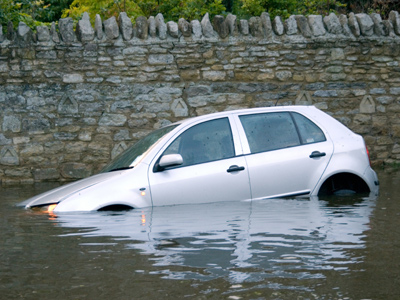
As the climate gets warmer we will see more floods.
Consequences of Climate Change
Climate change is already affecting people and places worldwide. This GCSE Geography quiz looks at its consequences, from rising seas to stronger storms and heatwaves.
1 .
The North Atlantic Current brings warm water north to the UK. An increase in melting polar ice may push this current further south preventing that warmer water reaching us. What are the likely consequences of this change for the UK?
Much colder conditions and a decrease in the amount of rainfall
Much warmer conditions and more rain
Drier conditions leading to desertification and warmer summers
Little measurable impact on the weather as the current has little direct effect
The shifting of the North Atlantic Current further south is often hypothesised as a possible reason for the next ice age. Countries on the same latitude as the UK and not affected by the current (Canada for example) have permafrost and much harsher winters
2 .
When referring to sea level rise we normally discuss melting ice. What other effect of global warming may lead to sea level rise and coastal flooding?
Increased rainfall
More pumping of water from flood events on land
Thermal expansion of the oceans as they warm up
Increase in river size
The thermal expansion of the water might not sound like a lot, but a large temeperature increase will cause a significant sea level rise
3 .
What is the general trend in the change of seasons in the UK?
Growing seasons are getting longer, whilst winters are becoming wetter and with more extreme weather events
Winters are becoming warmer whilst summers are becoming colder
The seasons are becoming more regular. Overall everything is becoming warmer and drier
Storms are becoming an infrequent event due to the climate getting warmer
Whilst summers and the growing season are getting longer, more frequent flooding and storm events are damaging crops and reducing the agricultural capacity
4 .
In 2008 Global CO2 levels reached 380ppm. If they reach 550ppm how much is it predicted that average global temperatures would rise in degrees Celsius?
2o
10o
6o
14o
Whilst a rise of 6 degrees doesn't sound like a lot, it's the difference between a warm day in England and a warm day in southern Spain. Species would go extinct as they struggled to adapt to the new climatic conditions, droughts and storms. Low-lying areas would be flooded as well which would have an impact on the economy
5 .
How will climate change reduce the amount of fresh water available for drinking?
Increased flooding and rising sea levels will contaminate fresh water supplies
More water will be locked up as ice
Decreased rainfall will reduce the amount of fresh water
Increased evaporation will reduce the amount of water
The increased flooding and sea level rises, as well as desertification, will lead to water stress in more areas
6 .
How is climate change likely to affect human migration patterns?
Populations will move away from cities as the flood risk increases
Populations will move away from the poles towards the warmer equator
People will move to low-lying coastal areas
Populations will move away from drought-stricken areas
People living in MEDCs (More Economically Developed Countries) will be more able to adapt to the changing weather than those in LEDCs (Less Economically Developed Countries). Many of the areas at most risk of drought and water stress are LEDCs and so the population may be forced to move to survive
7 .
Which of the following is not a reason why climate change would impact major UK cities in particular when compared to more rural areas?
Warmer weather will increase pollution levels
Most UK cities are built around a port and vulnerable to rising sea levels
Longer growing seasons and changing conditions may lead to a change in farming practices
More extreme weather conditions will lead to river flooding. UK cities are often built up to the very edges of the river banks
Flood barriers, such as the Thames Barrier, will prevent some flooding but many cities and towns are built on land that was previously marshland. Even a small rise in water levels will lead to flood events. Increased temperature may lead to increased pollution and diseases in population centres
8 .
How might global climate change impact the UK tourism-based economy in the short to medium term?
Continual flooding will force people to holiday elsewhere. It is likely that all parts of the tourism trade will be forced to close
Warmer conditions may encourage more people to stay at home, although skiing resorts in Scotland are unlikely to have snow for the winter season
Wetter conditions will reduce the chances for people to enjoy the countryside, although urban tourism will still be popular
Flooding in the south will encourage more people to move north, leading to a change in the tourist economy to the northern section of the UK
As temperatures increase it is likely that Britain will see warmer summers and become more attractive to tourists. In the longer term the movement of the North Atlantic Current may reverse this trend
9 .
17 million people in Bangladesh will be negatively impacted by climate change. What is the main risk that climate change poses to Bangladesh?
Desertification
Drought
Flooding
Increased ice
As a low-lying country, Bangladesh is at risk from rising sea levels and flooding
10 .
Roughly how many people's lives are threatened by flooding due to rising sea levels?
80,000,000
8,000,000
800,000
80,000
Low lying coastal areas and islands are at great risk. Many of the smaller atolls and islands will vanish if sea levels rise by more than half a metre



**Unlimited Quizzes Await You! 🚀**
Hey there, quiz champ! 🌟 You've already tackled today's free questions.
Ready for more?
Ready for more?
🔓 Unlock UNLIMITED Quizzes and challenge yourself every day. But that's
not all...
not all...
🔥 As a Subscriber you can join our thrilling "Daily Streak" against other
quizzers. Try to win a coveted spot on our Hall of Fame Page.
quizzers. Try to win a coveted spot on our Hall of Fame Page.
Don't miss out! Join us now and keep the fun rolling. 🎉
**Unlimited Quizzes Await You! 🚀**
Hey there, quiz champ! 🌟 You've already tackled today's free questions. Ready for more?
🔓 Unlock UNLIMITED Quizzes and challenge yourself every day. But that's not all...
🔥 As a Subscriber you can join our thrilling "Daily Streak" against other quizzers. Try to win a coveted spot on our Hall of Fame Page.
Don't miss out! Join us now and keep the fun rolling. 🎉




© Copyright 2016-2026 - Education Quizzes
Work Innovate Ltd - Design | Development |
Marketing
