




Ask the AI Tutor
Need help with Desertification? Ask our AI Tutor!
AI Tutor - Lucy
Connecting with Tutor...
Please wait while we establish connection
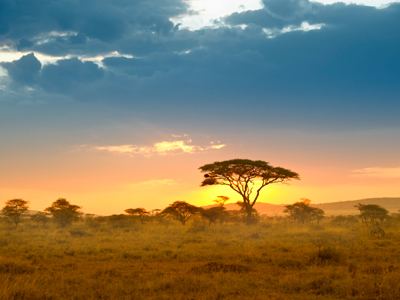
The creation of the Serengiti National Park has lead to the overgrazing of marginal lands.
Desertification
Learn how deserts spread into once-productive land. This GCSE Geography quiz explains what desertification is, why it happens, and how people can reduce its damaging effects.
1 .
Which of the following is a physical cause of desertification?
Overgrazing
Irrigation
Changing farming practices
Climate change
Climate change is a leading cause of desertification, along with unsustainable land usage
2 .
Which of the following is not a way that planting trees will help reduce desertification?
By acting as a wind-break to reduce the amount of sand being blown away
By producing water as rainfall in the immediate area
By providing a source of sustainable fuel
By protecting the remaining soil and allowing a leaf litter layer to develop
Charity programmes, such as that of the Green Cross in Burkina Faso, educate local populations on the use of plant nurseries and fuel saving stoves
3 .
Which of the following is not a possible strategy to reduce desertification?
Havesting branches rather than complete trees for fire wood
Controlled burning of grasslands to reduce the spread of wildfires
Reducing the number of livestock animals
Developing national parks and reserves where local people aren't permitted
The creation of the Serengiti National Park has lead to the overgrazing of marginal lands
4 .
How can plant science help increase the amount of vegetation in areas and so slow, or even reverse desertification?
By developing or discovering more drought resistant versions of crops such as millet and cotton
By creating new crops from varieties such as algaes and cactus
By changing the ground in specific ways to suit the water-intensive crops that are required
By developing treatments and medicines to help the crops survive times when there is little water
Genetically modified crops can help in these situations, as can moving crops from a different area, such as moving early maturing millet from southern to northern Mali. Improving the soil using fertilisers such as animal dung also helps
5 .
How can rainfall be made more reliable in areas under threat from desertification?
Better weather forecasting
Damming of rivers
Better crop selection
Cloud Seeding
Some people believe that messing with the atmosphere in this high-tech way may have as yet unknown impacts
6 .
Dams have been built on a number of major rivers to increase the amount of water available for drinking and agriculture. How can artificial irrigation increase desertification?
It causes rapid soil erosion
It causes salinisation of the soil
It causes soil contamination
It causes sheet erosion
Salinisation is an increase in levels of salt in the soil as minerals are drawn up to the surface by water evaporation
7 .
Which of the following is a human cause of desertification?
Increased flock and herd size
Seasonal rainfall being unreliable
Climate change
Certain crops going extinct
Whilst climate change is influenced by human activity, it is considered a natural cause of desertification rather than a human one
8 .
In areas under threat from desertification, people are forced to use marginal lands. How are these marginal lands defined?
Lands along the edges of a desert or a lake
Lands that form the boundary between two tribal areas. Grazing here can lead to tribal conflict
Lands that have little or no potential for profit. They often have poor soils or other undesirable characteristics
Lands that are at the edges of cities and may be heavily contaminated
Lands that are considered marginal for crops may be suitable for animal grazing in some circumstances, or for different farming methods
9 .
Magic stones are a project in which piles of stones are placed across slopes. How do these help reduce desertification?
The stones prevent soil blowing away by holding it down
The stones slow surface water run-off and soil erosion
The stones stop goats and other grazing animals destroying the vegetation
The stones remind people that the soil needs to be protected
These piles of stones are laid across a slope and trap surface water runoff, so reducing soil erosion
10 .
Which of the following is a disadvantage of afforestation?
Trees lock up carbon dioxide
Newly planted trees prevent other plants from getting water
Trees prevent windblown sand moving to form sand dunes
Trees become a source of firewood that will be used in stoves by local people
The trees may die due to lack of water. It could be argued that funding could be better spent on more effective projects
Our Social Circles




**Unlimited Quizzes Await You! 🚀**
Hey there, quiz champ! 🌟 You've already tackled today's free questions.
Ready for more?
Ready for more?
🔓 Unlock UNLIMITED Quizzes and challenge yourself every day. But that's
not all...
not all...
🔥 As a Subscriber you can join our thrilling "Daily Streak" against other
quizzers. Try to win a coveted spot on our Hall of Fame Page.
quizzers. Try to win a coveted spot on our Hall of Fame Page.
Don't miss out! Join us now and keep the fun rolling. 🎉
**Unlimited Quizzes Await You! 🚀**
Hey there, quiz champ! 🌟 You've already tackled today's free questions. Ready for more?
🔓 Unlock UNLIMITED Quizzes and challenge yourself every day. But that's not all...
🔥 As a Subscriber you can join our thrilling "Daily Streak" against other quizzers. Try to win a coveted spot on our Hall of Fame Page.
Don't miss out! Join us now and keep the fun rolling. 🎉
© Copyright 2016-2026 - Education Quizzes
Work Innovate Ltd - Design | Development |
Marketing
