




Ask the AI Tutor
Need help with Invasive Species? Ask our AI Tutor!
AI Tutor - Lucy
Connecting with Tutor...
Please wait while we establish connection
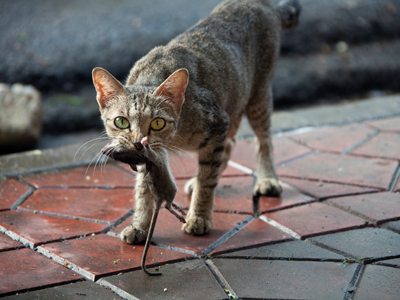
Some people believe that cats are one of the worst invasive species, decimating bird, amphibian and small mammal populations.
Invasive Species
Invasive species are plants or animals that spread into new areas, upsetting natural ecosystems. This quiz tests your GCSE Geography understanding of their causes, impacts and management.
1 .
Red-eared sliders are a species of pond turtle native to North America. How have they become widespread throughout the UK?
They have escaped from food farms
They have been able to travel from their native range due to global warming
Pet turtles were were released by their owners
They were released to predate an invasive lobster species
The film Teenage Mutant Ninja Turtles lead to a huge increase of purchases of these tiny hatchling turtles. After a few years they outgrew most standard aquariums and were abandoned. Millions have been imported into the UK and are still being imported in the hundreds of thousands, despite few people having the ability to house them as adults
2 .
What is a non-native species?
Something moved by humans
A species that preys on native species
A species that is causing a large amount of ecological damage
A species living outside its natural range
Non-native species are normally moved by human intervention, whether by deliberate or accidental introduction
3 .
Why might invasive species legislation across Europe not be appropriate for all member states?
Species that are banned to protect southerly nations cannot become invasive in more northerly ones
Few if any of the species will make it to island nations such as Ireland
Countries have different attitudes towards releasing animals, and some won't be releasing plants and animals at will
Some countries have better border controls than others
With the climate being generally colder, some of the species (such as apple snails and slider turtles) can't breed in northerly countries
4 .
The harlequin ladybird is considered the UKs fastest invading species but little is being done to eradicate them. Which of the following is not a reason that the ladybird isn't being targeted for eradication?
They are causing little economic impact
They prey on pests that might damage on crops
They provide prey for our native ladybird species
It's almost impossible to eradicate them without impacting native species
Knotweed, another invasive species, costs around £166 million annually and is far from being under control in some areas, whereas the harlequin ladybird is (as of yet) not making any obvious impact. It may be that they will help our economy by preying on crop pests
5 .
What can cat owners do to reduce the risk to local wildlife from their pet?
Feed their cats well so they don't need to hunt
Keep their cats indoors to protect them and other species
Nothing - cats are hunters and it's a natural behaviour which shouldn't be stopped
Rescue the animals caught by their cats when possible
Cats have been around humans for thousands of years and were probably encouraged by people in Egypt and the Middle East about 4000 years ago to protect food stores from rats and other rodents. In some parts of the world it is illegal to allow your cat to roam. As a semi-domesticated species, hunting is still a natural behaviour even when they are supplied with plenty of other food. Not all cat owners have their animals neutered which can lead to colonies of feral cats - their main source of food is from hunting
6 .
How does climate change affect the spread of invasive species?
As climates cool down, invasive species will be able to survive and breed in currently hot areas
More extreme weather will lead to the extinction of native species
As climates warm up, native species will be able to outcompete invaders
As climates warm up, invasive species will be able to survive and breed in currently cold areas
The warmer weather is already having an impact on some invasive species in the UK, with species which were previously unable to breed in the shorter summer period now thriving
7 .
In 1859, 24 rabbits were released in Australia. 10 years later, 2 million could be hunted with no noticeable affect on the population. What is the impact of the rabbits on the Australian landscape today?
Rabbits eating the local vegetation has led to the loss of plant species and soil erosion
The rabbits have spread disease to native marsupial species
Rabbits have become the main source of fur and meat to the Native Australians
Rabbits remove weeds that would be dangerous to sheep and other herbivores
An English farmer by the name of Thomas Austin introduced the 24 grey rabbits to his plot of land to remind him of home. In the mid 20th Century the introduction of the myxomatosis virus helped bring the population under control, but rabbits, along with camels and donkeys, also introduced by humans, are still a problem species in the Australian Outback
8 .
In the 20th Century, American mink escaped into the British countryside when they were released from fur farms by animal rights activists. What has the impact been on the natural environment?
Water voles are able to use empty mink burrows, thus increasing their numbers
The mink barely became established, but have provided an excellent food source for native predators
Some native species have declined by as much as 94% since the mink arrived
Mink have replaced other predators that hunting removed from the British countryside, so have had no impact
The water vole has been reduced by as much as 94%, although not all were killed by mink - some of the decline is due to habitat loss
9 .
Lionfish have been introduced outside of their native range and are being targeted for destruction in some locations. Why are lionfish a threat to other marine species in the Florida area?
A single lionfish can consume up to 80% of the juvenile fish on a reef in five weeks
As a venomous species, lionfish sting and kill any native predators
Lionfish remove the algae that other species feed on
Lionfish outcompete the native species for territory
As a species that can surive in lower salt environments, lionfish may invade the Everglades which is a key area for breeding and where many species of fish grow as fry. With no natural predators in this area the population is growing uncontrollably
10 .
Some introduced species become naturalised. What does this mean?
The species is moved from one area to another
The species becomes established, living and breeding in a region outside of its native range
The species becomes a native species and is listed in the flora and fauna of that region
The species is driven to extinction in its native range
A species may be introduced through accidental introductions, but if it is unable to reproduce or survive in the new climate it will not become naturalised. The grey squirrel has become naturalised in the UK since its introduction in the 1870's causing the severe decline of our native red squirrel through competition and spreading diseases to which the red squirrels have no immunity



**Unlimited Quizzes Await You! 🚀**
Hey there, quiz champ! 🌟 You've already tackled today's free questions.
Ready for more?
Ready for more?
🔓 Unlock UNLIMITED Quizzes and challenge yourself every day. But that's
not all...
not all...
🔥 As a Subscriber you can join our thrilling "Daily Streak" against other
quizzers. Try to win a coveted spot on our Hall of Fame Page.
quizzers. Try to win a coveted spot on our Hall of Fame Page.
Don't miss out! Join us now and keep the fun rolling. 🎉
**Unlimited Quizzes Await You! 🚀**
Hey there, quiz champ! 🌟 You've already tackled today's free questions. Ready for more?
🔓 Unlock UNLIMITED Quizzes and challenge yourself every day. But that's not all...
🔥 As a Subscriber you can join our thrilling "Daily Streak" against other quizzers. Try to win a coveted spot on our Hall of Fame Page.
Don't miss out! Join us now and keep the fun rolling. 🎉




© Copyright 2016-2026 - Education Quizzes
Work Innovate Ltd - Design | Development |
Marketing
