




Ask the AI Tutor
Need help with Management and Use of Coniferous Forests? Ask our AI Tutor!
AI Tutor - Lucy
Connecting with Tutor...
Please wait while we establish connection
What is the difference between coniferous and deciduous?
Management and Use of Coniferous Forests
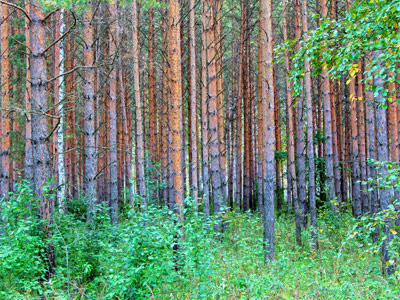
Coniferous forests provide timber, jobs, and habitats, but they must be carefully managed. This GCSE Geography quiz explores how these forests are used, controlled, and protected.
1 .
Which of the following statements is not correct?
Natural coniferous forests generally grow in colder climates than deciduous forests
The profits from selling timber from coniferous forests always benefit the local economy
A large proportion of the softwood from sustainably-managed coniferous forests is used to make paper
Most of the coniferous forests in Britain have been planted by the Forestry Commission
Large companies who exploit the World's major forests usually use their own staff rather than hire workers from the local population
2 .
Controlled logging takes ...
random trees from the forest
mature trees from the forest
ten percent of the trees from the forest
trees from the forest in blocks of 100 m2
Only trees over a certain age and size are taken in order that the forest structure is left intact. This enables the forest to regenerate over a period of about fifty years
3 .
Which statement about coniferous forests is correct?
They contain the greatest diversity of life on the planet
The soils are deep and rich
There is little diversity and the soils are thin and poor
The trees are all evergreen and mostly used for papermaking
Very few plants live on the forest floor and the nutrients are lost by leaching
4 .
In forests that have been deliberately planted as cash crops by the Forestry Commission, clear felling takes place. Clear felling takes ...
only trees from the edge of the forest
only trees from the middle of the forest
mature trees in large blocks
all of the trees in the forest in one go
Trees were planted in large blocks with hundreds or even thousands being planted at the same time, making clear felling possible
5 .
Which of the following countries have large areas of natural coniferous forest?
Algeria
Brazil
Canada
Britain
Algeria is in North Africa and is mainly desert, Brazil has tropical rainforests and most of Britain's coniferous forests have been planted by the Forestry Commission
6 .
How do the forest managers ensure that a forest is used sustainably?
They clear fell only a part of the forest and replant new trees afterwards
They clear fell only part of the forest and let it regenerate naturally
They clear fell all of the forest and replant new trees afterwards
They clear fell all of the forest and let it regenerate naturally
If they took all of the trees in one go, they would need to wait for about 50 years until the trees were ready for cutting again. Forestry is a very slow form of agriculture! Leaving it to regenerate naturally is done in some areas but not to provide a cash crop - it is better for wildlife and biodiversity
7 .
Which one of the following is not usually a recreational use of a Forestry Commission coniferous forest?
Mountain biking
Walking
Motorsports
Rugby
Forestry Commission forests have access tracks that enable the planting and harvesting machinery to gain access to the trees. They are therefore hard-wearing and can easily survive the passage of walkers, cyclists and even rally cars
8 .
Which of the following is not made from timber obtained from a coniferous forest?
The frame of a mass-produced armchair
Floor joists in many new houses
Paper
A top quality dining table
Top quality furniture is more commonly made from hardwood like oak or beech from a deciduous forest. The other three items are common softwood products
9 .
What term is given to the replanting of trees?
Replantation
Implantation
Deforestation
Afforestation
The Forestry Commission was set up by the British government after the First World War to buy land for afforestation. A large amount of Britain's woodlands were felled and used as part of the war effort and the government wanted to ensure a sustainable supply of timber for the future
10 .
How does recreational use of a coniferous forest aid the local economy?
It brings tourists to the area
People have to pay the Forestry Commission to use the forest
More wood is sold for making paper
All of the above
The tourists spend their money on local accommodation, eating, drinking and buying souvenirs. In the few cases where it is necessary to pay to use the forest (usually for the car parking), the money goes to the Forestry Commission and not necessarily to the local economy



**Unlimited Quizzes Await You! 🚀**
Hey there, quiz champ! 🌟 You've already tackled today's free questions.
Ready for more?
Ready for more?
🔓 Unlock UNLIMITED Quizzes and challenge yourself every day. But that's
not all...
not all...
🔥 As a Subscriber you can join our thrilling "Daily Streak" against other
quizzers. Try to win a coveted spot on our Hall of Fame Page.
quizzers. Try to win a coveted spot on our Hall of Fame Page.
Don't miss out! Join us now and keep the fun rolling. 🎉
**Unlimited Quizzes Await You! 🚀**
Hey there, quiz champ! 🌟 You've already tackled today's free questions. Ready for more?
🔓 Unlock UNLIMITED Quizzes and challenge yourself every day. But that's not all...
🔥 As a Subscriber you can join our thrilling "Daily Streak" against other quizzers. Try to win a coveted spot on our Hall of Fame Page.
Don't miss out! Join us now and keep the fun rolling. 🎉




© Copyright 2016-2026 - Education Quizzes
Work Innovate Ltd - Design | Development |
Marketing
