




Ask the AI Tutor
Need help with OS Maps: Landscape Features? Ask our AI Tutor!
AI Tutor - Lucy
Connecting with Tutor...
Please wait while we establish connection
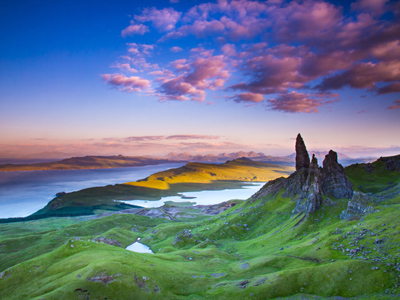
How many landscape features do you recognise?
OS Maps: Landscape Features
Ordnance Survey maps show both natural and human landscape features. Learn how to recognise quarries, reservoirs, valleys, and slopes so you can visualise places from symbols alone.
To see a larger image, click on the picture.
1 .
A student preparing for fieldwork made several sketches of landscape features they expected to see. This sketch represents:
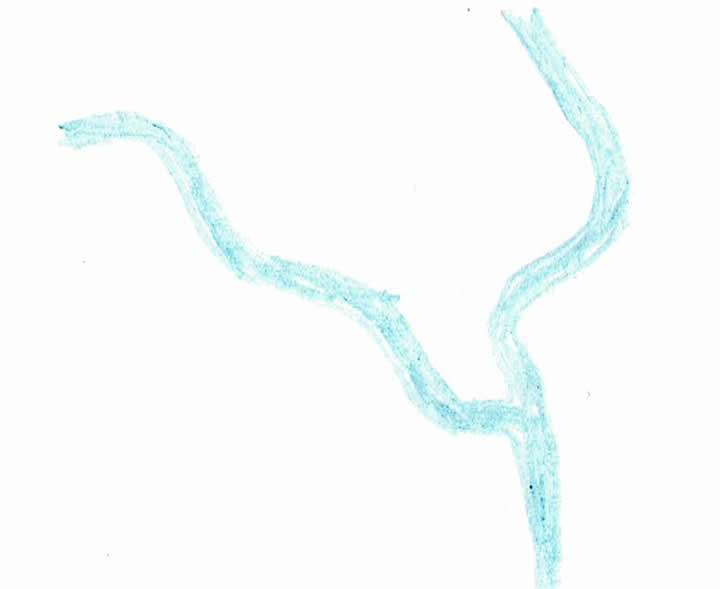
a fast-flowing mountain stream
the confluence of two rivers
a wave-cut platform
a road junction
Wide blue lines on OS maps represent rivers and where two rivers join is called a confluence
2 .
What landscape feature would be seen in the area that is outlined in red on this sketch map?
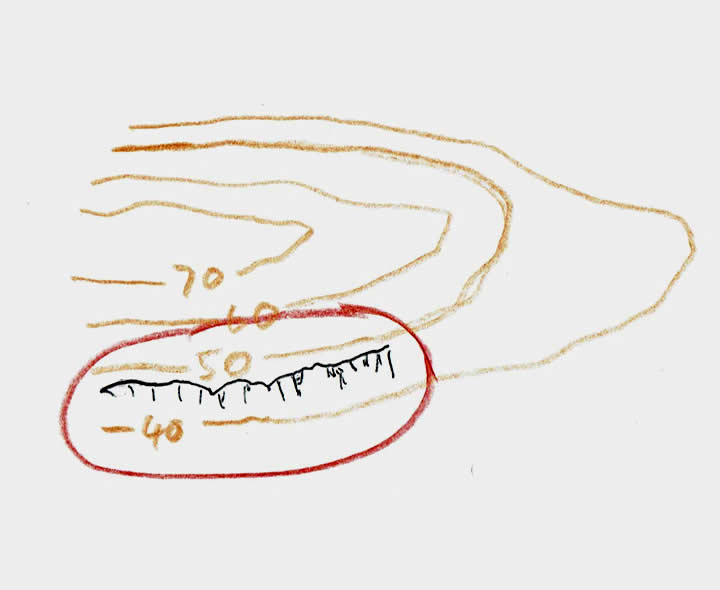
River
Waterfall
Cliff
Ox-bow lake
This is only a small cliff, the contour lines indicate that it is less than 10m in height
3 .
This sketch map was prepared for a 1:50,000 scale OS map. The green area on it shows:
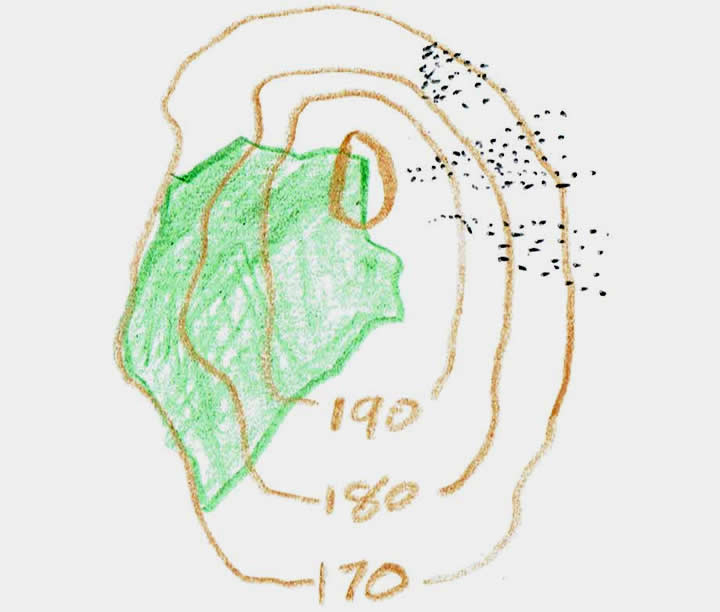
a mixed woodland
a broadleafed woodland
an orchard
a field
Broadleafed woodland would have small broadleaf trees drawn on it, a conifer woodland would have small pine trees drawn on it. An area of plain green on an OS 1:50,000 map indicates a mixed woodland with both conifers and broadleafed trees
4 .
This pattern of contour lines shows:
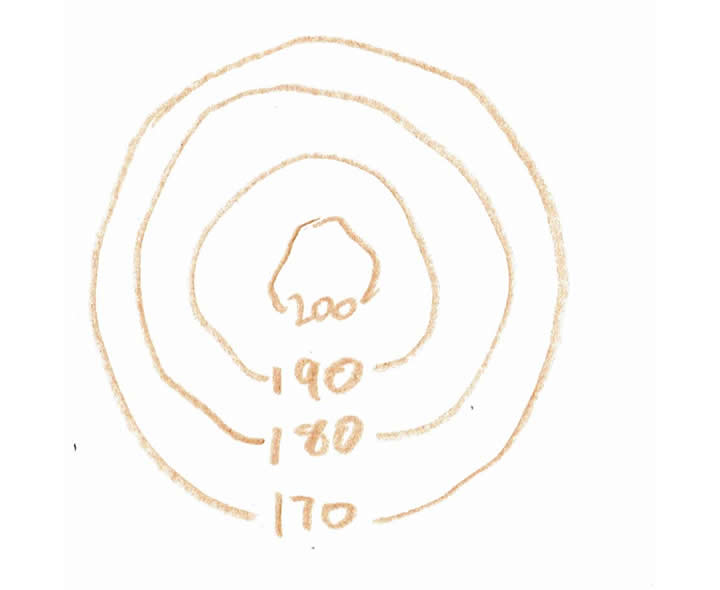
a valley
an escarpment
a ridge
a conical shaped hill
The contours are uniformly spaced and more or less circular
5 .
What landscape feature would you be looking at if you saw this pattern of contours on your OS map?
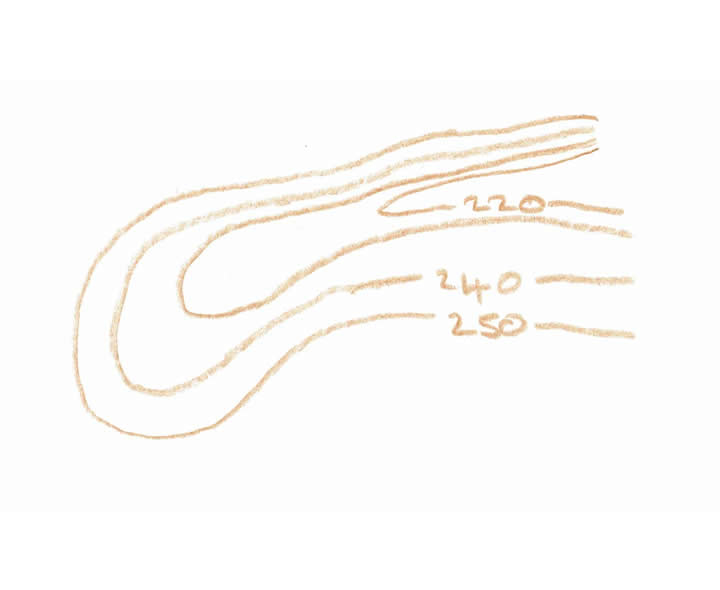
A meander
A spur
A hill
A valley
On OS maps, V-shaped patterns of the contour lines indicate there is a valley
6 .
What landscape feature did the geographer see on the east side of the hill (north is at the top)?
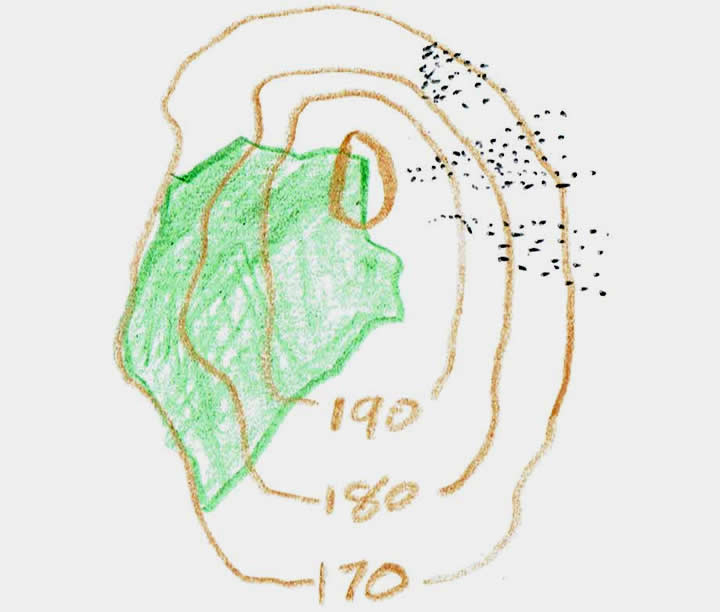
A wave-cut platform
A cliff
An escarpment
Scree
A scree is a mass of angular unsorted rocks lying on a slope of a hill or mountain or at the base of a cliff. It can also be referred to as talus
7 .
This sketch map was made by a geographer carrying out their fieldwork. What landscape feature would be seen in the area indicated by the red ring on the sketch?
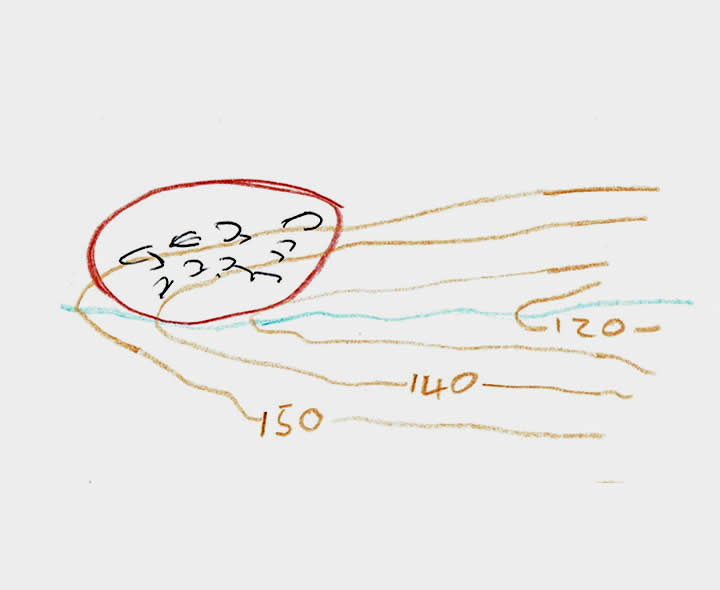
Railway
Rocky outcrops
A vertical cliff
Moorland
The small black curves are used to indicate and area where there are a lot of surface rocks visible
8 .
This landscape feature is a:
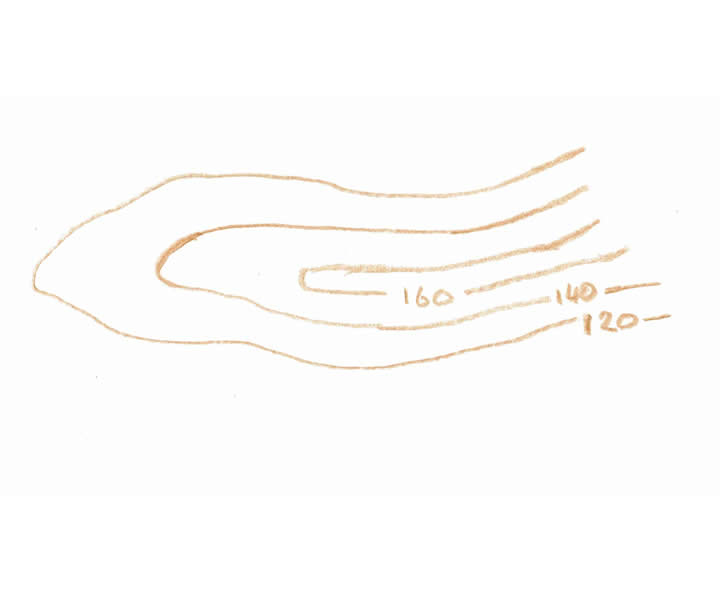
pyramidal peak
valley
spur
lake
V-shaped patterns of contour lines indicate spurs or valleys, in this case, the height is lower towards the point of the V-shape therefore it is a spur
9 .
Which of the following statements is correct?
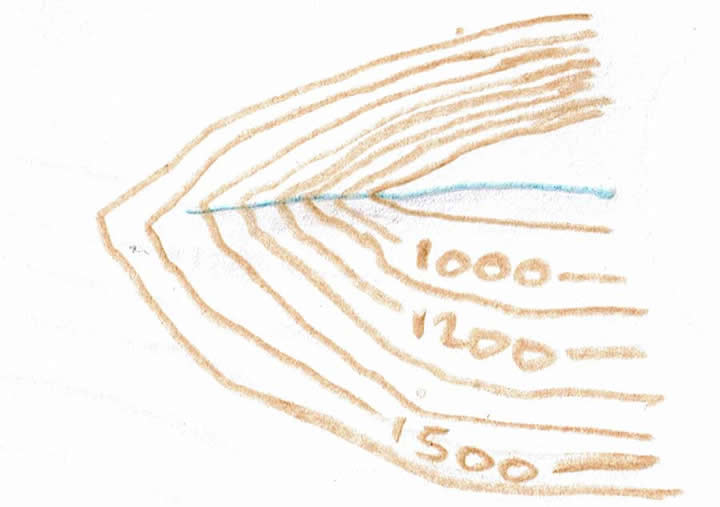
This diagram represents a frost shattered peak in a mountain range
This diagram represents an area where stone has been quarried
This diagram represents the lower course of a river
This diagram represents part of the upper course of a river
The clues are that the contour lines show very high ground, contour lines close together, the sharp V-shape of the contour lines and the thin blue line with no meanders showing the stream
10 .
What landscape feature is represented by this sketch taken from an OS map?
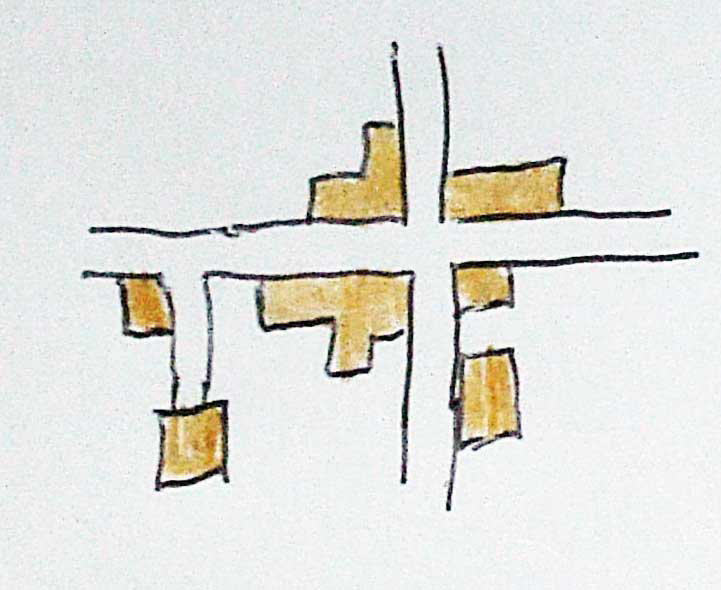
Village
Woodland
Valley
Trunk road
Landscape features include human-made items too



**Unlimited Quizzes Await You! 🚀**
Hey there, quiz champ! 🌟 You've already tackled today's free questions.
Ready for more?
Ready for more?
🔓 Unlock UNLIMITED Quizzes and challenge yourself every day. But that's
not all...
not all...
🔥 As a Subscriber you can join our thrilling "Daily Streak" against other
quizzers. Try to win a coveted spot on our Hall of Fame Page.
quizzers. Try to win a coveted spot on our Hall of Fame Page.
Don't miss out! Join us now and keep the fun rolling. 🎉
**Unlimited Quizzes Await You! 🚀**
Hey there, quiz champ! 🌟 You've already tackled today's free questions. Ready for more?
🔓 Unlock UNLIMITED Quizzes and challenge yourself every day. But that's not all...
🔥 As a Subscriber you can join our thrilling "Daily Streak" against other quizzers. Try to win a coveted spot on our Hall of Fame Page.
Don't miss out! Join us now and keep the fun rolling. 🎉




© Copyright 2016-2026 - Education Quizzes
Work Innovate Ltd - Design | Development |
Marketing
