




Ask the AI Tutor
Need help with Quarrying in National Parks? Ask our AI Tutor!
AI Tutor - Lucy
Connecting with Tutor...
Please wait while we establish connection
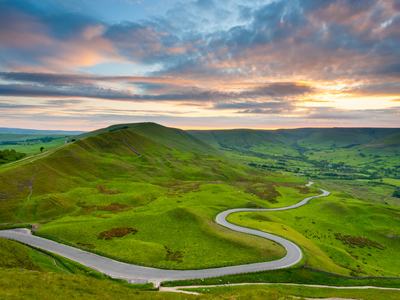
Peak District National Park.
Quarrying in National Parks
Quarrying in National Parks creates difficult choices about jobs, raw materials, landscape protection and tourism. This GCSE Geography quiz explores the arguments, impacts, and possible compromises.
1 .
What attracts people to a national park?
Scenery and landscape
Outdoor activities
Visitor centres
All of the above
There are two types of visitor to national parks - day trippers and holidaymakers
2 .
As well as national parks, quarries are sometimes opened near to sites of special scientific interest (SSSIs). What is an SSSI?
An artificially-constructed nature reserve
A field studies centre that specialises in the study of science
An area that is legally protected by law because of the wildlife or geology found there
A place set aside for secret research by the government
Sites of special scientific interest can be set up anywhere, they are not just found in national parks
3 .
Other than quarrying, which of the following is important to the local economy of a national park?
Brewing
Tourism
ICT
Steelmaking
Many businesses in national parks are geared up to make their profits from tourists
4 .
Which of the following statements is incorrect?
Quarrying in a national park is sustainable
Quarries provide employment in national parks
Quarries in national parks can be screened by planting trees
The passage of many lorries every day damages the roads in national parks
No quarrying of rock is sustainable as it takes millions of years for rocks and minerals to form
5 .
Which of the following would help to reduce the impact of a quarry on a national park?
Working the quarry only at night
Building a new railway line to transport the quarried products
Restricting the size of the quarry and the working hours
All of the above
Working the quarry at night would be more disturbing to local residents and probably the wildlife. Transport by rail is a better solution than road, but for large quarries only. The railway construction work would damage the national park
6 .
Why might local residents in a national park be unhappy about the closure of a quarry?
Fewer tourists will visit the area to look at the quarry
The roads will no longer be swept by the local authority
There will be less employment
House prices will be halved
There is usually not much industry in a national park as they are mainly rural areas, so if a quarry is closed, more people will be unemployed and have to commute to find work
7 .
When a quarry has been exhausted, it can be used as...
a place to build a tourist attraction
a place for water sports
a wildlife reserve
all of the above
There are examples of all of these - the tourist attraction of the Eden Project has been built in a quarry in Cornwall and the Cotswold Water Park has been created from worked-out gravel pits to provide lakes for water sports and wildlife
8 .
In the Cotswolds, a gravel quarry has been turned into a series of lakes and a wildlife reserve. Doing this to a quarry is called...
reworking
reservation
remaking
restoration
Restoration can be carried out to parts of a working quarry that are no longer in use or when a quarry has reached the end of its useful life
9 .
Which rock is quarried in the Peak District and Yorkshire Dales National Parks?
Chalk
Limestone
Granite
Slate
There are other rock types in the parks but the main rock quarried is limestone
10 .
What usually happens before a quarry can be opened or extended in a national park?
The quarry owners must gain planning permission
Nothing, there are no restrictions to quarrying
The prime minister of the UK must sign a document authorising the quarry
Trees need to be planted
Quarrying provides income to local councils through taxation



**Unlimited Quizzes Await You! 🚀**
Hey there, quiz champ! 🌟 You've already tackled today's free questions.
Ready for more?
Ready for more?
🔓 Unlock UNLIMITED Quizzes and challenge yourself every day. But that's
not all...
not all...
🔥 As a Subscriber you can join our thrilling "Daily Streak" against other
quizzers. Try to win a coveted spot on our Hall of Fame Page.
quizzers. Try to win a coveted spot on our Hall of Fame Page.
Don't miss out! Join us now and keep the fun rolling. 🎉
**Unlimited Quizzes Await You! 🚀**
Hey there, quiz champ! 🌟 You've already tackled today's free questions. Ready for more?
🔓 Unlock UNLIMITED Quizzes and challenge yourself every day. But that's not all...
🔥 As a Subscriber you can join our thrilling "Daily Streak" against other quizzers. Try to win a coveted spot on our Hall of Fame Page.
Don't miss out! Join us now and keep the fun rolling. 🎉




© Copyright 2016-2026 - Education Quizzes
Work Innovate Ltd - Design | Development |
Marketing
