




Ask the AI Tutor
Need help with Sampling Methods? Ask our AI Tutor!
AI Tutor - Lucy
Connecting with Tutor...
Please wait while we establish connection
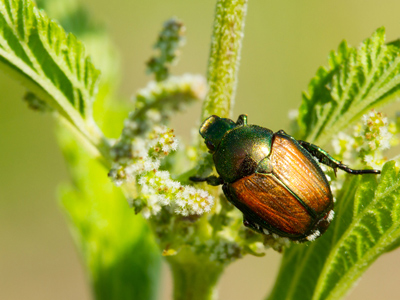
What would you use to sample beetles?
Sampling Methods
Geographers cannot survey everything, so they use sampling methods to collect data. This GCSE Geography quiz helps you practise choosing fair, reliable samples for fieldwork.
1 .
A quadrat could be used for environmental sampling in which of the following situations?
Interrupted belt transect of sand dunes
Continuous belt transect of the land from a farmers field to the edge of a lake
Random sampling of a school playing field
All of the above
Quadrats are used in many environmental surveys
2 .
What is sampling?
Gathering data from books
Counting every plant of different species in a field
Generating random pairs of co-ordinates
A short-cut method of investigating a large population or area
Without sampling, studying a population or environment would usually take too much time
3 .
Which of the following is a correct statement about random sampling?
The method used where the study area is the same throughout
The method used where the study area is not the same throughout
The investigator chooses where the samples will be taken
They are all correct
Random sampling is most appropriate for unifom areas and the sample locations should NEVER be chosen by the person doing the survey
4 .
Subjective data depends on which of the following?
Personal opinion
Clothing
Time of day
All of the above
An example of subjective data would be whether someone liked or disliked the design of a new bridge that had been built in the area of the survey
5 .
When using a quadrat for random sampling, the co-ordinates give the position of which corner of the quadrat?
North west
North east
South east
South west
In other words, the bottom left corner as you look at the quadrat
6 .
Which of the following would require stratified sampling?
An investigation into a woodland which had a clearing in it
An investigation of the whole of the school grounds excluding the buildings
An investigation in which questions are answered by working people, elderly ladies and children at primary school
All of the above
The word stratified comes from the latin 'stratus' meaning 'layer'
7 .
Sampling is:
a one hundred percent accurate measure of the population or area under study
a good estimate of what has been studied
visiting food shops and trying out some of the different foods on offer
an unimportant part of fieldwork
It is the most important part of fieldwork since it provides the data for your analysis and conclusion
8 .
Which of the following sampling methods would be the least practical for sampling the beetles living in a public park.
Random sampling with a quadrat
Systematic sampling with a quadrat
Continuous line transect
None of the above are practical
It would take a long time to complete (unless it was a very small public park!) and you would be very lucky indeed if a beetle crossed your transect line exactly at the moment you were looking at that point because they move around. Line transects are fine for vegetation surveys
9 .
Systematic sampling is:
an investigation into the systems used in a particular area
only suited to places that are the same everywhere
suitable for use where there is an environmental gradient
not suitable for urban surveys
Systematic in this sense indicates that samples will be taken at regular intervals
10 .
What is objective data?
Information about the objects found in a survey
Data that does not rely on a personal opinion
Data that is obtained from a survey where people are protesting about something
Data that is incorrect
It is data that can be measured using an instrument e.g. tape measure, quadrat or by counting



**Unlimited Quizzes Await You! 🚀**
Hey there, quiz champ! 🌟 You've already tackled today's free questions.
Ready for more?
Ready for more?
🔓 Unlock UNLIMITED Quizzes and challenge yourself every day. But that's
not all...
not all...
🔥 As a Subscriber you can join our thrilling "Daily Streak" against other
quizzers. Try to win a coveted spot on our Hall of Fame Page.
quizzers. Try to win a coveted spot on our Hall of Fame Page.
Don't miss out! Join us now and keep the fun rolling. 🎉
**Unlimited Quizzes Await You! 🚀**
Hey there, quiz champ! 🌟 You've already tackled today's free questions. Ready for more?
🔓 Unlock UNLIMITED Quizzes and challenge yourself every day. But that's not all...
🔥 As a Subscriber you can join our thrilling "Daily Streak" against other quizzers. Try to win a coveted spot on our Hall of Fame Page.
Don't miss out! Join us now and keep the fun rolling. 🎉




© Copyright 2016-2026 - Education Quizzes
Work Innovate Ltd - Design | Development |
Marketing
