




Ask the AI Tutor
Need help with Sustainable Tourism? Ask our AI Tutor!
AI Tutor - Lucy
Connecting with Tutor...
Please wait while we establish connection
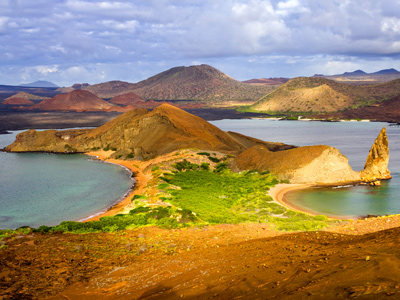
The Galapagos Islands
Sustainable Tourism
This GCSE Geography quiz looks at sustainable tourism. You will explore how holidays can support local communities, protect environments, and give visitors a positive, responsible travel experience.
1 .
The word 'staycation' has been invented to mean a holiday taken within driving distance of home, returning to sleep at home each night. Which of the following is NOT an economic or environmental benefit of a staycation?
A staycation supports the local economy
A staycation produces less air pollution as travelling by plane is not involved
A staycation does not put extra demands on local resources
No waiting at an airport
That is a social benefit
2 .
Sustainable tourism is about stewardship. What does this mean?
Getting a job on board a cruise liner
Looking after a holiday resort, making sure that all of the guests are happy
Management of the environment on a large scale locally, nationally and globally
Being in charge of buying organic food in a holiday destination
It is a personal responsibility that everyone has to look after the environment, whether at home, at work or as a tourist, to conserve it for future generations. Unfortunately, not everyone does this or believes that it is necessary
3 .
In Britain, during the 1950s, more and more people found they could afford to buy and run a car. How did this affect tourism in the UK?
It had no effect on tourism
It had a slight effect on tourism
The numbers of tourists increased
The number of tourists decreased
Holidays at seaside resorts and purpose built holiday camps were popular
4 .
Which of the following guidelines is most likely to be given to ecotourists in order to support the community?
Stay in locally owned accommodation
Keep to footpaths
Don't use air conditioning when it is available
Dress appropriately when visiting religious sites
This ensures that any money spent on accommodation benefits the local community
5 .
What is ecotourism?
A holiday where people stay in low-cost accommodation
A holiday where people travel abroad
A holiday designed to harm the environment as little as possible
Travelling to your holiday destination by spending as little money as possible
As well as guarding the environment, ecotourism is a form of tourism that ensures that the local community benefits
6 .
Conservation is a part of sustainable tourism. Which of the following is an example of conservation when applied to tourism?
Limiting visitor numbers to a locally historic building
Passing a law to create an SSSI in order to protect a local habitat
Building fences to keep visitors away from a local ancient monument
All of the above
Conservation is looking after the environment on a local scale in order to ensure that it is not damaged to the point where the attraction is no longer attractive to visitors
7 .
Some people think that neither sustainable tourism nor ecotourism are achievable. Which of the following is NOT a possible reason for this?
Travelling to a remote location usually involves travelling thousands of miles by plane
Tourists will always put pressure on local resources and amenities
The presence of tourists disturbs local wildlife
It is very expensive
Air travel contributes to the greenhouse effect, tourists use more water and electricity than if it were just the locals, and waste has to be treated and/or disposed of without polluting the local environment
8 .
Which one of the following is NOT a reason for the growth of tourism?
Unemployment
Greater wealth
Cheap air travel
More leisure time
Advertising has increased people's awareness and desire for holidays
9 .
Which of the following is NOT an aim of sustainable tourism?
Low impact on the environment
Promote local culture
Generate future employment for the local community
Get as many people there as possible
Sustainable tourism tries to achieve a positive outcome for local people, the environment, the tourists and tourist companies without overloading the attractions of the area
10 .
Which of the following guidelines is most likely to be given to ecotourists in order to protect the local environment?
Stay in locally owned accommodation
Keep to footpaths
Don't use air conditioning when it is available
Dress appropriately when visiting religious sites
Not using air conditioning would also be environmental advice, but the electricity is probably generated a long way away and the question asked about the LOCAL environment
You can find more about this topic by visiting BBC Bitesize - Changing pattern and nature of tourism



**Unlimited Quizzes Await You! 🚀**
Hey there, quiz champ! 🌟 You've already tackled today's free questions.
Ready for more?
Ready for more?
🔓 Unlock UNLIMITED Quizzes and challenge yourself every day. But that's
not all...
not all...
🔥 As a Subscriber you can join our thrilling "Daily Streak" against other
quizzers. Try to win a coveted spot on our Hall of Fame Page.
quizzers. Try to win a coveted spot on our Hall of Fame Page.
Don't miss out! Join us now and keep the fun rolling. 🎉
**Unlimited Quizzes Await You! 🚀**
Hey there, quiz champ! 🌟 You've already tackled today's free questions. Ready for more?
🔓 Unlock UNLIMITED Quizzes and challenge yourself every day. But that's not all...
🔥 As a Subscriber you can join our thrilling "Daily Streak" against other quizzers. Try to win a coveted spot on our Hall of Fame Page.
Don't miss out! Join us now and keep the fun rolling. 🎉




© Copyright 2016-2026 - Education Quizzes
Work Innovate Ltd - Design | Development |
Marketing
