




Ask the AI Tutor
Need help with The Climate Over the Past Two Million Years? Ask our AI Tutor!
AI Tutor - Lucy
Connecting with Tutor...
Please wait while we establish connection
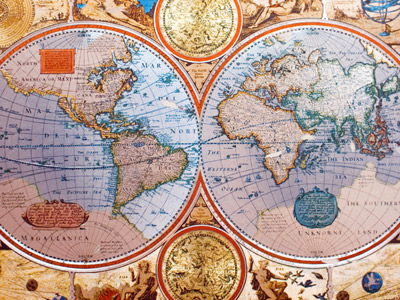
3% of scientists do not believe that climate change is a result of mankind's activities - but some people still believe that the Earth is flat!
The Climate Over the Past Two Million Years
This GCSE Geography quiz looks at how Earth’s climate has changed over the last two million years, including ice ages, warmer interglacials, and evidence left in the landscape.
1 .
Glacial retreat may be caused by increased temperature. What is another possible reason for glacial retreat?
Increased river flow under the ice
Human erosion
Lack of snowfall
Deforestation
Glaciers may be retreating as the lack of snowfall is reducing the amount of ice in general. However, this is likely to only be a small part of the reason - warmer temperatures and milder winters are more than likely the main cause
2 .
Scientists studying climate change refer to paleoclimates. What does this term refer to?
The Earth's past climates
Archaeological evidence that show the past climates
Today's climate
Different theories of climate change
Paleo means older or ancient, normally over geological timespans
3 .
Over the past 10,000 years what temperature has our climate averaged in degrees celcius?
21
14
0
80
Whilst it is difficult to measure overall, the temperatures averaged around 14 degrees C. The trend now is that temperatures are rising
4 .
Some people that don't support the theories of man-made global climate change point out that some scientists also disagree with the theories. What percentage of scientists support the theory that climate change is being driven by human activities?
A large majority
50%
0%
A small minority
Thousands of studies have been published on the topic of global climate change. The vast majority of them agree that there are significant man-made causes. When you read about scientists on-line that argue that this is solely a natural process, you are looking at a very small percentage. Remember, a small percentage of the world's population seriously believe the Earth is flat - there will always be people that disagree with scientifically accepted theories
5 .
How do rocks and fossils help scientists track the trends in climate change over millions of years?
They show the sediments, plants, and animals at different places over a long time period. These can be used to reconstruct the environments
Certain rocks only form at certain temperatures. By examining the rocks scientists can tell what temperatures they formed at
Since some rocks form underwater, any rocks formed in this way can be used to reconstruct the original sea floor
Many animals grow faster when temperatures are warmer. By measuring the growth of various fossils. Scientists can measure the temperature of the climate from this growth
Fossils and trace fossils can be used to reconstruct the environments, but it is a tough scientific discipline. Rocks and continents have moved over millions of years and often the plants and animals are now extinct or have evolved into a different form
6 .
What is the relationship between carbon dioxide in the atmosphere and temperature?
The more carbon dioxide in the atmosphere the cooler the temperature
As carbon dioxide levels reach a critical number the temperature suddenly drops
As the temperature falls it causes a rise in the amount of carbon dioxide in the atmosphere
The more carbon dioxide in the atmosphere the warmer the temperature
The data shows that as carbon dioxide levels rise the temperature also rises. Scientists can see that the carbon dioxide levels rise before the temperature rises, indicating a cause and effect
7 .
Why do scientists study pollen, rather than leaves and plants, to investigate climate change over millions of years?
Pollen is tougher and more likely to survive in the fossil record, marshes and ice cores than plants and leaves are
Pollen is rarer than plants and leaves and so easier to identify, meaning a more accurate picture of the environment can be built up
Pollen from all plants is only released at a single time of the year, meaning that scientists can use it as a form of clock
Plants never survive even in the fossil record. Only skeletal remains will ever be discovered
Pollen is tiny and released in massive quantities, meaning that it is often present in cores and samples. Being unique to the species of plant, these tiny grains can tell researchers what plants were growing in the area and so allow them to reconstruct the climate
8 .
Which of the following is not a natural cause of global climate change?
Change in Earth's orbit
Change in tilt of the Earth
Change in the Sun's activity
Burning fossil fuels
Climate change has been on-going for millions of years as the planet has cycled through glaciations, better known as ice-ages. However, man-made causes such as burning fossil fuels are accelerating the process
9 .
What data have scientists gathered from ice cores about the carbon dioxide concentration over the past 1,000 years?
In general they have only shown a tiny increase in levels of carbon dioxide over the past millennium
There has been a sharp fall in atmospheric carbon dioxide as the use of fossil fuels has pulled it from the atmosphere
The carbon dioxide levels have remained constant for most of the millennium, until the early 19th century when they rose sharply
Oxygen levels have fallen sharply as fossil fuels have used up the oxygen
The Industrial Revolution changed the way we operated. A massive increase in fossil fuel usage meant that carbon, previously trapped as coal and oil, was released into the atmosphere
10 .
Ice cores are cylinders of ice drilled out of an ice sheet or glacier. These are often extracted from Antarctica. What can ice cores tell us about the climate from millions of years ago through to the present day?
The size of the trapped snowflakes tell us what the conditions were like when they were formed
The ice contains trapped bubbles of air from the atmosphere, which allows scientists to measure the concentrations of different gases in the past
Thousands of animals are trapped in the ice. The cores contain these animals and DNA testing can tell us what was living on the ice at different times
Some years no snow fell and the layers melted. This is recorded in the ice cores and can show periods when there was no ice at the poles
One of the main areas that scientists use the ice cores for is examining the composition of the atmosphere. Using data obtained over the past 50 or 60 years they have compared air trapped in the ice thousands of years ago to the Earth's atmosphere today



**Unlimited Quizzes Await You! 🚀**
Hey there, quiz champ! 🌟 You've already tackled today's free questions.
Ready for more?
Ready for more?
🔓 Unlock UNLIMITED Quizzes and challenge yourself every day. But that's
not all...
not all...
🔥 As a Subscriber you can join our thrilling "Daily Streak" against other
quizzers. Try to win a coveted spot on our Hall of Fame Page.
quizzers. Try to win a coveted spot on our Hall of Fame Page.
Don't miss out! Join us now and keep the fun rolling. 🎉
**Unlimited Quizzes Await You! 🚀**
Hey there, quiz champ! 🌟 You've already tackled today's free questions. Ready for more?
🔓 Unlock UNLIMITED Quizzes and challenge yourself every day. But that's not all...
🔥 As a Subscriber you can join our thrilling "Daily Streak" against other quizzers. Try to win a coveted spot on our Hall of Fame Page.
Don't miss out! Join us now and keep the fun rolling. 🎉




© Copyright 2016-2026 - Education Quizzes
Work Innovate Ltd - Design | Development |
Marketing
