




Ask the AI Tutor
Need help with Tsunamis? Ask our AI Tutor!
AI Tutor - Lucy
Connecting with Tutor...
Please wait while we establish connection
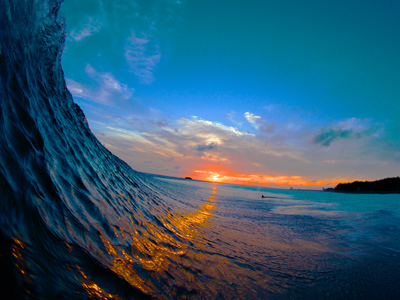
What do you know about tsunamis? Find out by playing this quiz.
Tsunamis
Tsunamis are powerful ocean waves caused by sudden movements of the sea floor. This quiz explores how they form, travel across oceans, and impact coasts worldwide.
1 .
The main primary effect of a tsunami is:
Drought
Flooding
Fire
Famine
Fire and famine are secondary effects and a tsunami does not cause a drought
2 .
A tsunami is:
a type of Chinese fish
any wave used by surfers
a powerful wave
an instrument used to measure the temperature of the oceans
Tsunamis can travel for thousands of kilometres without losing much of their destructive power
3 .
Which of the following could be an economic long-term effect of a tsunami?
Trees are replanted
Temporary housing is provided for local communities
Rubbish is cleared from farmland
Tourists stay away from affected areas
Replanting trees and clearing rubbish are environmental responses, temporary housing does cost money but is classed as a social response. Tourists staying away from the area is an economic effect as it would affect the local (and possibly the national) economy
4 .
Which of the following is a long-term response to a tsunami?
Rebuilding schools
Putting out fires
Making a news report about the tsunami
All of the above
There are many more examples of long-term responses like cleaning up the horrendous mess left after a tsunami, repairing buildings, roads and railways and developing better early-warning systems
5 .
Why might there be greater loss of life when a tsunami hits an LEDC?
The country needs foreign aid before it can begin any short-term responses to the tsunami
The country needs foreign aid before it can begin any long-term responses to the tsunami
The government of an LEDC is not interested in helping the general population
The population of poorer countries is much greater than in MEDCs
Within a few days after the tsunami, diseases like cholera can become established and spread. People have no clean drinking water so become dehydrated and ill, they have no shelter and receive no medical treatment and may die from hypothermia or injuries
6 .
In 1607, many people and their livestock living in coastal areas around the Bristol Channel were killed by a sudden flood. Eyewitness reports from survivors describe a wall of water rushing across the countryside for as far as they could see. It moved faster than people could run. The area remained under water for almost two weeks. Geographers used to think that this was a storm surge but more recently it is thought to have been a tsunami. What other observation would have confirmed the tsunami theory?
Boats bobbing up and down on the sea
Thunder and lightning at the same time as the wave came onto land
They would have seen a huge wave coming across the sea as the tsunami approached
The sea pulled back a long way from the shore just before the wave came onto the land
The theory is that an earthquake or landslide under the sea south of Ireland could have caused it but there is no real proof for this
7 .
Which of the following is a feature of a tsunami?
The water at the edge of the sea pulls back from the coast
Because of their shape, a tsunami always looks dark green
The top of a tsunami is always at least 10 metres higher than the surrounding sea water
All of the above
Tsunamis are difficult to spot out in deep sea or deep ocean areas because the top of the wave is rarely more than a few metres high
8 .
A tsunami can be formed by:
nuclear explosions
large shoals of fish
underwater earthquakes
all of the above
They can also be formed by landslides that occur underwater or at the edge of a sea or ocean
9 .
When a tsunami reaches shallower water, which of the following is true?
The height of the wave increases as it slows down
The tsunami speeds up
The height of the wave decreases
It is stopped by the beach
When it comes ashore, the height of the tsunami depends on the energy released during the earthquake or landslide that caused it
10 .
Which of the following is a short-term response to a tsunami?
Rescuing stranded people
Setting up beds in a sports hall so that survivors have somewhere to sleep
Putting out fires
All of the above
In LEDCs, this is much more difficult and often takes several days for aid to arrive from MEDCs



**Unlimited Quizzes Await You! 🚀**
Hey there, quiz champ! 🌟 You've already tackled today's free questions.
Ready for more?
Ready for more?
🔓 Unlock UNLIMITED Quizzes and challenge yourself every day. But that's
not all...
not all...
🔥 As a Subscriber you can join our thrilling "Daily Streak" against other
quizzers. Try to win a coveted spot on our Hall of Fame Page.
quizzers. Try to win a coveted spot on our Hall of Fame Page.
Don't miss out! Join us now and keep the fun rolling. 🎉
**Unlimited Quizzes Await You! 🚀**
Hey there, quiz champ! 🌟 You've already tackled today's free questions. Ready for more?
🔓 Unlock UNLIMITED Quizzes and challenge yourself every day. But that's not all...
🔥 As a Subscriber you can join our thrilling "Daily Streak" against other quizzers. Try to win a coveted spot on our Hall of Fame Page.
Don't miss out! Join us now and keep the fun rolling. 🎉




© Copyright 2016-2026 - Education Quizzes
Work Innovate Ltd - Design | Development |
Marketing
