




Ask the AI Tutor
Need help with Urban Change: Opportunities and Challenges? Ask our AI Tutor!
AI Tutor - Lucy
Connecting with Tutor...
Please wait while we establish connection
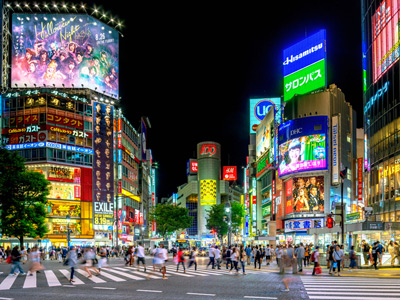
Tokyo is a megacity.
Urban Change: Opportunities and Challenges
Cities are always changing. This quiz explores how urban areas create jobs and services, but also face challenges like inequality, congestion, and environmental problems.
1 .
Which of the following is NOT a cause of traffic congestion in a MEDC city?
Poor public transport links
City centres often developed before motor vehicles
Out of town industrial estates and shopping centres
Greater car ownership
Traffic congestion increases pollution, increases the carbon footprint of a city, costs extra money for motorists stuck in traffic and wastes a lot of time. Many cities in both MEDCs and LEDCs are introducing traffic management schemes
2 .
Which of the following is not a city-centre traffic management scheme for urban areas in MEDCs?
Building shopping centres in the CBD
Park and ride schemes
Congestion charging
Bus lanes
Bus lanes can also be used by taxis and cyclists which encourages people to leave their cars at home and travel into the city centre using other means of transport
3 .
Which of the following statements is correct?
Urban populations have grown more in MEDCs than LEDCs since 1950
Urban populations have grown more in LEDCs than MEDCs since 1950
Climate change means that people prefer to live in cities as they have a better climate than rural areas
All of the above
Since 1950, the urban population in LEDCs has increased by a factor of about 5. Taken over the same time period, the urban population in MEDCs has only increased by a factor of two i.e. it has doubled
4 .
Which of the following is NOT a reason for rural to urban migration?
Poverty
Wanting a better standard of living
A need for cleaner air
Political disturbances and armed conflict
Poverty, political disturbance and armed conflict are all push factors, a better standard of living is a pull factor. Other factors include climate change making subsistence farming even less productive or even a natural disaster
5 .
In which of the following countries would you be least likely to see a shanty town development?
Germany
Bangladesh
Brazil
Senegal
Shanty towns are features of many cities in LEDCs and NICs because rural to urban migration is very high
6 .
A megacity is an urban area with a population of over ten million people. Which of the following statements about megacities is NOT true?
Housing is more readily available in LEDC megacities than MEDC megacities
When compared to an MEDC megacity, the layout of LEDC megacities is usually more irregular
Ensuring safe, clean water supplies is a problem that is faced by all megacities
Disposal of waste from any megacity requires careful organisation
Other issues that all megacities have in common are food and energy supplies and traffic congestion
7 .
Which of the following is one way that MEDCs deal with housing shortages in their cities?
They send people back to their original homes
They renovate old housing stock to provide affordable homes
They knock down old houses and make people live in shanty towns to save money
They give free houses to people moving to the city from the country
Rural to urban migration is much less in MEDCs
8 .
Which of the following does not give local authorities an opportunity to reduce the carbon footprint of their town or city?
Housing creation
Running buses on biodiesel
Congestion charging
Building new shopping centres on the edge of the city
New houses or renovated older houses can be built to be more energy efficient. Biodiesel can reduce CO2 emissions by more than 10%. Congestion charging encourages people to use public transport instead of driving into the city. Building new shopping centres on the edge of an urban area can increase car use
9 .
Why is building affordable homes in cities difficult?
Brownfield sites are available but need to be cleared of old buildings and pollution
Land values are high
It is rare to find large plots of land for building within an urban area
All of the above
These factors make housing development an expensive business and migrants arriving in the city may not be able to afford somewhere to live
10 .
Traffic congestion, industrial decline and housing shortages are issues in MEDCs and LEDCs. Why has this become worse since the end of the Second World War?
Population growth
Lots of people were killed in the war
Pollution from factories has ruined the countryside
More people have cars
Improved healthcare has reduced infant mortality and extended life expectancy



**Unlimited Quizzes Await You! 🚀**
Hey there, quiz champ! 🌟 You've already tackled today's free questions.
Ready for more?
Ready for more?
🔓 Unlock UNLIMITED Quizzes and challenge yourself every day. But that's
not all...
not all...
🔥 As a Subscriber you can join our thrilling "Daily Streak" against other
quizzers. Try to win a coveted spot on our Hall of Fame Page.
quizzers. Try to win a coveted spot on our Hall of Fame Page.
Don't miss out! Join us now and keep the fun rolling. 🎉
**Unlimited Quizzes Await You! 🚀**
Hey there, quiz champ! 🌟 You've already tackled today's free questions. Ready for more?
🔓 Unlock UNLIMITED Quizzes and challenge yourself every day. But that's not all...
🔥 As a Subscriber you can join our thrilling "Daily Streak" against other quizzers. Try to win a coveted spot on our Hall of Fame Page.
Don't miss out! Join us now and keep the fun rolling. 🎉




© Copyright 2016-2026 - Education Quizzes
Work Innovate Ltd - Design | Development |
Marketing
