




Ask the AI Tutor
Need help with Urbanisation? Ask our AI Tutor!
AI Tutor - Lucy
Connecting with Tutor...
Please wait while we establish connection
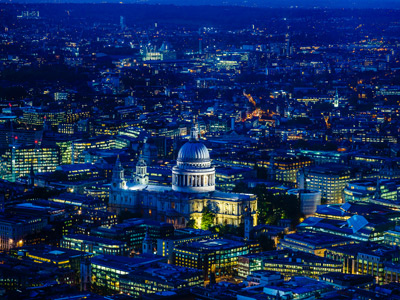
London has a population over 10 million, making it a megacity.
Urbanisation
Urbanisation is the growth of towns and cities as more people move from rural areas. This quiz explores its causes, patterns, and the challenges it creates worldwide.
1 .
Brownfield sites are in urban areas, often on disused and derelict land. Greenfield sites are in rural areas and normally on land that has never been developed before. Which of the following is an advantage of greenfield sites?
Greenfield sites are mostly available in the North and the Midlands of the UK
Greenfield sites reduce urban sprawl
Greenfield sites are cheaper to build on
Greenfield sites clear and clean the land before development can begin
Since little needs to be done to clean up the site before use, and since much larger developments can be completed, the cost per unit for the developer is reduced
2 .
Brownfield sites are in urban areas, often on disused and derelict land. Greenfield sites are in rural areas and normally on land that has never been developed before. Which of the following is an advantage of brownfield sites?
Brownfield sites are often in deprived areas and unpopular with property purchasers
Reusing derelict brownfield sites can improve the entire area and increase property values
Gentrification of the area caused by brownfield sites being developed can increase prices and force local residents out
Contaminated land found on brownfield sites may be unsuitable for residential properties
Urban renewal of both derelict sites and old properties means that areas are improved and property prices increase. This can lead to gentrification of the area and a change in the demographics of the population
3 .
What is the definition of a sustainable city?
A city that meets both the needs of current and future residents
A city that is carbon neutral
A city that is neither growing uncontrollably nor shrinking
A city that relies on ecologically sound technologies
Key features of a sustainable city include good public transport links, safe walking and cycling routes, recycling of waste, and resources and services being open to all
4 .
World cities are those considered internationally important for trade and finance. Which of the following is not considered a world city?
Abu Dhabi
London
New York
Tokyo
World cities control a disproportionate percentage of the world's commerce. Also known as global cities, they can rise and fall as the international business landscape changes. In 1866 Liverpool was described as the only global city, now this smaller city is overshadowed by neighbouring Manchester
5 .
Which of the following are not methods of reducing traffic congestion in urban areas?
Park and ride schemes
Providing more car parks in the city centre
Cycle lanes and paths
Low emission zones
By providing car parks, more cars are encouraged to come into the city centre. By improving public transport and cycle lanes, as well as penalising car users that do enter the city, it becomes easier and cheaper to leave the car outside the city centre
6 .
How do local services and employment opportunities increase a city's sustainability?
By keeping money in the local economy
By encouraging people to migrate into the city
By increasing pollution as people use cars in the immediate area
By reducing the need for long journeys and use
Reducing transport needs reduces pollution and so improves the life of residents
7 .
What is the definition of a megacity?
Any city larger than 1 million acres
One of the top 10 largest cities in the world
Cities that have more than 50% of their country's population
Any city with more than 10 million people living in it
One of the problems defining a city's population comes from defining its boundaries. Greater London is much larger then London itself. Many city centres have surprisingly low populations as businesses and retail have taken over the streets
8 .
In many cities there exist areas of deprivation close by gentrified areas that are unaffordable to those on lower incomes. Which of the following is not a reason for deprivation in UK cities?
Poor access to education
Areas of older, run down housing
Unemployment after the decline in industry
Safety and security concerns in high crime areas
Whilst some areas have better educational opportunities than others, everyone has access to a free basic education in the UK - unlike in many less developed nations
9 .
Which of the following is a push factor in urbanisation?
Better service provision
Greater wealth
Unemployment
Improved health care
The potential for employment is often a pull factor for cities. Even in more economically advanced nations, such as the UK, people move to places like London and Manchester in the hope of finding the right job
10 .
Urbanisation can cause a number of problems. Which of the following is not an issue in more economically advanced nations?
Transport congestion
Open sewers leading to disease
Housing pressures
Pollution
Despite many people moving to cities in search of the perfect job, unemployment can also be an problem in urban areas of the UK. Added to pollution, rising house prices and traffic congestion, it's no surprise that counter urbanisation is occuring



**Unlimited Quizzes Await You! 🚀**
Hey there, quiz champ! 🌟 You've already tackled today's free questions.
Ready for more?
Ready for more?
🔓 Unlock UNLIMITED Quizzes and challenge yourself every day. But that's
not all...
not all...
🔥 As a Subscriber you can join our thrilling "Daily Streak" against other
quizzers. Try to win a coveted spot on our Hall of Fame Page.
quizzers. Try to win a coveted spot on our Hall of Fame Page.
Don't miss out! Join us now and keep the fun rolling. 🎉
**Unlimited Quizzes Await You! 🚀**
Hey there, quiz champ! 🌟 You've already tackled today's free questions. Ready for more?
🔓 Unlock UNLIMITED Quizzes and challenge yourself every day. But that's not all...
🔥 As a Subscriber you can join our thrilling "Daily Streak" against other quizzers. Try to win a coveted spot on our Hall of Fame Page.
Don't miss out! Join us now and keep the fun rolling. 🎉




© Copyright 2016-2026 - Education Quizzes
Work Innovate Ltd - Design | Development |
Marketing
