




Ask the AI Tutor
Need help with Britain: British Empire C. 1919-69 - The Growth Of Indian Demands For Independence? Ask our AI Tutor!
AI Tutor - Lucy
Connecting with Tutor...
Please wait while we establish connection
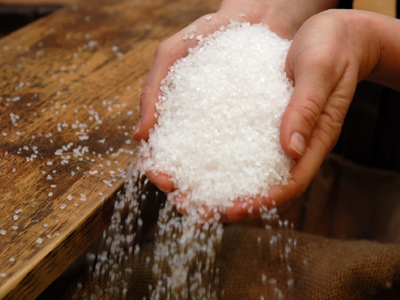
Gandhi led the 'March to the Sea' to protest about the tax on salt.
Britain: British Empire C. 1919-69 - The Growth Of Indian Demands For Independence
This GCSE History quiz looks at how Indian nationalist demands grew between the world wars, from protests and Congress campaigns to calls for full independence from British rule.
1 .
In which other area, apart from India, was Gandhi active as a radical lawyer, protesting against racial discrimination, before his return to India?
South Africa
Kenya
Uganda
Nigeria
Gandhi had grown up in India, but he had gone to London to train as a barrister. After his education he did not return immediately to the land of his birth
2 .
In 1930 Gandhi led a famous "March to the Sea" to protest about a government tax on a particular commodity. What was this commodity?
Sugar
Cotton
Tea
Salt
The violent reaction of the police on this occasion played into Gandhi's hands. Gandhi urged his followers never to answer force with force, but always to behave non-violently
3 .
Jawarhalal Nehru led a mainly Hindu party seeking to compel Britain to offer independence to India. What was the full name of this party?
The Congress Party
The Hindu League
The Indian National Congress
Congress
Gandhi and Nehru hoped that it would be possible for both Hindus and Muslims to work together in the same party to end British rule in India
4 .
In 1931 Gandhi managed to sign a deal with the then Viceroy (Governor) of India. The agreement did not last. Who was this viceroy?
Willingdon
Linlithgow
Reading
Irwin
The British were anxious to keep Gandhi out of prison, and to make progress towards Indian self-government. But they were not yet prepared to confer full sovereignty
5 .
A Muslim League was founded in 1935. Which Muslim aristocrat was responsible for this?
Ayub Khan
Zia ul-Haq
Jinnah
Zulfikar Ali Bhutto
The foundation of this organisation made it more difficult for Indians to present a united front against British rule
6 .
Churchill sent a left-wing Labour figure to India in 1942 to urge Gandhi especially to support the British war effort, as India seemed increasingly vulnerable to a Japanese attack. Who was this envoy?
Arthur Henderson
Aneurin Bevan
Sir Stafford Cripps
Michael Foot
The Indian nationalist leaders had great respect for the British Labour Party. Gandhi had met many of its members during his visit in the early 1930's. However this mission was unsuccessful
7 .
Gandhi became more militant as the war went on. Later in 1942 he began a campaign to force the British to leave. What was the name of this campaign?
British Out
British Go
Time To Go
Quit India
Gandhi realised that the British were in a weak position: squeezed between advancing Japanese armies to the east, and growing nationalist fervour in India itself
8 .
On the other hand another Hindu, Subhas Chandra Bose, set up an army to fight on the same side as the Japanese. What name was given to this army?
The Indian Nationalist Army
The Indian National Army
The Indian Independence Army
Sons of India
This was never a large military force. Many more Indians joined up in the British forces
9 .
Who replaced Wavell as Viceroy, instructed to pull the British out of India on honourable terms?
Mountbatten
Slim
Freyberg
Smuts
The new Labour Government was determined to leave India, and the new Viceroy was given a narrow timescale within which the evacuation should be concluded
10 .
Which princely state in the far north of British India was not a part of the 1947 terms, and remains a bone of contention between India and Pakistan to this day?
Punjab
Sikkim
Bhutan
Kashmir
Most parts of the former Raj were clearly dominated either by Hindus or by Muslims. This province had substantial numbers from each community



**Unlimited Quizzes Await You! 🚀**
Hey there, quiz champ! 🌟 You've already tackled today's free questions.
Ready for more?
Ready for more?
🔓 Unlock UNLIMITED Quizzes and challenge yourself every day. But that's
not all...
not all...
🔥 As a Subscriber you can join our thrilling "Daily Streak" against other
quizzers. Try to win a coveted spot on our Hall of Fame Page.
quizzers. Try to win a coveted spot on our Hall of Fame Page.
Don't miss out! Join us now and keep the fun rolling. 🎉
**Unlimited Quizzes Await You! 🚀**
Hey there, quiz champ! 🌟 You've already tackled today's free questions. Ready for more?
🔓 Unlock UNLIMITED Quizzes and challenge yourself every day. But that's not all...
🔥 As a Subscriber you can join our thrilling "Daily Streak" against other quizzers. Try to win a coveted spot on our Hall of Fame Page.
Don't miss out! Join us now and keep the fun rolling. 🎉




© Copyright 2016-2026 - Education Quizzes
Work Innovate Ltd - Design | Development |
Marketing
