




Ask the AI Tutor
Need help with Britain: British Society 1931-1951 - Britain At War 1939-45? Ask our AI Tutor!
AI Tutor - Lucy
Connecting with Tutor...
Please wait while we establish connection
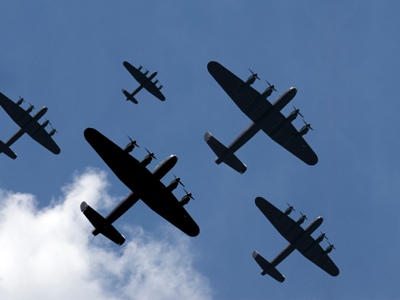
Many British civilians were killed in air raids during the war.
Britain: British Society 1931-1951 - Britain At War 1939-45
Discover what life was like in Britain during the Second World War, from the Blitz and evacuation to rationing, propaganda and the daily impact of total war.
1 .
A memorial in Central London depicts the various functions that women performed during these years. Where is this memorial situated?
In Parliament Square
In Trafalgar Square
In Whitehall
At the Imperial War Museum south of the river
This was a late tribute to the sterling work of women in the national war effort
2 .
Air raid procedures were administered by ARP wardens. What did ARP stand for?
Air Raid Procedures
Air Raid Protection
Air Raid Prevention
Air Raid Precautions
Sirens wailed, the "All Clear" sounded and Londoners were escorted to and from tube stations. All of this was supervised by ARP wardens
3 .
How many British civilians were killed in air raids between 1940 and 1945?
32,000
100,000
50,000
125,000
This figure includes victims of conventional bombing, V1s and V2s
4 .
Many women and girls served on the land, thus releasing men for military service. What name was given to this group?
Women's Land Army
Women's Land Force
Girls' Agricultural Army
Women on the Land
A productive British agriculture industry was all the more important as less food was being imported
5 .
Towards the end of the war the Germans sent flying bombs (V1s) to attack London. What nickname were they given?
Doodlebombs
Buzzbugs
Doodlebugs
Rocket Bombs
When they ran out of fuel they would plunge to the ground and explode. They made a buzzing sound until they dipped towards the ground, when they suddenly fell silent
6 .
To protect civilians from air raids the government issued a shelter to be installed outside, partially buried, covered with earth and named after a government minister. What were these shelters called?
Anderson Shelters
Morrison shelters
Churchill shelters
Bevin shelters
Such shelters were quite effective and reduced bombing casualties. However, they offered little protection in the event of a direct hit
7 .
Children were evacuated from big cities to the countryside in order to escape the expected bombing. How many children were involved?
1 million
2 million
4.5 million
3 million
Many children returned to their families when the bombing didn't occur. When air raids began in the autumn of 1940 most of them returned to the countryside
8 .
48,000 men were directed to the coal mines and other industries by the Ministry of Labour and National Service. Named after the minister responsible, what were they called?
Morrison's Boys
Bevin's Boys
Churchill's Boys
Eden's Boys
These men were in an occupation which they could not leave for military service
9 .
During the first six months of the war very little actual fighting took place on the continent. What name was given to this period?
Eerie War
Phoney War
Weird War
Ghost war
This lull was not to last. In the spring of 1940 Hitler was to attack Denmark and Norway, as well as the Low Countries and France
10 .
Older volunteers were recruited to defend the UK in the event of a German invasion. Popularly known as "Dad's Army", they were also called the Home Guard. What was their full official title?
Home Defence Army
Local Defence Force
Irregular Underground Army
Local Defence Volunteers
They would have begun a guerrilla campaign against the Germans if an invasion had ever taken place. Thankfully, their skills and enthusiasm were never put to the test
You can find more about this topic by visiting BBC Bitesize - Depression, war and recovery, 1930-1952



**Unlimited Quizzes Await You! 🚀**
Hey there, quiz champ! 🌟 You've already tackled today's free questions.
Ready for more?
Ready for more?
🔓 Unlock UNLIMITED Quizzes and challenge yourself every day. But that's
not all...
not all...
🔥 As a Subscriber you can join our thrilling "Daily Streak" against other
quizzers. Try to win a coveted spot on our Hall of Fame Page.
quizzers. Try to win a coveted spot on our Hall of Fame Page.
Don't miss out! Join us now and keep the fun rolling. 🎉
**Unlimited Quizzes Await You! 🚀**
Hey there, quiz champ! 🌟 You've already tackled today's free questions. Ready for more?
🔓 Unlock UNLIMITED Quizzes and challenge yourself every day. But that's not all...
🔥 As a Subscriber you can join our thrilling "Daily Streak" against other quizzers. Try to win a coveted spot on our Hall of Fame Page.
Don't miss out! Join us now and keep the fun rolling. 🎉




© Copyright 2016-2026 - Education Quizzes
Work Innovate Ltd - Design | Development |
Marketing
