




Ask the AI Tutor
Need help with Britain: British Society 1931-1951 - Foreign Policy Under Labour 1945-1951? Ask our AI Tutor!
AI Tutor - Lucy
Connecting with Tutor...
Please wait while we establish connection
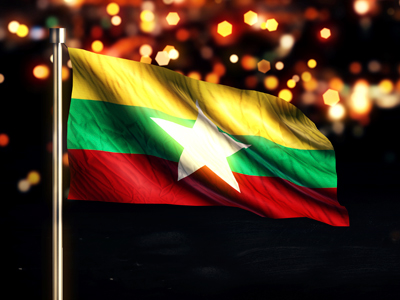
Burma gained its independence from the UK in 1948.
Britain: British Society 1931-1951 - Foreign Policy Under Labour 1945-1951
Discover how Labour handled foreign policy after 1945, from creating the United Nations and joining NATO to managing empire, the Cold War and relations with the USA.
1 .
The Labour government of 1945-50 was an enthusiastic adherent of NATO when it was set up in 1949. Where was the new body's headquarters?
Brussels
Bonn
Paris
London
By 1949 the conciliatory atmosphere of 1945 had long since dissipated - especially since the communist coup in Czechoslovakia the previous year
2 .
In 1948 the Soviet Government attempted to blockade Berlin and to force the three Western allies to leave their sectors of the city. How was this blockade defeated?
By threatening a Third World War
By forcing the way through surface corridors to Berlin
By organising an airlift and calling the bluff of the USSR not to shoot the aeroplanes down
By setting up a counter-blockade of East Berlin
Stalin calculated that any airlift would fail to bring into West Berlin sufficient supplies to sustain the city. But he realised that any attempt to shoot such aeroplanes down could trigger a "full retaliatory response"
3 .
In 1947 India and Pakistan received their independence from Britain. Further Raj territories became independent in 1948. Which one of the following was not involved in this further measure?
Burma
Ceylon
Nepal
Kashmir
The dissolution of Britain's South Asian empire encouraged other colonies elsewhere to demand independence
4 .
Britain joined the UN as a founding member. She also became a member of a smaller constituent body whose permanent members had the right to veto resolutions emanating from it. What was the name of this body?
The Security Council
The Council
The Assembly
The General Assembly
It was important to ensure that both the USA and the USSR were members of the UN
5 .
When the Korean War broke out the British government immediately supported the UN effort to remove the North Korean invaders from the south. The newly appointed British Chancellor of the Exchequer found extra cash for this cause by introducing new NHS charges for false teeth and glasses. What was his name?
Hugh Dalton
Hugh Gaitskell
Harold Wilson
John Freeman
The principle of the NHS, set up in 1948, was fundamental: it was to be free at the point of use. Therefore the introduction of charges for certain services seemed to many a denial of the principles of the health service
6 .
Who succeeded Ernest Bevin as foreign secretary in March 1951?
Herbert Morrison
Hugh Dalton
Sir Stafford Cripps
Aneurin Bevan
Bevin's death was a major blow but - in the event - Labour had little time before a further general election would hand power to the Tory opposition
7 .
In 1948 Britain agreed to relinquish a UN mandate, and to hand the problem back to the UN. Which was the territory concerned?
Palestine
Transjordan
Iraq
Syria
Bevin became fed up by the problems: ethnic and religious. There seemed from the military and strategic point of view no advantage in hanging on
8 .
In 1947 the British government told the US government that they could no longer shoulder the burden of keeping both Greece and Turkey secure from communist infiltration. What was President Truman's reply?
Britain would be allowed to relinquish its responsibilities in Turkey, but would have to continue to guarantee Greece
Britain could abandon Greece, but must continue its obligations to Turkey
The United States (under the so-called Truman Doctrine) would take over lock, stock and barrel Britain's duties throughout this area
The United States would - in alliance with Britain - ensure the security of "free peoples" against communist aggression throughout the world
This was effectively the end of US isolationism. In other words the US was now taking on an open-ended commitment
9 .
Attlee had to fly suddenly to represent Britain at an international conference in August 1945, as he had won the general election. Where was this conference held?
Yalta
Tehran
Casablanca
Potsdam
Churchill had originally represented Britain here, but he had had to return in order to fight the general election campaign at home
10 .
In 1946 a British economist crossed the Atlantic to negotiate a $5 billion loan from the USA. Who was this?
John Maynard Keynes
Austin Robinson
Joan Robinson
Wynne Godley
The Americans drove a hard bargain, both in respect of the interest rate charged and the length of the repayment period
You can find more about this topic by visiting BBC Bitesize - Depression, war and recovery, 1930-1955



**Unlimited Quizzes Await You! 🚀**
Hey there, quiz champ! 🌟 You've already tackled today's free questions.
Ready for more?
Ready for more?
🔓 Unlock UNLIMITED Quizzes and challenge yourself every day. But that's
not all...
not all...
🔥 As a Subscriber you can join our thrilling "Daily Streak" against other
quizzers. Try to win a coveted spot on our Hall of Fame Page.
quizzers. Try to win a coveted spot on our Hall of Fame Page.
Don't miss out! Join us now and keep the fun rolling. 🎉
**Unlimited Quizzes Await You! 🚀**
Hey there, quiz champ! 🌟 You've already tackled today's free questions. Ready for more?
🔓 Unlock UNLIMITED Quizzes and challenge yourself every day. But that's not all...
🔥 As a Subscriber you can join our thrilling "Daily Streak" against other quizzers. Try to win a coveted spot on our Hall of Fame Page.
Don't miss out! Join us now and keep the fun rolling. 🎉




© Copyright 2016-2026 - Education Quizzes
Work Innovate Ltd - Design | Development |
Marketing
