




Ask the AI Tutor
Need help with Britain: Indian Independence - How Britain Dealt With The Issue? Ask our AI Tutor!
AI Tutor - Lucy
Connecting with Tutor...
Please wait while we establish connection
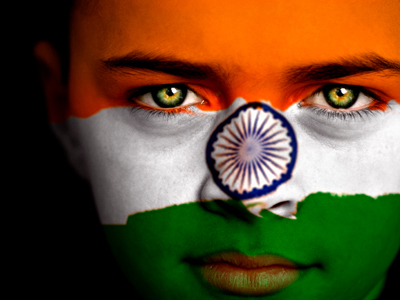
India gained its independence from the UK in 1947.
Britain: Indian Independence - How Britain Dealt With The Issue
This GCSE History quiz looks at how British governments responded to Indian nationalism, using reforms, negotiations and partition to manage independence while trying to protect British interests.
1 .
In 1919 British troops opened fire on an unarmed crowd of demonstrators in the Punjab, killing at least 379 people. Who was the commander that ordered this?
Major-General Clive
Field Marshal Wavell
Field Marshall Haig
Brigadier-General Dyer
This event encouraged many Indians to distrust the British and to support Congress
2 .
Eventually the British decided that they would have to divide India into a Muslim state and a Hindu state. What name was given to this kind of division?
Secession
Cession
Partition
Irredentism
This was a similar "solution" to that adopted for Ireland in 1922
3 .
After the Second World War a new Viceroy negotiated with the Hindu and Muslim leaders the terms of independence for India. One further complication was the existence of many states still ruled by their traditional leaders, who would need to be coaxed into joining a new independent country. What name was given to these areas like Hyderabad, Mysore and Baroda?
Princely states
Traditional states
Feudal states
Royal states
Negotiations had to take place with each one of these regions, whereby they lost political power, but retained their wealth
4 .
In November 1930 a conference opened in London to discuss India's future. What was the conference called?
The Summit Conference
The Round Table Conference
The Indian Constitutional Conference
The Government of India Conference
Gandhi attended on behalf of Congress and made many useful contacts in London, especially in the Labour Party and the trade union movement
5 .
In 1905 the Viceroy divided one of India's provinces: a move which Congress suspected as an attempt to split Muslims from Hindus. Which province was involved?
Punjab
Uttar Pradesh
Orissa
Bengal
This area had a significant number of Muslims
6 .
Which British Conservative politician had done his best to delay Indian constitutional reform in the 1930's, and in the late 1940's - now as Leader of the Opposition - opposed Indian independence?
Sir Anthony Eden
Winston Churchill
R. A. Butler
Sir Leslie Hore-Belisha
Many Conservatives were against independence for India, as they felt that this would hasten independence for other colonies elsewhere
7 .
What status did India enjoy after 1950
An independent republic outside the Commonwealth
An independent republic within the Commonwealth
Independent within the Commonwealth, recognizing the British monarch as head of state.
Independent outside the Commonwealth, recognizing the British monarch as head of state.
Indians were careful to take a while to determine the nature of their new relationship with Britain
8 .
In 1919 the Government of India Act was passed, which introduced the sharing of power between elected Indians and British officials. What name was given to this concept?
Autonomy
Diarchy
Autarky
Communalism
For the British this was a radical step, but it did not go far enough for committed nationalists
9 .
The Indian National Congress demanded self-rule at an early stage, but Britain would not countenance this. What Hindi word was used to describe this aspiration?
Swaraj
Satyagraha
Kitar
Chandapura
Britain was prepared to reform the government of the Raj, but at a very gradual pace, which frustrated nationalists
10 .
When Britain went to war with Germany in September 1939, 2.5 million Indians joined up to fight on Britain's side. What name was given to this pro-British force?
The Indian National Army
The British Indian Army
The Anglo-Indian Army
The Indian British Army
A minority of Indian nationalist militants collaborated with the Japanese, but far more supported Britain



**Unlimited Quizzes Await You! 🚀**
Hey there, quiz champ! 🌟 You've already tackled today's free questions.
Ready for more?
Ready for more?
🔓 Unlock UNLIMITED Quizzes and challenge yourself every day. But that's
not all...
not all...
🔥 As a Subscriber you can join our thrilling "Daily Streak" against other
quizzers. Try to win a coveted spot on our Hall of Fame Page.
quizzers. Try to win a coveted spot on our Hall of Fame Page.
Don't miss out! Join us now and keep the fun rolling. 🎉
**Unlimited Quizzes Await You! 🚀**
Hey there, quiz champ! 🌟 You've already tackled today's free questions. Ready for more?
🔓 Unlock UNLIMITED Quizzes and challenge yourself every day. But that's not all...
🔥 As a Subscriber you can join our thrilling "Daily Streak" against other quizzers. Try to win a coveted spot on our Hall of Fame Page.
Don't miss out! Join us now and keep the fun rolling. 🎉




© Copyright 2016-2026 - Education Quizzes
Work Innovate Ltd - Design | Development |
Marketing
