




Ask the AI Tutor
Need help with Britain: Warfare Between AD 1350 and 1700? Ask our AI Tutor!
AI Tutor - Lucy
Connecting with Tutor...
Please wait while we establish connection
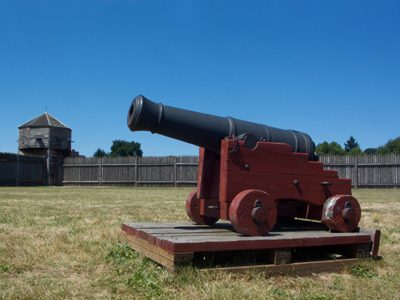
Gunpowder become more widely available at the end of the 14th Century.
Britain: Warfare Between AD 1350 and 1700
Explore how warfare in Britain changed between 1350 and 1700, from armoured knights and longbowmen to gunpowder weapons, new tactics, and powerful early modern states.
1 .
Which of the following is not a firearm?
Pike
Flintlock
Musket
Revolver
During this period firearms replaced other infantry weapons, reducing the role of cavalry and enhancing the role of the infantry
2 .
At which fort on the Thames Estuary did Queen Elizabeth I rally her troops in 1588 as the Spanish Armada threatened to invade England?
Gravesend
Shoeburyness
Tilbury
Sheerness
Elizabeth had done her best to assemble an army from the county militias, as she expected a Spanish landing somewhere in South East England. She made a rousing speech, but could not know that the danger of an invasion had now passed as the Spanish fleet had been dispersed by Drake's fire ships and a southerly wind
3 .
Oliver Cromwell mustered a full-time professional army, which helped him to win the 1645 campaign against Charles I's depleted forces. What was this force called?
The New Model Army
The New Modern Army
The Model Army
The New Army
Cromwell emerged as the outstanding Parliamentary commander during the Civil War. He saw that only a fully professional body could defeat the King and ensure Parliament's security after the war
4 .
What name is given to a soldier of fortune - i.e. one who fights, not for a cause, but for money?
Mercenary
Troubadour
Minuteman
Militiaman
This period saw an increased use of such troops who often came from Scotland, Switzerland or Germany. They would fight well if paid on time, but they could mutiny or even go over to the other side if not paid
5 .
Which port did Henry V besiege before moving inland to engage the French at Agincourt?
Honfleur
Le Havre
Harfleur
Calais
Henry was keen to defeat the main French army, and so he decided to move rapidly inland before returning to England
6 .
In which English county did Henry VIII construct the following artillery castles around 1530? Sandgate, Deal, Walmer, Sandown.
Sussex
Essex
Hampshire
Kent
Henry's fear of a French invasion led him to construct a series of low artillery castles on the south coast of England
7 .
Which of the following was a hand-held firearm, becoming a strong feature of warfare by the early sixteenth century?
Arquebus
Culverin
Howitzer
Revolver
Gunpowder became more widely available from the end of the fourteenth century, and was used both in hand-held weapons for the infantry and in artillery
8 .
At which major battle did Cromwell defeat the Royalist forces in 1645, effectively winning the Civil War for Parliament?
Marston Moor
Newbury
Edgehill
Naseby
Cromwell had learnt the effective use of cavalry and he gradually wore down Royalist resistance in the North and the Midlands
9 .
Which infantry weapon is usually regarded as the main factor in the English victory at Agincourt in 1415?
Crossbow
Musket
Pike
Longbow
The English army was outnumbered at Agincourt, and weary and disease-ridden after the march from the coast. It faced the flower of the French nobility, who fought as mounted knights
10 .
Which English commander ravaged the French countryside in 1356 prior to the English victory at Poitiers in the same year?
Edward III
Edward the Black Prince
The Earl of Warwick
The Earl of Shrewsbury
This technique was known as a chevauchee, whereby an army would lay waste to the countryside to deny food and shelter to its opponents
You can find more about this topic by visiting BBC Bitesize - Britain, migration and empire overview, c790 - present day



**Unlimited Quizzes Await You! 🚀**
Hey there, quiz champ! 🌟 You've already tackled today's free questions.
Ready for more?
Ready for more?
🔓 Unlock UNLIMITED Quizzes and challenge yourself every day. But that's
not all...
not all...
🔥 As a Subscriber you can join our thrilling "Daily Streak" against other
quizzers. Try to win a coveted spot on our Hall of Fame Page.
quizzers. Try to win a coveted spot on our Hall of Fame Page.
Don't miss out! Join us now and keep the fun rolling. 🎉
**Unlimited Quizzes Await You! 🚀**
Hey there, quiz champ! 🌟 You've already tackled today's free questions. Ready for more?
🔓 Unlock UNLIMITED Quizzes and challenge yourself every day. But that's not all...
🔥 As a Subscriber you can join our thrilling "Daily Streak" against other quizzers. Try to win a coveted spot on our Hall of Fame Page.
Don't miss out! Join us now and keep the fun rolling. 🎉




© Copyright 2016-2026 - Education Quizzes
Work Innovate Ltd - Design | Development |
Marketing
