




Ask the AI Tutor
Need help with Britain: Warfare From 1900 To Present Day? Ask our AI Tutor!
AI Tutor - Lucy
Connecting with Tutor...
Please wait while we establish connection
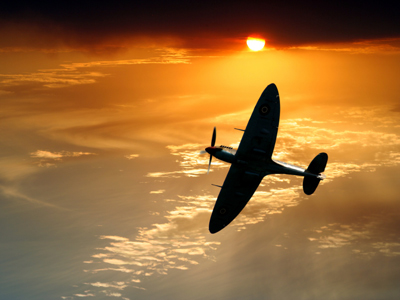
"Never in the field of human conflict was so much owed by so many to so few." - Winston Churchill.
Britain: Warfare From 1900 To Present Day
From trenches and tanks to drones and nuclear weapons, this GCSE History quiz explores how warfare changed Britain and the wider world after 1900.
1 .
What kind of weapon was the German V2?
A rocket
A flying bomb
A torpedo boat
A bomber aircraft
Even after the Allied landings in Italy and France the Germans were able to threaten Britain and its forces, for they still controlled
much occupied land and coastline
2 .
Which of the following gases was used as a weapon on the Western Front between 1914 and 1918?
Sarin
Mustard Gas
Carbon Monoxide
Methane
Both sides used gas, especially when the prevailing wind suited them. Many soldiers lost their sight as a result of gas - even if only temporarily
3 .
Which nuclear-armed state tested its nuclear weapons at Bikini Atoll in the Pacific after the Second World War?
France
The United States
The Soviet Union
Great Britain
Nuclear weapons needed testing, preferably a long way away from human habitation
4 .
The USA and its British ally used the Polaris and Trident delivery systems to deliver a nuclear payload in the event of war. What kind of platform did these two systems use?
Bomber aircraft
Artillery shells
Submarines
Surface warships
The two states were looking for a system that was fast and relatively difficult to identify and destroy
5 .
Which kind of nuclear-armed missiles arrived at RAF Greenham Common during the 1980's?
Minuteman
Titan
Cruise
Patriot
Several NATO member states asked for US assistance in the 1980's to deter the SS20 rockets that the USSR had just deployed on its western border
6 .
Which British commander during the Great War was referred to by his critics as "the Butcher of the Somme"?
Sir John French
Rawlinson
Lord Kitchener
Haig
Generals found it difficult to devise strategies on the Western Front that would not involve heavy casualties. They had to have an eye to British public opinion, to the feelings of allies like France and Russia and to the failure of alternative tactics like the Dardanelles campaign against Turkey
7 .
Which general commanded United Nations forces during the 1991 Gulf War?
Schwarzkopf
De La Billiere
Westmoreland
Colin Powell
The UN assembled a coalition drawn from a wide variety of member states to remove Iraqi forces from Kuwait
8 .
Prime Minister Winston Churchill was famous for his oratory. In one 1940 speech he said, "Never in the field of human conflict has so much been owed by so many to so few". To which group in the British armed forces was he referring?
The soldiers returning from the Dunkirk beaches
The "Dambuster" Squadron 617
RAF Fighter Command
The Home Guard
In 1940 Britain was in a precarious position, following the fall of France, Norway and the Low Countries. Moreover Hitler seemed to be preparing to invade across the Channel
9 .
Which was the only major military campaign in the First World War on the Western Front in which the attacking forces sustained less casualties than the defenders?
The Somme
Passchendaele
Verdun
Loos
In most Great War battles the attackers suffered greater casualties than the defenders. Trench warfare after all suited defensive weaponry and tactics: barbed wire, snipers, machine guns, etc
10 .
Which method did Britain use to recruit troops at the beginning of the Great War?
Voluntary enlistment
Conscription
The Press Gang
The Draft
Britain had historically been a great naval power, not a military one. In 1914, therefore, a much larger army was suddenly needed
You can find more about this topic by visiting BBC Bitesize - Britain, migration and empire overview, c790 - present day



**Unlimited Quizzes Await You! 🚀**
Hey there, quiz champ! 🌟 You've already tackled today's free questions.
Ready for more?
Ready for more?
🔓 Unlock UNLIMITED Quizzes and challenge yourself every day. But that's
not all...
not all...
🔥 As a Subscriber you can join our thrilling "Daily Streak" against other
quizzers. Try to win a coveted spot on our Hall of Fame Page.
quizzers. Try to win a coveted spot on our Hall of Fame Page.
Don't miss out! Join us now and keep the fun rolling. 🎉
**Unlimited Quizzes Await You! 🚀**
Hey there, quiz champ! 🌟 You've already tackled today's free questions. Ready for more?
🔓 Unlock UNLIMITED Quizzes and challenge yourself every day. But that's not all...
🔥 As a Subscriber you can join our thrilling "Daily Streak" against other quizzers. Try to win a coveted spot on our Hall of Fame Page.
Don't miss out! Join us now and keep the fun rolling. 🎉




© Copyright 2016-2026 - Education Quizzes
Work Innovate Ltd - Design | Development |
Marketing
