




Ask the AI Tutor
Need help with Cold War: 1945-1953 - Origins And Early Crises? Ask our AI Tutor!
AI Tutor - Lucy
Connecting with Tutor...
Please wait while we establish connection
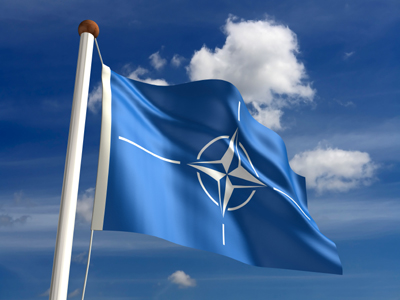
NATO was formed in 1948 in an attempt to deter Soviet aggression.
Cold War: 1945-1953 - Origins And Early Crises
Test your knowledge of the early Cold War. This GCSE History quiz explores origins, rival superpowers and the first crises between 1945 and 1953.
1 .
How did the Western Allies defeat the Soviet blockade of West Berlin between 1947 and 1948?
By threatening nuclear strikes
By airlifting supplies into West Berlin from the three Western zones of Germany
By forcing a way, using military means, to West Berlin on surface routes like railways and motorways
By imposing economic sanctions on the USSR and its allies
The Western allies felt that they had to respond to this blatant Soviet challenge. However, they were anxious to do nothing that could provoke a third world war
2 .
The Allies determined that German war criminals would be put on trial. Where did these trials take place in 1946?
Aachen
Berlin
Munich
Nuremberg
The allies felt strongly that Germany had waged an aggressive war, and that serious crimes against humanity (like the Holocaust) had been committed, which should be tried formally by the four main allies
3 .
Which of the following states was not a founder member of NATO?
Canada
France
Denmark
Sweden
The North Atlantic Treaty Organisation aimed to deter Soviet threats after 1948. It consisted of the main states around the North Sea and the North Atlantic, and some Mediterranean ones
4 .
Which post war American president gave his name in the 1940s to the doctrine that stated that the USA would come to the aid of "free peoples" menaced by Communist aggression?
Roosevelt
Truman
Eisenhower
Kennedy
After Britain had made clear that it could no longer alone resist the advance of Communism in states like Greece and Turkey, the USA replied with a proactive doctrine committing the United States to defend "free peoples" wherever they might be challenged
5 .
Which international conference after the end of World War II was held in Germany to define the settlement between the defeated power and the victorious allies?
Potsdam
Casablanca
Tehran
Yalta
The Allies met regularly as the war progressed to decide on aims and priorities. But in 1945 they had to re-order much of Europe
6 .
Which American presidential candidate promised in 1952 to travel to Korea to break the deadlock in the war there?
Taft
Truman
Eisenhower
Nixon
The Korean War had reached a kind of stalemate by the time of the 1952 US presidential election. The main problem was the intervention of Communist China following General Douglas MacArthur's proposal to advance into Chinese territory
7 .
In 1950 the United Nations Security Council resolved to assist a UN member faced with an attack by a Communist state on its northern border. Which state was the victim?
South Vietnam
Thailland
South Korea
Malaya
The majority of the UN Security Council felt that threats of aggression must be nipped in the bud. They remembered the aggression committed by Hitler and Mussolini in the 1930s, and the failure of the League of Nations to resist this
8 .
Which Central European country experienced a coup in 1948, in which the Communists seized power and became part of the Soviet sphere of interest?
Hungary
Austria
Czechoslovakia
Poland
Most Central and Eastern European states had become Communist by 1948, but - from the Russian point of view - there remained a significant gap in what came to be called the "Iron Curtain"
9 .
In which East European city did serious riots occur in 1953, following the news of Stalin's death? There was clearly an expectation that Stalin's passing would be followed by liberalisation of the tight dictatorships that prevailed in Communist states.
Berlin
Prague
Budapest
Warsaw
NATO members hoped for a "thaw" in relations with the USSR and its "satellites". Many citizens in Communist states hoped for a relaxation of the harsh regimes under which they lived
10 .
In 1949 the situation changed again in favour of Communism when China emerged as a Communist power, following the defeat of the Kuomintang in the Civil War. Who now became China's leader?
Chiang Kai-Shek
Sun Yat Sen
Mao Zedong
Chou En Lai
A civil war had raged in China between Communists and Nationalists since the 1920s. The two sides coalesced to some extent, from 1931 onwards, to confront the Japanese invader, but war resumed in earnest after the defeat of the Japanese in 1945



**Unlimited Quizzes Await You! 🚀**
Hey there, quiz champ! 🌟 You've already tackled today's free questions.
Ready for more?
Ready for more?
🔓 Unlock UNLIMITED Quizzes and challenge yourself every day. But that's
not all...
not all...
🔥 As a Subscriber you can join our thrilling "Daily Streak" against other
quizzers. Try to win a coveted spot on our Hall of Fame Page.
quizzers. Try to win a coveted spot on our Hall of Fame Page.
Don't miss out! Join us now and keep the fun rolling. 🎉
**Unlimited Quizzes Await You! 🚀**
Hey there, quiz champ! 🌟 You've already tackled today's free questions. Ready for more?
🔓 Unlock UNLIMITED Quizzes and challenge yourself every day. But that's not all...
🔥 As a Subscriber you can join our thrilling "Daily Streak" against other quizzers. Try to win a coveted spot on our Hall of Fame Page.
Don't miss out! Join us now and keep the fun rolling. 🎉




© Copyright 2016-2026 - Education Quizzes
Work Innovate Ltd - Design | Development |
Marketing
