




Ask the AI Tutor
Need help with Cold War: 1954-1957 - Hungary 1956, The Suez Crisis? Ask our AI Tutor!
AI Tutor - Lucy
Connecting with Tutor...
Please wait while we establish connection
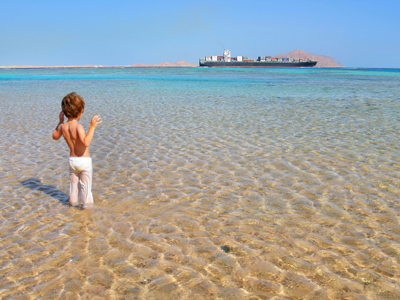
In 1956 Egypt nationalised the Suez Canal.
Cold War: 1954-1957 - Hungary 1956, The Suez Crisis
Explore the Cold War in the 1950s, from the Hungarian Uprising to the Suez Crisis, and see how these events exposed tensions between East and West.
1 .
In which city was the agreement signed which brought an end to French intervention in Indo-China, and divided Vietnam into two parts?
Geneva
Paris
London
Rome
The French, trying to recover their former colony, were defeated by Vietnamese Communist forces at Dien Bien Phu in 1954. An international conference ensued, that allowed for a French withdrawal and the division of Vietnam into two states: North and South
2 .
Which Central European country was occupied by the victorious states from the Second World War until 1955, when a mutual withdrawal was arranged: on condition that the state concerned should remain neutral?
West Germany
Austria
Italy
Hungary
The USSR was keen to concentrate on defending those parts of the "Iron Curtain" that were most essential to her defence
3 .
Which country's membership of NATO in 1955 infuriated the USSR and its allies, leading to the setting up of the Warsaw Pact?
West Germany
France
Italy
Hungary
The USSR and its Allies regarded any expansion of NATO as a direct and serious threat
4 .
Which Soviet leader authorised Russian forces to enter Hungary in the autumn of 1956 to put down a "counter revolution"?
Bulganin
Malenkov
Khrushchev
Beria
The USSR was not prepared to accept any liberalisation of the Communist government in Hungary, still less any intention to leave the Warsaw Pact
5 .
Which Hungarian leader was captured by invading Soviet forces in 1956, and later executed?
Laszlo Rajk
Imre Nagy
Matjas Rakosi
Janos Kadar
The Russian authorities put the former Hungarian leader to death, hoping that this would serve as a deterrent to others who might consider straying from the Soviet line
6 .
In 1956 the Egyptian leader announced the nationalisation of the Suez Canal. Who was he?
Colonel Nasser
General Neguib
King Farouk
Anwar Sadat
The Egyptian leader sought to use the revenues from the canal to build a "high dam" on the Nile, giving Egypt ample electricity
7 .
Which British prime minister used force, together with France, to attempt to recover the Canal?
Eden
Churchill
MacMillan
Butler
The British leadership saw the Egyptian government as similar to Hitler and Mussolini in the 1930s. They further believed that force (rather than appeasement) was the way to deal with what they saw as naked aggression
8 .
Which American president refused to support British and French policy over Suez, complaining that he had not been consulted?
Truman
Eisenhower
Dulles
Harriman
The United States regarded Britain and France as dangerous aggressors, especially as the USSR seemed to be getting away with its attack on Hungary at the same time
9 .
What name is given to the speech delivered to the Russian Communist Party in 1956, listing and describing Stalin's crimes against his own people?
The Secret Speech
The Truth Speech
Stalin's Crimes: the Full Truth
The Great Speech
Communist Party members were astonished to hear from the new leaders details of Stalin's crimes
10 .
Which Russian name is given to the first Russian satellite sent into space to orbit the earth in 1957, thus stealing a march on the Americans?
Laika
Vostok
Sputnik
Gagarin
Russia's NATO opponents were astonished to realise that the USSR was ahead of them in the "Space Race"



**Unlimited Quizzes Await You! 🚀**
Hey there, quiz champ! 🌟 You've already tackled today's free questions.
Ready for more?
Ready for more?
🔓 Unlock UNLIMITED Quizzes and challenge yourself every day. But that's
not all...
not all...
🔥 As a Subscriber you can join our thrilling "Daily Streak" against other
quizzers. Try to win a coveted spot on our Hall of Fame Page.
quizzers. Try to win a coveted spot on our Hall of Fame Page.
Don't miss out! Join us now and keep the fun rolling. 🎉
**Unlimited Quizzes Await You! 🚀**
Hey there, quiz champ! 🌟 You've already tackled today's free questions. Ready for more?
🔓 Unlock UNLIMITED Quizzes and challenge yourself every day. But that's not all...
🔥 As a Subscriber you can join our thrilling "Daily Streak" against other quizzers. Try to win a coveted spot on our Hall of Fame Page.
Don't miss out! Join us now and keep the fun rolling. 🎉




© Copyright 2016-2026 - Education Quizzes
Work Innovate Ltd - Design | Development |
Marketing
