




Ask the AI Tutor
Need help with Cold War: The Cuba Crisis Of 1962? Ask our AI Tutor!
AI Tutor - Lucy
Connecting with Tutor...
Please wait while we establish connection
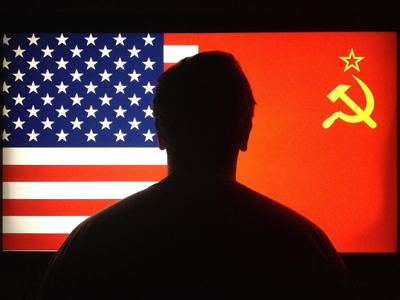
The UN brokered an agreement between the USA and the USSR on the 28th of October 1962.
Cold War: The Cuba Crisis Of 1962
Discover why the Cuban Missile Crisis of 1962 brought the world close to nuclear war and how leaders in Washington and Moscow stepped back from disaster.
1 .
The Cuban Crisis led to the setting up of a direct telephone link between the White House and the Kremlin, which made it easier in the future for crises to be defused. What name was given to this 'phone line?
The Hotline
The Scrambler 'phone
Speedlink
Summit Call
This 'phone line has been in regular use since 1963. Previously communication was difficult: traditionally contact between one country and another was carried out via ambassadors and foreign ministries, which could be a lengthy process
2 .
The Cuba Crisis also ushered in a nuclear test ban treaty (1963), and a further treaty in 1968 which encouraged countries that were tempted to acquire nuclear weapons to refrain from doing so. What was this latter agreement called?
The Nuclear Disarmament Agreement
The Nuclear Non-Proliferation Treaty
The Nuclear Ban Treaty
The International Atomic Weapons Disarmament Agreement
The Cuba Crisis had brought the world to the edge of the nuclear abyss. Statesmen now sought deals that would prevent this ever happening again
3 .
What type of reconnaissance aircraft did the USA use to photograph suspected missile sites on the Cuban mainland?
B52
Dakota
U2
Hercules
Reconnaissance photographs from these flights showed that the Russians were setting up offensive missile sites in the Cuban countryside
4 .
Which British Conservative prime minister was in regular touch by telephone throughout the crisis with Kennedy, and supported the US stance throughout?
Churchill
Eden
Douglas-Home
MacMillan
The USA received consistent support during the Cuba Crisis from its allies in NATO and other defence pacts. The British government was especially supportive, an example - perhaps - of the "Special Relationship" between the two English-Speaking nations
5 .
In 1961 the US supported an invasion attempt of the island of Cuba by anti-Castro forces based in Florida. The invasion failed ignominiously, but Castro - fearing further attacks - asked the Soviet Union for weapons that would deter more US-backed assaults. What was the name of the ill-fated invasion attempt in 1961?
The Bay of Pigs
Guantanamo Bay
The Gulf of Batabano
Gulf of Ana Maria
The 1961 attack by US-backed forces gave the Soviet Union the opportunity to introduce into the Caribbean theatre both defensive and offensive missiles, capable of altering the nuclear arms balance in the Cold War
6 .
Kennedy decided to surround Cuba with US warships to ensure that no further weaponry entered the island. What name did he give to this policy?
Embargo
Siege
Quarantine
Blockade
Kennedy believed that this policy was a useful compromise between ignoring the Soviet threat and over-reacting to it in an aggressive way
7 .
Secretly the US agreed to withdraw its missiles from Turkey, a NATO member which shared a common border with the Soviet Union. The Russians had long complained that their action in Cuba was simply redressing a balance that had long been out of kilter. What kind of missiles had been deployed in Turkey?
Patriot
Cruise
Jupiter
Minuteman
A total of 100 Jupiter missiles were built between 1956-1961
8 .
The US representative at the United Nations presented the incriminating aerial photographs to the Assembly, and asked for the Soviet delegate's reaction. Who was this US diplomat?
Dean Rusk
Hubert Humphrey
Adlai Stevenson
Robert McNamara
The photographs gained by the US spy 'plane embarrassed the Soviet Union, which delayed making a response to the US allegations
9 .
The United Nations brokered an agreement on the 28th of October 1962. Who was the Secretary-General who achieved this?
Dag Hammarskjold
U Thant
Kurt Waldheim
Trygve Lie
Secretaries-General of the UN were normally chosen from neutral powers, so that they could receive support from both sides in the Cold War. Several of them came from Third World countries. Thant himself came from Burma
10 .
Kennedy's advisors were divided in their advice as to what action the US should take. Which air force general urged air attacks on Cuba followed by the toppling of the Castro regime?
Westmoreland
MacArthur
Curtis le May
Colin Powell
Kennedy's options ranged from doing nothing in response to the Soviet militarisation, to launching a full-scale assault on the island of Cuba



**Unlimited Quizzes Await You! 🚀**
Hey there, quiz champ! 🌟 You've already tackled today's free questions.
Ready for more?
Ready for more?
🔓 Unlock UNLIMITED Quizzes and challenge yourself every day. But that's
not all...
not all...
🔥 As a Subscriber you can join our thrilling "Daily Streak" against other
quizzers. Try to win a coveted spot on our Hall of Fame Page.
quizzers. Try to win a coveted spot on our Hall of Fame Page.
Don't miss out! Join us now and keep the fun rolling. 🎉
**Unlimited Quizzes Await You! 🚀**
Hey there, quiz champ! 🌟 You've already tackled today's free questions. Ready for more?
🔓 Unlock UNLIMITED Quizzes and challenge yourself every day. But that's not all...
🔥 As a Subscriber you can join our thrilling "Daily Streak" against other quizzers. Try to win a coveted spot on our Hall of Fame Page.
Don't miss out! Join us now and keep the fun rolling. 🎉




© Copyright 2016-2026 - Education Quizzes
Work Innovate Ltd - Design | Development |
Marketing
