




Ask the AI Tutor
Need help with Crime And Punishment: The Ancient World? Ask our AI Tutor!
AI Tutor - Lucy
Connecting with Tutor...
Please wait while we establish connection
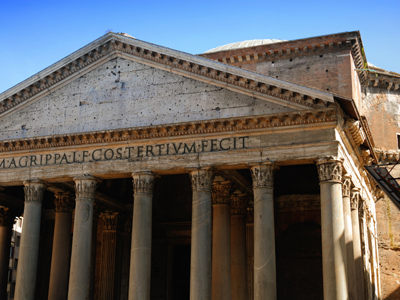
Throughout the Roman Empire, honour had to be accorded to the Roman gods.
Crime And Punishment: The Ancient World
From ancient Egypt to early Rome, crime and punishment shaped everyday life. Test what you know about laws, trials, and penalties in the ancient world.
1 .
Slaves had no legal identity and couldn't own property. Which special form of punishment was reserved for them?
Fines
Burning at the Stake
Whipping
Torture
Other sections of society, like nobles and ordinary citizens, had their own certain punishments - reserved just for them!
2 .
Which paid officials could fine people for selling underweight bread or leaving a mess in the street?
Vigiles
The Urban Cohort
Aediles
Local magistrates
Most of the powers of the Aediles were removed by the first Roman Emperor, Augustus
3 .
The punishment of fighting to the death in the arena was only imposed for exceptionally serious crimes, such as refusing to obey the Emperor's authority. What name was given to those with whom the condemned had to fight?
Pugilists
Gladiators
Combatants
Warriors
These fights were of course always to the death. Entering the arena the men would shout in the direction of the Emperor: "Caesar! Those who are about to die salute you!"
4 .
In Rome itself, slaves could be branded if they tried to escape, and put to death if they tried to kill their master. In the latter case, what form of execution was employed?
Crucifixion
Beheading
Stoning
Being hurled from a cliff
This was public execution, designed to deter onlookers from committing a similar offence
5 .
Throughout the Empire religious toleration was the norm, but certain conditions applied. What were these?
Honour had to be accorded to Roman gods
Other religions' holidays had to be observed
Freedom to change religion was guaranteed
All other faiths would receive the same level of toleration, subject to similar terms
Breach of these conditions would provoke punishment like enslavement or confiscation of goods
6 .
Decimation was a punishment inflicted on whole legions (Roman military units). What did this punishment consist of?
Executing half of the regiment
Executing one tenth of the legion's members
Fining the legionaries 10% of their pay
Fining the legionaries half of their pay
This form of collective punishment was regarded by the authorities as a useful deterrent
7 .
In the provinces, the role of a police force was taken by which group?
Locally raised constables
Units of the Roman Army
Locally recruited paramilitaries
Freed slaves
Rome hoped that crime and disorder would be rare, as the outlying parts of the Empire were (in Rome's view) leniently governed
8 .
Which arena in Rome was regularly used for fights to the death between men or between men and animals?
The Forum
The Palatine Hill
The Hippodrome
The Colosseum
Such occasions were enormously popular with Romans
9 .
The Emperor was protected by a special guard, which only reacted with force to very serious threats to the Emperor's person - like assassination attempts. What was the name of this force?
The Imperial Guard
The Royal Guard
The Proconsular Guard
The Praetorian Guard
The Guard would deal savagely with any perceived threat
10 .
Who created the laws in the Roman Empire?
The Emperor alone
The Emperor and the Senate together
The Senate by itself
All free citizens of Rome
From time to time a new code of laws was drawn up



**Unlimited Quizzes Await You! 🚀**
Hey there, quiz champ! 🌟 You've already tackled today's free questions.
Ready for more?
Ready for more?
🔓 Unlock UNLIMITED Quizzes and challenge yourself every day. But that's
not all...
not all...
🔥 As a Subscriber you can join our thrilling "Daily Streak" against other
quizzers. Try to win a coveted spot on our Hall of Fame Page.
quizzers. Try to win a coveted spot on our Hall of Fame Page.
Don't miss out! Join us now and keep the fun rolling. 🎉
**Unlimited Quizzes Await You! 🚀**
Hey there, quiz champ! 🌟 You've already tackled today's free questions. Ready for more?
🔓 Unlock UNLIMITED Quizzes and challenge yourself every day. But that's not all...
🔥 As a Subscriber you can join our thrilling "Daily Streak" against other quizzers. Try to win a coveted spot on our Hall of Fame Page.
Don't miss out! Join us now and keep the fun rolling. 🎉




© Copyright 2016-2026 - Education Quizzes
Work Innovate Ltd - Design | Development |
Marketing
