




Ask the AI Tutor
Need help with Middle East: 1948-1999 - Origins Of The Arab-Israeli Conflict Up To 1948? Ask our AI Tutor!
AI Tutor - Lucy
Connecting with Tutor...
Please wait while we establish connection
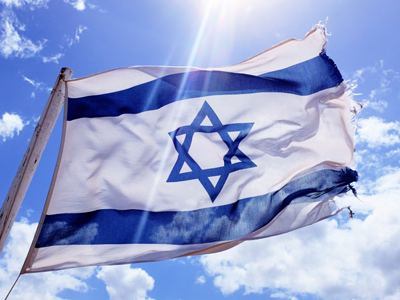
The State of Israel was declared on the 14th of May 1948.
Middle East: 1948-1999 - Origins Of The Arab-Israeli Conflict Up To 1948
Explore how competing nationalisms, British rule and international decisions shaped the origins of the Arab-Israeli conflict up to 1948 in this GCSE History revision quiz.
1 .
In 1921 a Jewish paramilitary force was set up in Palestine, which soon exceeded its rivals in terms of numbers of volunteers. What was its name?
The Irgun
The Stern Gang
The Haganah
Shin Bet
Palestinian Arabs responded by building up their own armed forces, giving the British supervisory power yet further headaches
2 .
In 1917 the British government issued a declaration that encouraged the setting up of a "Jewish homeland" in Palestine, and at the same time promised to respect Palestinian rights. What was the declaration called?
The Lawrence Declaration
The Balfour Declaration
The Churchill Declaration
The Weizmann Declaration
This was to prove difficult to put into practice, as more Jews pressed to get into Palestine
3 .
Which of the following Arab states was not involved in the 1948 First Arab-Israeli War?
Lebanon
Syria
Jordan
Saudi Arabia
Despite this onslaught Israel prevailed - until the next time
4 .
In 1916 a secret agreement was signed between Britain and France after the defeat of the Turks. Britain was to receive Palestine. What was the deal called?
The Hoare-Laval Pact
The Sykes-Picot Agreement
The Anglo-French Understanding
The Entente Cordiale
Palestine already had a mixed Jewish-Arab population. Palestinian Arabs feared the arrival of more Jews
5 .
Aware of British reluctance to bear the burden indefinitely, the United Nations came up with a plan for Palestine in 1948. What did this plan involve?
Jews to live within an Arab state, but to enjoy special rights
Arabs to live within a Jewish state, but to enjoy special rights
The 2 - state solution: a partition plan giving some parts to the new Israeli state, and the rest to a Palestinian state
Britain to remain nominally in charge, but UN forces to be stationed in Palestine in case of trouble
All of these suggestions involved compromise
6 .
On the 14th of May 1948, the state of Israel was proclaimed. Which Israeli politician made the announcement?
Abba Eban
Moshe Dayan
Golda Meir
David Ben-Gurion
The new state was immediately attacked by several of its Arab neighbours
7 .
Under what terms did Britain accept responsibility for Palestine after the Great War?
As a colony as part of the spoils of war enshrined in the Treaties of Sevres and Lausanne with Turkey
As a mandate from the League of Nations
As a gift from the Treaty of Versailles
In a referendum conducted within Palestine
Britain would now have to reconcile Arab aspirations with Jewish ones. This would not be easy
8 .
In the 1930s and 1940s the spiritual leader of Palestine's Muslim Arab population, the Grand Mufti of Jerusalem, regularly met one of the European dictators. Which one?
Stalin
Mussolini
Hitler
Franco
Clearly some Palestinians were so frustrated by British policy in their homeland that they were prepared to seek help elsewhere
9 .
In 1948 the fighting intensified, after the declaration of the state of Israel, and a massacre took place at Deir Yassin. What happened?
Jewish terrorists murdered Arab civilians
Arab terrorists murdered Jewish civilians
British forces attacked a Jewish settlement
British forces attacked an Arab settlement
Whatever happened exactly at Deir Yassin, the massacre remains a source of bitterness
10 .
In 1946 Jewish terrorists bombed a prominent building in Jerusalem, killing many Jews, Arabs and British. What was the building's name?
The David Hotel
The Temple Hotel
The King David Hotel
Hotel Jerusalem
This atrocity shocked the world. Some in the British government wondered whether ruling Palestine was worth the candle



**Unlimited Quizzes Await You! 🚀**
Hey there, quiz champ! 🌟 You've already tackled today's free questions.
Ready for more?
Ready for more?
🔓 Unlock UNLIMITED Quizzes and challenge yourself every day. But that's
not all...
not all...
🔥 As a Subscriber you can join our thrilling "Daily Streak" against other
quizzers. Try to win a coveted spot on our Hall of Fame Page.
quizzers. Try to win a coveted spot on our Hall of Fame Page.
Don't miss out! Join us now and keep the fun rolling. 🎉
**Unlimited Quizzes Await You! 🚀**
Hey there, quiz champ! 🌟 You've already tackled today's free questions. Ready for more?
🔓 Unlock UNLIMITED Quizzes and challenge yourself every day. But that's not all...
🔥 As a Subscriber you can join our thrilling "Daily Streak" against other quizzers. Try to win a coveted spot on our Hall of Fame Page.
Don't miss out! Join us now and keep the fun rolling. 🎉




© Copyright 2016-2026 - Education Quizzes
Work Innovate Ltd - Design | Development |
Marketing
