




Ask the AI Tutor
Need help with Middle East: 1948-1999 - The Wars Of 1956, 1967 And 1973? Ask our AI Tutor!
AI Tutor - Lucy
Connecting with Tutor...
Please wait while we establish connection
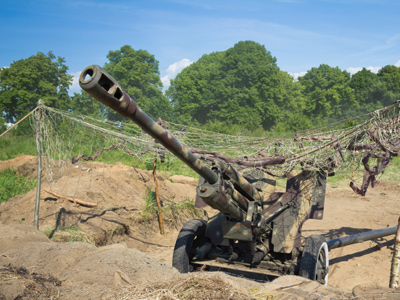
The Soviet Union supplied weapons to Israel's enemies - but not to Israel itself.
Middle East: 1948-1999 - The Wars Of 1956, 1967 And 1973
Test your GCSE History knowledge of the Middle East conflicts of 1956, 1967 and 1973, including causes, key events and consequences, in this quick revision quiz.
1 .
In 1964 Palestinian militants set up a formal organisation to confront Israel. What was this body called?
The Palestinian People's Front
The Front for the Total Liberation of Palestine
The People's Liberation Organisation
The Palestine Liberation Organisation
There were several such groups, but this was by far the largest
2 .
In 1972 an outrage by Palestinian militants horrified the world, when several Israeli Olympic athletes were murdered. Where did this incident occur?
Vienna
Bonn
Cologne
Munich
After this the Israeli authorities stepped up security even more
3 .
In 1970 Palestinian paramilitaries were forced to leave his territory by which Arab leader?
King Saud of Saudi Arabia
King Hussein of Jordan
Colonel Gadaafi of Libya
President Sadat of Egypt
Wherever these Palestinian fighters went there was likely to be trouble
4 .
Which of the following territorial gains from 1967 does Israel still hold?
The Sinai Desert
The Gaza Strip
The Golan Heights
The East Bank of the Jordan
Israel believes in holding these last vestiges of its gains as bargaining chips for future talks
5 .
In 1967 Egypt began a blockade of the Straits of Tiran, thus denying Israel access to which vital waterway?
The Suez Canal
The Gulf of Suez
The Gulf of Aquaba
The Gulf of Eilat
This was a serious blow for Israel, as it threatened her trade. Israel regarded it as virtually an act of war
6 .
In 1967 a fresh war erupted. By what name is it usually known?
The 1967 War
The Six Day War
The Third Middle East War
The Third Arab-Israeli War
The Israelis destroyed their adversaries' air forces on the ground
7 .
In 1956, in collusion with Britain and France, Israel attacked Egypt across which desert region?
The Gaza Strip
The Negev
The Nafud
The Sinai
UN forces intervened and Israel had to pull back from the Suez Canal - for the time being
8 .
Which important state provided weapons on a vast scale to Arab states, especially to Egypt and Syria?
China
France
The Soviet Union
Britain
This country always refused to supply arms to Israel
9 .
In 1973 the final war of the four erupted. This was known as the Yom Kippur War, named after an important Jewish religious festival. By what English name is this day better known?
Passover
The Day of Atonement
The Day of Wrath
The Day of Masada
The day was chosen by the Egyptians, who thought that this was an opportunity for a surprise attack, as most Israelis would be pre-occupied by their religious duties
10 .
The UN interposed UNEF units between the warring powers after the end of the 1956 War. What does UNEF stand for?
United Nations Emergency Force
United Nations Expeditionary Force
United Nations Extra Force
United Nations Engagement Force
This force remained in place until 1967, when President Nasser of Egypt demanded its removal



**Unlimited Quizzes Await You! 🚀**
Hey there, quiz champ! 🌟 You've already tackled today's free questions.
Ready for more?
Ready for more?
🔓 Unlock UNLIMITED Quizzes and challenge yourself every day. But that's
not all...
not all...
🔥 As a Subscriber you can join our thrilling "Daily Streak" against other
quizzers. Try to win a coveted spot on our Hall of Fame Page.
quizzers. Try to win a coveted spot on our Hall of Fame Page.
Don't miss out! Join us now and keep the fun rolling. 🎉
**Unlimited Quizzes Await You! 🚀**
Hey there, quiz champ! 🌟 You've already tackled today's free questions. Ready for more?
🔓 Unlock UNLIMITED Quizzes and challenge yourself every day. But that's not all...
🔥 As a Subscriber you can join our thrilling "Daily Streak" against other quizzers. Try to win a coveted spot on our Hall of Fame Page.
Don't miss out! Join us now and keep the fun rolling. 🎉




© Copyright 2016-2026 - Education Quizzes
Work Innovate Ltd - Design | Development |
Marketing
