




Ask the AI Tutor
Need help with Northern Ireland: 1968-98 - Attempts At Agreement 1996-1998? Ask our AI Tutor!
AI Tutor - Lucy
Connecting with Tutor...
Please wait while we establish connection
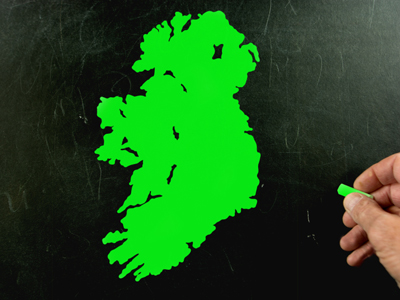
Prior to 1998, the Republic of Ireland claimed the whole of Ireland - including the North - to be part of its territory.
Northern Ireland: 1968-98 - Attempts At Agreement 1996-1998
This quiz looks at how multi party talks in the late 1990s tried to end violence in Northern Ireland and led towards the Good Friday Agreement.
1 .
The terms of the 1998 treaty were put to the two electorates (the Irish Republic and Northern Ireland) in separate referenda. What was the vote in favour in the North?
55%
95%
71%
94%
It was important for the success of the Good Friday Agreement that it should be accepted in the North by a majority of Protestants and by a majority of Catholics. It was
2 .
Not all republican paramilitaries accepted the terms of 1998. In 1998 dissident republicans detonated a huge bomb which caused considerable loss of life. In which Northern Irish town did this device go off?
Enniskillen
Omagh
Ballymena
Coleraine
The Peace Process survived this outrage, but rogue republicans still posed a threat to security
3 .
Which long-serving Catholic politician in Northern Ireland shared the Nobel Peace Prize in 1998?
Gerry Fitt
Seamus Mallon
John Hume
Liam Docherty
A previous Nobel Peace Prize had been awarded in the 1970's to the two leaders of the "Peace People": one Catholic and one Protestant. This initiative had ultimately failed, but the 1998 winners seemed more likely to succeed
4 .
Which Protestant organisation caused inter-communal tension to rise in 1996 by becoming involved in violence at Drumcree? They insisted on marching along the Garvaghy Road and so through a Roman Catholic housing estate. The police tried to keep the two groups apart, but violence ensued.
The Orange Order
The Vanguard Party
The Free Presbyterian Church
The Alliance Party
The march followed a traditional route, and the marchers were loth to change it. Clearly the whole question of parades would need to be examined. During the so-called "Marching Season" during July and August both communities undertook time-honoured parades
5 .
Which Catholic US democrat senator for Massachusetts supported the US president during the 1990's in his efforts to bring the political wing of the IRA to the negotiating table?
John Kerry
Edward Kennedy
Wayne Morse
Hubert Humphrey
Pressure from a Roman Catholic senator, who represented a state with a large proportion of Irish-Americans, was most useful in persuading Republican paramilitaries to join the talks in 1998, and to sign up to the eventual agreement
6 .
Which Conservative Roman Catholic politician was asked to recommend changes to policing in Northern Ireland under the terms of the 1998 agreement?
John Patten
Chris Patten
Iain Duncan-Smith
Norman St. John Stevas
The title, "Royal Ulster Constabulary", for the Northern Ireland police force and its cap badge were disliked by the Catholic minority. Moreover, the overwhelming number of police officers were still Protestants
7 .
Under the 1998 agreement the government of the Irish Republic agreed to recommend the abolition of Articles 2 and 3 in their constitution - subject to a referendum among the Republic's electorate. What did these articles state?
That the Republic was a neutral state
That the Republic claimed the whole island of Ireland as its territory
That the Roman Catholic religion was the established religion in all 32 Irish counties
That no member of the British armed forces could enter the Republic's territory under any circumstances
If these two articles could be removed, Protestants in the North were more likely to vote in favour of the 1998 agreement in their own referendum
8 .
Which moderate Unionist politician became First Minister in the Northern Ireland government from 1998?
Sir Reg Impey
David Trimble
Ian Paisley, Junior
William McCrae
The first elections under the constitution set up in 1998 produced a coalition government, formed of moderate Protestant Unionists and moderate Catholic Nationalists
9 .
Which of the following four departments of government remained with London following the 1998 deal?
Health
Education
Trade
Defence
Northern Ireland did not become a totally independent state - certain key powers were retained by Westminster
10 .
Which voting method was used in the elections to the Northern Ireland Assembly set up under the Good Friday Agreement?
The "First Past the Post" system
An electoral college
Proportional Representation
Compulsory voting using the "List System"
Those who framed the new constitution were keen to be fair, and - at the same time - to end up with an effective government
You can find more about this topic by visiting BBC Bitesize - Changing relations: Northern Ireland and its neighbours, 1965-98



**Unlimited Quizzes Await You! 🚀**
Hey there, quiz champ! 🌟 You've already tackled today's free questions.
Ready for more?
Ready for more?
🔓 Unlock UNLIMITED Quizzes and challenge yourself every day. But that's
not all...
not all...
🔥 As a Subscriber you can join our thrilling "Daily Streak" against other
quizzers. Try to win a coveted spot on our Hall of Fame Page.
quizzers. Try to win a coveted spot on our Hall of Fame Page.
Don't miss out! Join us now and keep the fun rolling. 🎉
**Unlimited Quizzes Await You! 🚀**
Hey there, quiz champ! 🌟 You've already tackled today's free questions. Ready for more?
🔓 Unlock UNLIMITED Quizzes and challenge yourself every day. But that's not all...
🔥 As a Subscriber you can join our thrilling "Daily Streak" against other quizzers. Try to win a coveted spot on our Hall of Fame Page.
Don't miss out! Join us now and keep the fun rolling. 🎉




© Copyright 2016-2026 - Education Quizzes
Work Innovate Ltd - Design | Development |
Marketing
