




Ask the AI Tutor
Need help with Northern Ireland: 1968-98 - Initial Divisions And Grievances? Ask our AI Tutor!
AI Tutor - Lucy
Connecting with Tutor...
Please wait while we establish connection
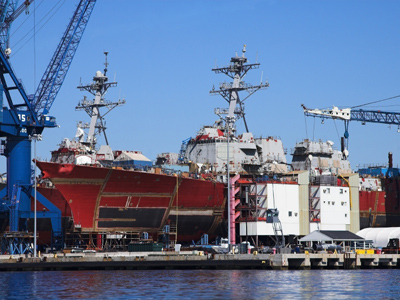
Harland and Wolff was a major employer in Belfast's shipyards - though predominantly of Protestants.
Northern Ireland: 1968-98 - Initial Divisions And Grievances
Discover how long-standing religious, political and economic divisions in Northern Ireland created tension, discrimination and conflict, and test how well you understand this GCSE History topic.
1 .
A new more militant group (People's Democracy) emerged, inspired by the events of 1968 in continental Europe and the Civil Rights movement in the United States. Which black American leader did they admire and try to emulate?
Malcom X
Stokely Carmichael
Ralph Abernathy
Martin Luther King
PD were keen on long marches, like those undertaken by the Civil Rights movement in the USA, like, for example, the one in Alabama from Selma to Montgomery
2 .
The civil rights activist, Austin Currie, staged a well publicised sit-in in a large empty house. What point was he trying to make?
That there was ample empty council housing available, but Catholics were prevented from becoming tenants of Protestant-controlled councils
That there were many large family homes for sale, but that Catholics faced discrimination from estate agents
That he himself was a man of means, who could afford a large home
That there was a glut of housing, both for sale and rent
Discrimination was a fact of life in post-war Northern Ireland. Catholics expected unequal treatment in education, housing, jobs, voting rights and other areas
3 .
All cities in the Province were segregated into Catholic and Protestant areas. Which of the following areas was the main working-class Catholic zone in West Central Belfast?
Andersonstown
The Shankill Road
The Divis Flats
The Falls Road
This segregation meant that people on one side of the divide rarely met people from the other
4 .
The Harland and Wolff factory in East Belfast was a major employer that hired almost entirely Protestant workers. What did the factory make?
Clothing
Motor Vehicles
Ships
Railway locomotives
This was a vital employer for the Province's economy, but it was in the grip of East Belfast's Unionist community
5 .
Later in 1969 a young Catholic girl was elected as a Westminster MP. At 21 she was the youngest MP, and she was briefly the darling of the British media. Eventually she became a strong supporter of the IRA. Who was she?
Maoire Drumm
Bernadette Devlin/McAliskey
Pat Hume
Evelyn Glenholmes
A graduate of Queen's University Belfast, she was a shrill and articulate defender of the minority Catholic community, who soon made her mark in the Commons
6 .
The main police force (the RUC) was supplemented by a small elite squad trained for dealing with public disorder, and enjoying a reputation for brutality. It also had hardly any Catholics in its ranks. What was its name?
The Special Patrol Group
The "B" Specials
The Special Branch
"A" Company
This was a major Catholic grievance. They saw this force as sectarian and violent
7 .
Which burly Unionist politician and preacher was an active opponent of the Civil Rights movement?
William Craig
William Faulkner
Ian Paisley
Lord Brookeborough
Protestants were frequently harangued by this man, determined never to "surrender" to Rome
8 .
Before the arrival of British troops later in 1969, the security forces in Northern Ireland used a method of crowd control for the first time ever in the UK. What was this method?
Plastic bullets
Rubber bullets
Water cannon
CS gas
Disorder in the Province was getting badly out of hand in 1969, and the locally-controlled government felt that strong measures were needed
9 .
What was the most obvious difference between state schools in Northern Ireland and those in mainland Britain?
The ones in the Province were fee-paying. On the mainland they were free
In Northern Ireland all state schools were either Catholic or Protestant. This was not the case on the mainland
In the Province all state secondary schools were selective - either grammars or secondary moderns (with an 11 plus exam at the age of 11). On the mainland the majority were fully comprehensive
In Northern Ireland school meals were free to all pupils. On the mainland there was a means test
In Northern Ireland the independent sector was smaller and less influential than on the mainland. Supporters of the state system there asserted that it produced better academic results than elsewhere
10 .
A non-sectarian pressure group called NICRA began, in the late 1960s, to agitate for civil rights for all citizens of Northern Ireland. What did NICRA stand for?
Northern Ireland Civil Rights Association
Northern Ireland Citizens' Rights Association
Northern Ireland Constitutional Rights Association
Northern Ireland Catholic Rights Association
This body organised regular marches. It was often the victim of violence, but never advocated violence itself
You can find more about this topic by visiting BBC Bitesize - Changing relations: Northern Ireland and its neighbours, 1965-98



**Unlimited Quizzes Await You! 🚀**
Hey there, quiz champ! 🌟 You've already tackled today's free questions.
Ready for more?
Ready for more?
🔓 Unlock UNLIMITED Quizzes and challenge yourself every day. But that's
not all...
not all...
🔥 As a Subscriber you can join our thrilling "Daily Streak" against other
quizzers. Try to win a coveted spot on our Hall of Fame Page.
quizzers. Try to win a coveted spot on our Hall of Fame Page.
Don't miss out! Join us now and keep the fun rolling. 🎉
**Unlimited Quizzes Await You! 🚀**
Hey there, quiz champ! 🌟 You've already tackled today's free questions. Ready for more?
🔓 Unlock UNLIMITED Quizzes and challenge yourself every day. But that's not all...
🔥 As a Subscriber you can join our thrilling "Daily Streak" against other quizzers. Try to win a coveted spot on our Hall of Fame Page.
Don't miss out! Join us now and keep the fun rolling. 🎉




© Copyright 2016-2026 - Education Quizzes
Work Innovate Ltd - Design | Development |
Marketing
