




Ask the AI Tutor
Need help with Northern Ireland: 1968-98 - The Role Of The Security Forces? Ask our AI Tutor!
AI Tutor - Lucy
Connecting with Tutor...
Please wait while we establish connection
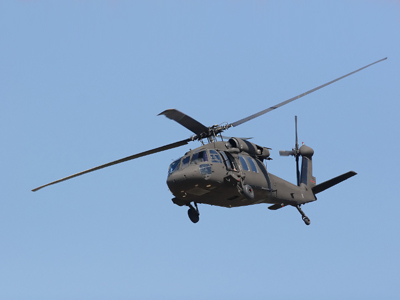
South Armagh was especially dangerous for UK security forces. It could only be accessed safely by air.
Northern Ireland: 1968-98 - The Role Of The Security Forces
This GCSE History quiz looks at the role of the Army and police in Northern Ireland, from peacekeeping aims to controversies that shaped community attitudes during the Troubles.
1 .
In January 1972 British troops killed 13 Roman Catholics in Londonderry. Which unit of the British army was responsible for this outrage?
Royal Marine Commandos
The Brigade of Guards
The Parachute Regiment
The Royal Engineers
This was a shocking event, in which armed troops gunned down unarmed demonstrators on the streets of a British city
2 .
"Operation Banner" (the intervention in Northern Ireland) was the longest continuous campaign fought by the British army anywhere. How long was this?
36 years
29 years
39 years
38 years
When the troops were deployed to the Province in 1969, few can have thought that they would be kept there for anything like as long as this
3 .
Later in 1969 Harold Wilson's Labour government did decide to deploy British troops to Northern Ireland. How were these troops received initially by the Catholic inhabitants in Belfast and Londonderry?
With indifference
With hostility
With welcoming cups of tea and other refreshments
With books and pamphlets outlining the case for a United Ireland
The troops' arrival undoubtedly prevented a massacre, and reassured - temporarily - fearful Catholics
4 .
Which of the following interrogation techniques was not used by British forces in Northern Ireland for a while during the 1970s?
Hooding
"White Noise"
Sleep Deprivation
Waterboarding
These methods were revealed in the 1970s and were thereafter discontinued. However, allegations of "torture" persisted, and the damage had already been done to relations between British troops and local Roman Catholics
5 .
Which was the worst year during the "Troubles" for deaths among the security forces?
1971
1972
1979
1982
In the absence of a political settlement the security forces were left to battle it out with paramilitaries from both sides of the sectarian divide
6 .
An immediate enquiry was set up into the events of "Bloody Sunday". Which judge presided over this investigation, which was widely criticised for being too favourable to the security forces?
Widgery
Hutton
Savile
Scott
This early enquiry left in many people an uneasy feeling that justice had not been done
7 .
In 1972 "Operation Motorman" involved a military invasion and occupation of the Bogside area of Londonderry - and the introduction of internment. What was meant by internment?
Arresting and imprisoning suspects locally without trial for an unlimited period
Arresting suspects and keeping them in prison for a short while, before releasing them
Arresting suspects and keeping them in prison for a while, before putting them before a court
Arresting suspects and sending them indefinitely to prison on the UK mainland
The Northern Irish authorities had difficulty in getting witnesses to testify against known paramilitaries. Internment was an attempt to overcome this problem
8 .
Jack Lynch, the Prime Minister of the Republic of Ireland at the very beginning of the "Troubles", suggested that an outside force should intervene in the Province. Which force or forces did he have in mind?
Units of the British army
Police officers from the Irish Republic (Gardaí)
A United Nations Force
A force made up from Commonwealth countries
The government of Southern Ireland felt that it had a responsibility to protect the minority Catholic community in the North
9 .
Which mainly Catholic area, bordering on the Irish Republic on the east side of the frontier, was exceptionally dangerous for the security forces, who arrived in and left the area by air?
County Fermanagh
County Tyrone
South Armagh
County Londonderry
A hostile population and the proximity of the Republic made this an especially hazardous region
10 .
A special forces unit of the British army achieved the greatest Provisional IRA loss of life in one incident during the Troubles. Which unit was this?
The Special Boat Squadron
The Special Air Service
The RAF Regiment
The Army Air Corps
Small elite units could be highly effective in the circumstances of Northern Ireland
You can find more about this topic by visiting BBC Bitesize - Changing relations: Northern Ireland and its neighbours, 1965-98



**Unlimited Quizzes Await You! 🚀**
Hey there, quiz champ! 🌟 You've already tackled today's free questions.
Ready for more?
Ready for more?
🔓 Unlock UNLIMITED Quizzes and challenge yourself every day. But that's
not all...
not all...
🔥 As a Subscriber you can join our thrilling "Daily Streak" against other
quizzers. Try to win a coveted spot on our Hall of Fame Page.
quizzers. Try to win a coveted spot on our Hall of Fame Page.
Don't miss out! Join us now and keep the fun rolling. 🎉
**Unlimited Quizzes Await You! 🚀**
Hey there, quiz champ! 🌟 You've already tackled today's free questions. Ready for more?
🔓 Unlock UNLIMITED Quizzes and challenge yourself every day. But that's not all...
🔥 As a Subscriber you can join our thrilling "Daily Streak" against other quizzers. Try to win a coveted spot on our Hall of Fame Page.
Don't miss out! Join us now and keep the fun rolling. 🎉




© Copyright 2016-2026 - Education Quizzes
Work Innovate Ltd - Design | Development |
Marketing
