




Ask the AI Tutor
Need help with Russia: 1905-1914 - Tsarist Russia? Ask our AI Tutor!
AI Tutor - Lucy
Connecting with Tutor...
Please wait while we establish connection
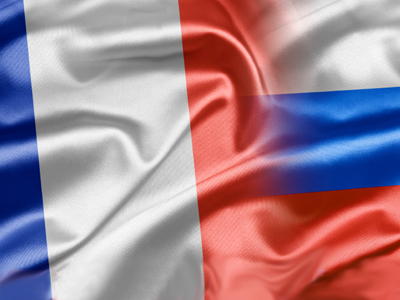
In 1892 Russia and France became allies in an attempt to counter the German-Austrian threat.
Russia: 1905-1914 - Tsarist Russia
Explore Tsarist Russia from 1905 to 1914 and see how autocracy, reform, and growing unrest shaped society under Nicholas II before the First World War began.
1 .
Which nominal province of the Ottoman Empire was formally annexed by Austria-Hungary in 1908, causing concern to the Russian government about Austrian expansion eastward, and thus unleashing a full-scale international crisis?
Bosnia
The Sanjak of Novipazar
The Banat of Temesvar
The Voivodina
The Turkish Empire, dubbed the "Sick Man of Europe", was in gradual decline as some parts of its European territory were seized by neighbouring states while others made independent bids for sovereignty
2 .
In July 1914 Russian troops were put on a war footing by the Tsar's government in an attempt to forestall an Austrian attack on Serbia, supported by Germany. What is this process called?
Mobilisation
Enlistment
Conscription
Recruitment
The Tsar decided - on advice - to call up reservists and to move regular troops up to the front line
3 .
In 1913 the Romanov dynasty celebrated a major anniversary as Tsars. How many years were they celebrating on the throne?
400
300
200
500
This was a major milestone in the history of the Romanov family, and was celebrated accordingly
4 .
Of which political group was Trotsky a member when he took part in the 1905 Revolution?
Bolsheviks
Social Revolutionaries
Mensheviks
Kadets
A coalition of opposition parties briefly came together to oppose the Tsar's regime during 1905-6
5 .
What was the name of the Tsar's son (the Tsarevitch) who suffered from incurable haemophilia?
Alexander
Nicholas
Paul
Alexis
He was the youngest in a family of five. His illness cast doubt on his ability to serve effectively as Tsar come the time when when his father would eventually die
6 .
Where was the treaty signed that brought the Russo-Japanese War of 1904-5 to an end?
Brest-Litovsk
Portsmouth
Vladivostok
St. Petersburg
The Tsar's government had no choice but to accept Japan's terms
7 .
In 1892 Nicholas II's predecessor, Alexander III, entered into a formal military and diplomatic alliance with France, directed principally against Germany and Austria-Hungary. Under this agreement France supported Russia against these two central powers in 1914. What name was given to this Franco-Russian treaty?
The Dual Alliance
The Entente Cordiale
The Dual Entente
The Re-Insurance Treaty
Russia feared both German and Austrian expansion. France seemed an obvious ally, determined to recover the lost provinces of Alsace-Lorraine, and ensuring that Germany would have to fight a two front war in the event of conflict involving either party
8 .
Which one of these was not a daughter of Nicholas and Alexandra?
Tatiana
Olga
Marie
Saskia
Alexandra gave birth to four daughters before she eventually had a son
9 .
Which warship of the Russian Black Sea fleet was seized by its mutinous crew during the 1905 Revolution in an incident later made famous by the Soviet-era film-maker Sergei Eisenstein?
Aurora
Potemkin
Sverdlovsk
Anastasia
The incident was of little consequence at the time. It was the only imperial warship to be affected, and it could not leave the confines of the Black Sea. However, Lenin used the event for propaganda purposes after the Bolshevik success in 1917
10 .
Which of Nicholas II's ministers followed a two-pronged approach of simultaneous repression and reform, until his assassination at the Kiev Opera House in 1912?
Plehve
Pobedonostsev
Protopopov
Stolypin
As long as Russia was not at war and her economy thrived, the Romanov dynasty was quite likely to survive



**Unlimited Quizzes Await You! 🚀**
Hey there, quiz champ! 🌟 You've already tackled today's free questions.
Ready for more?
Ready for more?
🔓 Unlock UNLIMITED Quizzes and challenge yourself every day. But that's
not all...
not all...
🔥 As a Subscriber you can join our thrilling "Daily Streak" against other
quizzers. Try to win a coveted spot on our Hall of Fame Page.
quizzers. Try to win a coveted spot on our Hall of Fame Page.
Don't miss out! Join us now and keep the fun rolling. 🎉
**Unlimited Quizzes Await You! 🚀**
Hey there, quiz champ! 🌟 You've already tackled today's free questions. Ready for more?
🔓 Unlock UNLIMITED Quizzes and challenge yourself every day. But that's not all...
🔥 As a Subscriber you can join our thrilling "Daily Streak" against other quizzers. Try to win a coveted spot on our Hall of Fame Page.
Don't miss out! Join us now and keep the fun rolling. 🎉




© Copyright 2016-2026 - Education Quizzes
Work Innovate Ltd - Design | Development |
Marketing
