




Ask the AI Tutor
Need help with Russia: 1917-1921 - Lenin And The Consolidation Of Soviet Power? Ask our AI Tutor!
AI Tutor - Lucy
Connecting with Tutor...
Please wait while we establish connection
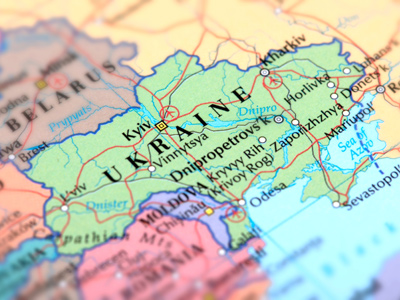
The Ukraine enjoyed a brief period of independence from 1917, before it was taken over by the Soviet Union.
Russia: 1917-1921 - Lenin And The Consolidation Of Soviet Power
Learn how Lenin and the Bolsheviks turned a fragile revolution into Soviet control between 1917 and 1921, using force, propaganda, and emergency policies like War Communism.
1 .
To which of these former parts of the Tsarist state was Lenin prepared to concede independence after the Civil War?
Armenia
Estonia
Kazakhstan
Chechyna
Lenin was prepared to grant independence to areas that did not have significant natural resources or were unlikely to be used as invasion routes by hostile powers
2 .
Lenin moved the Russian capital in 1918 to a location further away from the Civil War fighting. Which city became the new capital?
Kiev
Moscow
Nishni Novgorod
Archangelsk
The capture of the Bolshevik capital would have been a disaster
3 .
Bolsheviks murdered the entire Romanov family in June 1918. What was the name of the city where these executions took place at the Ipatiev House?
Ekaterinburg
Irkutsk
Perm
Kazan
During the Civil War the royal family had to leave St. Petersburg. Ekaterinburg (or Yekaterinburg) was renamed Sverdlovsk in 1924 after the Communist party leader Yakov Sverdlov. It reverted back to its original name in 1991
4 .
Which senior Tsarist naval officer controlled the anti-Bolshevik forces attacking the red zone from the east?
Kolchak
Denikin
Wrangel
Yudenich
The Bolsheviks controlled a relatively small area between St. Petersburg and Moscow. Thus they could be attacked on all sides. However, the White Russian commanders found it difficult to co-ordinate their efforts, and to overcome personal differences
5 .
Where did the Bolsheviks make peace with Germany in March 1918, thereby ending the First World War on the Eastern Front?
Rapallo
Minsk
Brest Litovsk
Suwalki
Lenin had promised peace if he became Russian leader. Thus he felt obliged to accept Germany's harsh peace terms in 1918, if he was to remain in power. He believed also that Germany herself would fall prey to a communist revolution, and that - in those circumstances - Russia would soon regain her lost territories
6 .
What happened at Kronstadt in the Gulf of Finland in 1921, which so disturbed the Bolshevik leadership?
A naval mutiny against the Bolsheviks
The garrison joined the White Russian side
Foreign forces arrived with military support against the Bolsheviks
Trotsky promised concessions if the garrison withdrew their demands for a more liberal communist state
Having just defeated the Whites in the Civil War, the Bolsheviks were terrified by a challenge by the "enemy within"
7 .
The Bolsheviks deployed a ruthless secret police force during the Civil War. What was its name of this organisation?
OGPU
KGB
NKVD
Cheka
The Tsarists also used a brutal police force called the Okhrana. The Bolsheviks felt that they had to be utterly ruthless to prevail in the Civil War, and made full use of their equivalent force
8 .
Which large Slav province of Southern Russia, bordering the Black Sea, enjoyed a brief period of independence against the Bolsheviks during the Civil War?
Byelorussia
The Ukraine
Moldavia
Georgia
The Bolsheviks were determined to hold on to as much territory as possible - especially as they had by now recovered their losses to Germany from Brest-Litovsk
9 .
Which Russian Marxist revolutionary party split off from the Bolsheviks in 1903 at the Brussels conference and fought against them in the Civil War?
The Social Revolutionaries
The Mensheviks
The Octobrists
The Decembrists
The Bolsheviks lacked allies in the Civil War - either domestic or foreign
10 .
Who was the Bolshevik Foreign Commissar who negotiated with Germany, and who was told by Lenin to accept the Germans' harsh terms for peace in 1918?
Trotsky
Stalin
Bukharin
Kalinin
The Bolshevik negotiators were put in an impossible position. If they failed to agree to the German terms the war would go on, but the terms were extremely severe. If they signed they would lose (perhaps only temporarily) large areas of land, millions of citizens and much of their agriculture and industry



**Unlimited Quizzes Await You! 🚀**
Hey there, quiz champ! 🌟 You've already tackled today's free questions.
Ready for more?
Ready for more?
🔓 Unlock UNLIMITED Quizzes and challenge yourself every day. But that's
not all...
not all...
🔥 As a Subscriber you can join our thrilling "Daily Streak" against other
quizzers. Try to win a coveted spot on our Hall of Fame Page.
quizzers. Try to win a coveted spot on our Hall of Fame Page.
Don't miss out! Join us now and keep the fun rolling. 🎉
**Unlimited Quizzes Await You! 🚀**
Hey there, quiz champ! 🌟 You've already tackled today's free questions. Ready for more?
🔓 Unlock UNLIMITED Quizzes and challenge yourself every day. But that's not all...
🔥 As a Subscriber you can join our thrilling "Daily Streak" against other quizzers. Try to win a coveted spot on our Hall of Fame Page.
Don't miss out! Join us now and keep the fun rolling. 🎉




© Copyright 2016-2026 - Education Quizzes
Work Innovate Ltd - Design | Development |
Marketing
