




Ask the AI Tutor
Need help with Russia: 1924-1941 - Foreign Policy? Ask our AI Tutor!
AI Tutor - Lucy
Connecting with Tutor...
Please wait while we establish connection
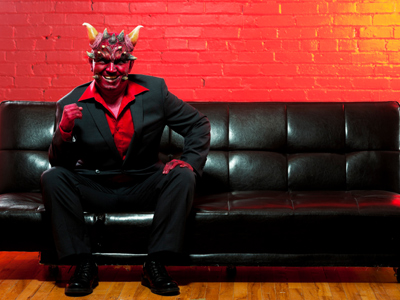
Churchill, usually Stalin's critic, said of him, "If Hitler invaded Hell I would make favourable representations to the Devil."
Russia: 1924-1941 - Foreign Policy
This GCSE History quiz explores Stalin's foreign policy between 1924 and 1941, from Socialism in One Country to the Nazi-Soviet Pact and the road to war.
1 .
Which formerly hostile Western European state recognised the Soviet regime in 1924?
France
Great Britain
Italy
The United States of America
By 1924 the Bolshevik government seemed to be entrenched in power, and the European political and economic situation seemed to be settling down. Why not recognise the USSR, if only further to encourage trade?
2 .
Litvinov, the Soviet Foreign Commissar until May 1939, signed non-aggression pacts with a number of states in 1928, in a bid to enhance Soviet security. With which of the following countries did he not sign such an agreement?
Great Britain
France
Poland
Estonia
Ideally Litvinov wanted agreements with major powers, but sometimes he had to be content with weaker states
3 .
In 1934 Litvinov secured Soviet membership of an international organisation, which he felt could confer on the USSR the benefits of collective security. What was this organisation?
The International Labour Organisation
The League of Nations
The Anti-Comintern Pact
The Peace Pledge Union
Litvinov persuaded Stalin that the advent of fascism (Mussolini had been in power since 1922, and Hitler since the previous year) could best be countered by international co-operation around the principle of collective security. However, Stalin was quite capable of changing his mind if international action seemed not to work
4 .
In May 1939 Litvinov was dismissed, and a new Foreign Commissar, who was more in favour of doing a deal with Hitler, was appointed. Who was this?
Lavrenti Beria
Marshal Voroshilov
Vyacheslav Molotov
Vyshinsky
A change of Foreign Commissar would most likely lead to a change in foreign policy, but the cynical Stalin could always revert to the previous policy, if Litvinov's successor failed to deliver the goods
5 .
On the 23rd of August 1939 the German Foreign Minister flew to Moscow to sign a treaty with Stalin. What was this treaty called?
The Nazi-Soviet Pact
The Dual Alliance
The Stalin-Ribbentrop Treaty
The Russo-German Agreement
This deal stunned the rest of the world. Now Hitler could attack Poland - his next target - with impunity
6 .
On the 17th of September 1939, in accordance with the terms of the recent agreement with Germany, Soviet forces invaded a neighbouring state, and began to enforce a brutal version of communism there. Which state was this?
Romania
Lithuania
Finland
Poland
The August deal with Germany gave Stalin a free hand in much of Eastern Europe
7 .
At the end of 1939, and well into 1940, the Red Army was engaged in a bruising war with Finland. What name is this conflict sometimes given?
The Finno-Soviet War
The Stalin-Mannerheim War
The Winter War
The Karelian War
Stalin's forces, weakened by the recent purge of senior officers, had difficulty in defeating a much smaller Finnish army. Before succumbing to an inevitable defeat, the Finns surrounded and destroyed several Russian regiments
8 .
In 1940 - again in accordance with the August 1939 treaty - Stalin invaded three neighbouring states, whose independence Lenin had been content to respect. Which of the three had never enjoyed the protection of the "Litvinov Protocol" from 1928?
Lithuania
Romania
Estonia
Latvia
Stalin was unlikely to respect the terms of the 1928 agreement, which he felt had been superseded by the August 1939 pact
9 .
What name was given to the German assault on the Soviet Union in June 1941?
Operation Barbarossa
Operation Hohenstaufen
Operation Siegfried
Operation Hohenschwanstein
Hitler saw this invasion (in full breach of the understanding reached with Stalin two years before) as in keeping with traditional Teutonic (German) hostility to the "barbarian" Slavs in the East
10 .
Which Western European leader (formerly a strong opponent of Stalin and Soviet communism) said at the time of the German attack on Russia in June 1941: "If Hitler invaded hell, I would make favourable representations to the devil".
Roosevelt
Churchill
Chiang Kai-Shek
General de Gaulle
The old adage, "My enemy's enemy is my friend", seemed to apply on this occasion



**Unlimited Quizzes Await You! 🚀**
Hey there, quiz champ! 🌟 You've already tackled today's free questions.
Ready for more?
Ready for more?
🔓 Unlock UNLIMITED Quizzes and challenge yourself every day. But that's
not all...
not all...
🔥 As a Subscriber you can join our thrilling "Daily Streak" against other
quizzers. Try to win a coveted spot on our Hall of Fame Page.
quizzers. Try to win a coveted spot on our Hall of Fame Page.
Don't miss out! Join us now and keep the fun rolling. 🎉
**Unlimited Quizzes Await You! 🚀**
Hey there, quiz champ! 🌟 You've already tackled today's free questions. Ready for more?
🔓 Unlock UNLIMITED Quizzes and challenge yourself every day. But that's not all...
🔥 As a Subscriber you can join our thrilling "Daily Streak" against other quizzers. Try to win a coveted spot on our Hall of Fame Page.
Don't miss out! Join us now and keep the fun rolling. 🎉




© Copyright 2016-2026 - Education Quizzes
Work Innovate Ltd - Design | Development |
Marketing
