




Ask the AI Tutor
Need help with Russia: Stalin's Seizure Of Power, 1924-1929? Ask our AI Tutor!
AI Tutor - Lucy
Connecting with Tutor...
Please wait while we establish connection
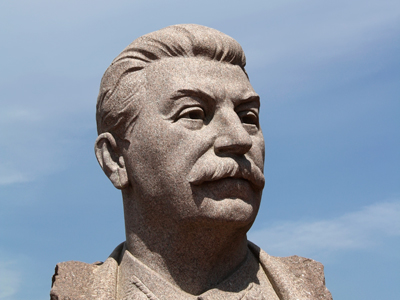
After Lenin's death there were several contenders for his now vacant position - Stalin came out on top.
Russia: Stalin's Seizure Of Power, 1924-1929
Study how Stalin rose from party official to Soviet leader, using alliances, party rules and political skill to outmanoeuvre his rivals after Lenin's death in 1924.
1 .
One of Trotsky's weaknesses was his former membership of the Menshevik Party. In which year did he join the Bolsheviks?
1914
1917
1916
1918
Stalin always enjoyed the advantage that he had long been a Bolshevik Party member and associate of Lenin's. It was known that Trotsky had only joined quite recently
2 .
Which of the following emerged from the 1924-9 period as a Stalin crony, serving him loyally into the 1930s and beyond?
Molotov
Kamenev
Zinoviev
Pyatakov
Surviving as a minister under Stalin was a high risk pastime. Through good fortune and good judgement several of Stalin's associates managed to cling on to power
3 .
Not the least of Stalin's assets was his secret police. What name were they given during most of this period?
OGPU
NKVD
FSB
KGB
There had been a secret police force in Tsarist times. Under an even more authoritarian regime Stalin felt the need for one as he tightened his grip on Russia
4 .
Trotsky felt obliged to resign from one of his posts in 1925. Which job was this?
Commissar for Foreign Affairs
Commissar for Military and Naval Affairs
Chairman of the annual Party Congress
Commissar for Transportation
Trotsky already felt isolated in the growing power struggle, and he hoped that resignation from one post might take the heat off him
5 .
After Lenin's death a big effort was made to increase the number of Party members from working-class backgrounds in memory of the former leader. What name was given to this process?
Proletarianisation of the Party
The Lenin Enrolment
The Lenin Rescript
Workers Unite
Under Lenin, Party membership had remained stagnant. After his death in 1924, Stalin saw a further way in which to increase his power. By recruiting more members from humble backgrounds, Stalin could cement their allegiance to him
6 .
Having seen off Trotsky, Stalin now turned on the "Right" opposition, who advocated more cautious policies. One of these was Tomsky. For which organisations was he responsible?
Trade Unions
Regional Assemblies
Police
Broadcasting
Stalin could not tolerate any aspect of Soviet life being under any other control than his own. One by one he brought these bodies into line, and dismissed their leaders if he felt that they posed a threat to him
7 .
Stalin accused his opponents of trying to divide the Party into rival groups. What name was given to this tendency?
Deviationism
Factionalism
Sectionalism
Separatism
Stalin's argument was that he had always followed the Leninist line of total unity, and that his adversaries were trying to split the Party into warring groups
8 .
Where was Trotsky exiled within the USSR before he went abroad permanently?
Kazakhstan
Siberia
Georgia
Azerbaijan
By 1929 Trotsky had lost the argument with Stalin, having always underestimated his opponent. There seemed little option but to go into exile
9 .
What name was given to Stalin's preferred economic policy in his long argument with Trotsky?
Socialism in One Country
War Communism
Euro Communism
Permanent Revolution
Trotsky and Stalin differed over future policy: could Russia go it alone with a series of sweeping reforms, or would she have to ensure worldwide communism to have any chance of success?
10 .
What radical programme for agricultural re-organisation did Stalin introduce at the 1927 Party Conference?
Nationalisation
Collectivisation
State Ownership
Requisitioning
By now Stalin felt that he had overcome Trotsky's "Left-wing" opposition to domestic policy, and he now prepared to take on the so-called "Right" by outlining revolutionary plans for industry and agriculture



**Unlimited Quizzes Await You! 🚀**
Hey there, quiz champ! 🌟 You've already tackled today's free questions.
Ready for more?
Ready for more?
🔓 Unlock UNLIMITED Quizzes and challenge yourself every day. But that's
not all...
not all...
🔥 As a Subscriber you can join our thrilling "Daily Streak" against other
quizzers. Try to win a coveted spot on our Hall of Fame Page.
quizzers. Try to win a coveted spot on our Hall of Fame Page.
Don't miss out! Join us now and keep the fun rolling. 🎉
**Unlimited Quizzes Await You! 🚀**
Hey there, quiz champ! 🌟 You've already tackled today's free questions. Ready for more?
🔓 Unlock UNLIMITED Quizzes and challenge yourself every day. But that's not all...
🔥 As a Subscriber you can join our thrilling "Daily Streak" against other quizzers. Try to win a coveted spot on our Hall of Fame Page.
Don't miss out! Join us now and keep the fun rolling. 🎉




© Copyright 2016-2026 - Education Quizzes
Work Innovate Ltd - Design | Development |
Marketing
