




Ask the AI Tutor
Need help with Terrorism Since 1969: The Provisional IRA To 1998? Ask our AI Tutor!
AI Tutor - Lucy
Connecting with Tutor...
Please wait while we establish connection
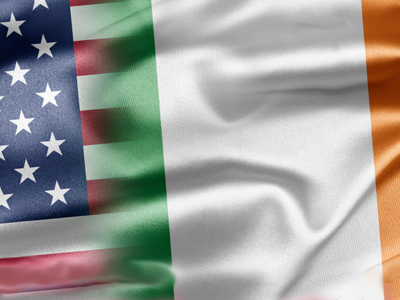
The IRA had many supporters within the United States of America.
Terrorism Since 1969: The Provisional IRA To 1998
This GCSE History quiz explores the Provisional IRA’s campaign from 1969 to 1998, including aims, tactics, and how violence, protest, and politics affected the Northern Ireland peace process.
1 .
The PIRA had a political wing. What was it called?
The Social Democratic and Labour Party
Sinn Fein
The Alliance Party
The Irish National Independence Party
Gradually the political wing took a more prominent role - until eventually it appeared to have a different agenda from the military wing
2 .
Which of the following terms was used to describe IRA members by Unionists, Alliance Party supporters and the SDLP?
Soldiers
Volunteers
Freedom Fighters
Terrorists
There was no agreement among the parties about a suitable term
3 .
A remaining stumbling block was the question of paramilitary weapons. The word "de-commissioning" was frequently used to describe what should be done with them as a condition of a settlement. What does "de-commissioning" mean?
All weapons to be handed over to the British security authorities
All weapons to be handed over to the United Nations
All weapons to be put manifestly "beyond use", but to remain under IRA control
All weapons to be totally destroyed under supervision
The question of IRA arms was a tricky one: Republicans were reluctant to abandon their arms in case the armed struggle was to resume but Loyalists were hesitant to talk to Sinn Fein without an acceptable solution to the matter of weaponry
4 .
When did the ceasefire by the IRA occur that enabled the Good Friday talks to continue?
1996
1998
1997
1999
The IRA was still keen to take part in the talks
5 .
The IRA's 1994 ceasefire broke down, and they resumed their bombing campaign on the British mainland. Which of the following English targets was attacked before the ceasefire was resumed?
The London Docklands
Harrods
Hyde Park
Brighton
Careful diplomacy was needed to coax the IRA back to the negotiating table
6 .
In 1972 several Provisional leaders met a British cabinet minister in London to see whether any basis for a settlement existed. Who was the British minister involved?
Patrick Mayhew
Peter Brooke
William Whitelaw
Robert Carr
Neither side saw any point in continuing the conflict if there was a basis for compromise. In the event the Provisionals found that the terms which the British were prepared to concede fell far short of the Republicans' minimum demands
7 .
What nickname was given to the prison where most paramilitaries were held - newly built outside Belfast, and having a distinctive shape when viewed from the air?
The H blocks
The E blocks
The T blocks
The F blocks
Loyalist and Republican prisoners were separated - hence the need for different blocks
8 .
After 1976 Republican prisoners demanded to be treated as "Prisoners of War" and not as ordinary criminals. They launched a campaign in furtherance of this objective called the "blanket protest". What did this involve?
Refusing to wear prison uniform, and insisting on wearing only the blankets issued to keep them warm at night
Refusing to wear anything - they regarded the blankets as a form of unacceptable prison uniform
Agreeing to wear prison issue underwear, but only wearing blankets on top
Agreeing to wear prison uniform, but sewing badges of rank on top - made from the blankets supplied by the prison
When it was clear that the British government would not give in, the protesters decided to embark on hunger strikes
9 .
The IRA split in 1969, when the Provisionals decided to embark on a campaign of "armed struggle" to force British troops to leave the Province. What was the name of the other faction that remained on ceasefire throughout?
The Official IRA
The Real IRA
The Continuity IRA
The Traditional IRA
The issue that led to the split was an ideological one. The PIRA's opponents were Marxists, who despised sectarianism and preferred to appeal to the working class on both sides of the communal divide
10 .
After 1981 IRA propaganda announced a new policy of "the ballot paper with one hand" and "the Armalite with the other". What was an Armalite?
A sub-machine gun made in the Soviet Union
A carbine produced in the United States
A portable bomb
A pistol manufactured in Scandinavia
The IRA could rely on several sources of weaponry - they had many supporters in the United States
You can find more about this topic by visiting BBC Bitesize - Changing relations: Northern Ireland and its neighbours, 1965-98



**Unlimited Quizzes Await You! 🚀**
Hey there, quiz champ! 🌟 You've already tackled today's free questions.
Ready for more?
Ready for more?
🔓 Unlock UNLIMITED Quizzes and challenge yourself every day. But that's
not all...
not all...
🔥 As a Subscriber you can join our thrilling "Daily Streak" against other
quizzers. Try to win a coveted spot on our Hall of Fame Page.
quizzers. Try to win a coveted spot on our Hall of Fame Page.
Don't miss out! Join us now and keep the fun rolling. 🎉
**Unlimited Quizzes Await You! 🚀**
Hey there, quiz champ! 🌟 You've already tackled today's free questions. Ready for more?
🔓 Unlock UNLIMITED Quizzes and challenge yourself every day. But that's not all...
🔥 As a Subscriber you can join our thrilling "Daily Streak" against other quizzers. Try to win a coveted spot on our Hall of Fame Page.
Don't miss out! Join us now and keep the fun rolling. 🎉




© Copyright 2016-2026 - Education Quizzes
Work Innovate Ltd - Design | Development |
Marketing
