




Ask the AI Tutor
Need help with World War One: 1914-18 - Battles Of 1916 On The Western Front - 2? Ask our AI Tutor!
AI Tutor - Lucy
Connecting with Tutor...
Please wait while we establish connection
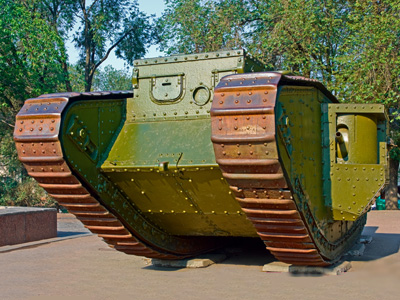
In September 1916, tanks were used for the first time in battle.
World War One: 1914-18 - Battles Of 1916 On The Western Front - 2
Explore the later stages of the 1916 Western Front battles, as the Somme offensive dragged on, tactics evolved and soldiers faced months of exhausting, deadly trench warfare.
1 .
The first day of the Battle of the Somme was called "the worst day in the history of the British Army", when nearly 20,000 British soldiers were killed and almost 40,000 wounded, captured or missing. What was the precise date of this day?
1 July 1916
22 June 1916
17 July 1916
1 August 1916
This infantry attack came after a week long British artillery bombardment, which was supposed to destroy German barbed wire, machine guns and trench systems
2 .
In anticipation of a huge attack, the British government introduced a new form of recruitment as the response from volunteers was becoming smaller and smaller. What name was given to this new system, long employed on the continent?
Conscription
Enlistment
The Press Gang
Joining up
All major European powers employed a form of national service, depending on age and family circumstances
3 .
Many young men who signed up for the army preferred to serve in the same units as their work mates, school friends and neighbours. Thus, casualty lists often included siblings and neighbours from the same town and factory. What name was given to such formations?
Mates units
Pals battalions
Chums platoons
Friends for life
These groups usually came from the North and the Midlands
4 .
The Ulster Memorial on the Somme commemorates what sort of British troops who fell in the battle between July and November 1916?
Roman Catholics from the North East of Ireland
Protestants from the North East of Ireland
Catholics and Protestants from the North East of Ireland
Troops recruited from all over Ireland
Men from all over Ireland answered the call in the autumn of 1914, but a small minority refused to join up - hoping for a German victory
5 .
Lloyd George, newly appointed Defence Minister after the death of Lord Kitchener, had his doubts about the wisdom of the Somme offensive. Much of the blame for failure was put on the prime minister who authorised the attack. Who was this?
Herbert Asquith
George Curzon
Arthur Balfour
Edward Grey
The prime minister resigned in December 1916, having led the Liberal Party since 1908, and Lloyd George seized his chance
6 .
In September 1916 a new weapon was employed for the first time at the battle of Flers-Courcelette. Which weapon was this?
Flame-throwers
Anti-personnel mines
Trench mortars
Tanks
The introduction of any weapon could help to tip the balance in the campaign. However, a long period of training and adjustment was usually necessary
7 .
At the end of 1916 - after the end of the Battle of the Somme - German forces withdrew to a pre-prepared defensive line where they expected to receive the next British attack. What name was given to this line?
The Hohenzollern Line
The Ludendorff Line
The Mackensen Line
The Hindenburg Line
German trenches were extremely well built , and hence hard to destroy by artillery or aerial bombardment
8 .
The British memorial on the Somme is especially significant. How does it compare with other British war memorials?
It is the largest British war memorial in France
It is the largest British war memorial anywhere from the Great War
It is the largest British war memorial in the world
It is the only British war memorial that records the names of all British troops who died in the Battle of the Somme
Names appear on the stonework according to military unit, and rank
9 .
Which famous British architect designed the Somme memorial to British dead?
Lutyens
Rogers
Stirling
Seifert
Several British architects, sculptors and painters made their names by designing appropriate memorials to chronicle the British sacrifice in the war
10 .
Where exactly is this British memorial?
Albert
Bapaume
Peronne
Thiepval
A site was selected that would enable the monument to be seen from a great distance in all directions



**Unlimited Quizzes Await You! 🚀**
Hey there, quiz champ! 🌟 You've already tackled today's free questions.
Ready for more?
Ready for more?
🔓 Unlock UNLIMITED Quizzes and challenge yourself every day. But that's
not all...
not all...
🔥 As a Subscriber you can join our thrilling "Daily Streak" against other
quizzers. Try to win a coveted spot on our Hall of Fame Page.
quizzers. Try to win a coveted spot on our Hall of Fame Page.
Don't miss out! Join us now and keep the fun rolling. 🎉
**Unlimited Quizzes Await You! 🚀**
Hey there, quiz champ! 🌟 You've already tackled today's free questions. Ready for more?
🔓 Unlock UNLIMITED Quizzes and challenge yourself every day. But that's not all...
🔥 As a Subscriber you can join our thrilling "Daily Streak" against other quizzers. Try to win a coveted spot on our Hall of Fame Page.
Don't miss out! Join us now and keep the fun rolling. 🎉




© Copyright 2016-2026 - Education Quizzes
Work Innovate Ltd - Design | Development |
Marketing
