




Ask the AI Tutor
Need help with World War One: 1914-18 - The War On The Eastern Front? Ask our AI Tutor!
AI Tutor - Lucy
Connecting with Tutor...
Please wait while we establish connection
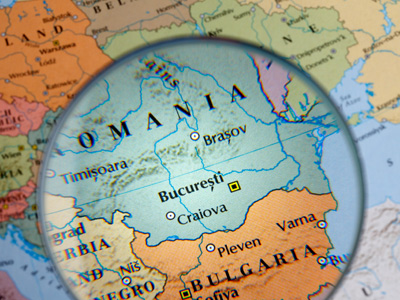
Romania joined the war in the summer of 1916, on the side of the Allies.
World War One: 1914-18 - The War On The Eastern Front
This GCSE History quiz looks at the Eastern Front, where huge distances, harsh conditions and shifting battle lines shaped a very different First World War experience.
1 .
Who was the Austrian chief-of-staff responsible for the Austro-Hungarian effort on the Eastern Front?
Radetzky
Mackensen
Conrad von Hoetzendorf
Liman von Sanders
This commander had played a key role in 1914. He had encouraged the Austrian Emperor, Franz Josef, to take a hard line against the Serbs in June and July 1914
2 .
Which Balkan state defected from its alliance with Germany in June 1916, and joined the Western Allies?
Bulgaria
Greece
Albania
Romania
The new ally brought with it significant quantities of raw materials like oil and grain
3 .
Which Russian general launched a successful offensive on the Eastern Front in the spring of 1916, thus easing the pressure on French forces still defending Verdun against a massive German onslaught?
Brusilov
Yudenich
Denikin
Wrangel
This general was one of Russia's least incompetent, and he made at least two other incursions on the Eastern Front - usually at the expense of Austro-Hungarian forces
4 .
Which of his relatives did Tsar Nicholas II replace as supreme army commander?
Grand Duke Michael
Grand Duke Sergei
Grand Duke Nicholas
Grand Duke Alexander
The Tsar believed that his move to the front would raise morale in Russia, but it left the Tsarina in Petrograd with "Our Friend" - Rasputin
5 .
What was the approximate length of the Eastern Front in miles?
500
1,000
1,500
2,000
The Eastern Front was much longer than the Western Front so it was unlikely that trench warfare would ever become a major feature there
6 .
In March 1918 negotiations between Russian Bolshevik and Imperial German negotiators bore fruit, and a treaty was signed that effectively ended the war in the East. Where was this deal signed?
Riga
Stettin
Brest-Litovsk
Lodz
This agreement satisfied both sides: Germany was able to concentrate on the war against Britain and France, while Lenin had his hands free to assert his authority over Russia
7 .
In August 1914 Russian armies invaded German territory in the East and fought two battles there. What was the name of this part of Germany?
East Prussia
Posen
West Prussia
Brandenburg
The Russians were optimistic that the absence of most of the German army (otherwise engaged in France and Belgium) would enable them to defeat the Germans on their home ground
8 .
What name was given to the German-led coalition fighting the Allies in the Great War?
The Triple Alliance
The Dual Alliance
The Central Powers
The Entente
The alliance system had grown up in Europe ever since 1879. However, by the middle of the Great War there had been changes on each side
9 .
Which senior German commander assumed responsibility in the East soon after the start of hostilities?
Moltke
Falkenhayn
Hindenburg
Groener
The front needed buttressing following the Russian invasion of this region
10 .
Which city in Russian Poland did the Germans capture in 1915, and retain until the end of the war?
Krakow
Gdansk/Danzig
Warsaw
Vilna
Poles resented the German presence, but they loathed the Russians more



**Unlimited Quizzes Await You! 🚀**
Hey there, quiz champ! 🌟 You've already tackled today's free questions.
Ready for more?
Ready for more?
🔓 Unlock UNLIMITED Quizzes and challenge yourself every day. But that's
not all...
not all...
🔥 As a Subscriber you can join our thrilling "Daily Streak" against other
quizzers. Try to win a coveted spot on our Hall of Fame Page.
quizzers. Try to win a coveted spot on our Hall of Fame Page.
Don't miss out! Join us now and keep the fun rolling. 🎉
**Unlimited Quizzes Await You! 🚀**
Hey there, quiz champ! 🌟 You've already tackled today's free questions. Ready for more?
🔓 Unlock UNLIMITED Quizzes and challenge yourself every day. But that's not all...
🔥 As a Subscriber you can join our thrilling "Daily Streak" against other quizzers. Try to win a coveted spot on our Hall of Fame Page.
Don't miss out! Join us now and keep the fun rolling. 🎉




© Copyright 2016-2026 - Education Quizzes
Work Innovate Ltd - Design | Development |
Marketing
