




Ask the AI Tutor
Need help with World War One Aftermath: 1933-1938 The Policy Of Appeasement? Ask our AI Tutor!
AI Tutor - Lucy
Connecting with Tutor...
Please wait while we establish connection
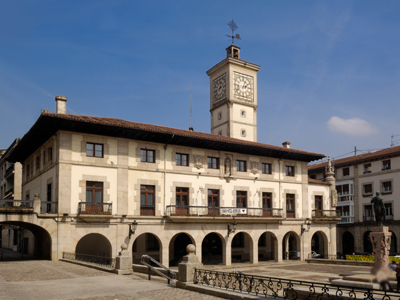
In 1937 Guernica, in Spain, was bombed by German aeroplanes.
World War One Aftermath: 1933-1938 The Policy Of Appeasement
Explore how Britain and France tried to avoid another world war by appeasing Hitler between 1933 and 1938, making concessions they hoped would keep the peace.
1 .
The British prime minister, Neville Chamberlain, flew three times within roughly a week in September 1938 to meet Hitler to discuss the Czech crisis. Where did the first of these meetings take place?
Berchtesgaden
Bad Godesberg
Prague
Berlin
Chamberlain had to travel to wherever Hitler happened to be at any given time
2 .
Hitler insisted at a late stage in the crisis that large parts of Southern Slovakia would have to be given to a neighbouring power. What was the name of this power?
Romania
Yugoslavia
Russia
Hungary
Hitler intensified the crisis when he insisted that the claims of other states on Czech territory should be accommodated. Mussolini suggested an international conference to work out a compromise, and thus war was postponed until 1939. Italy was worried that she might be dragged into a war before she was ready
3 .
In July 1936 General Franco unleashed a military rebellion against the elected government of Spain. Mussolini's Italy and Hitler's Germany gave the rising strong military support. The Spanish government received some arms from France and the Soviet Union. Britain backed an international commission with the intention of preventing arms from reaching either side. What was the name of this body?
The Non-Intervention Committee
The Neutrality Pact
The Non-Intervention Commission
The Spanish Disarmament Agency
The attempt to keep weapons out of Spain was well-intentioned, but destined to fail, as the arms suppliers took no notice of regular appeals to desist from interference in what was, in essence, a civil war
4 .
In 1934 Hitler failed to seize a nearby country by force. Which state was this?
Poland
Czechoslovakia
Hungary
Austria
In 1934 Hitler was relatively weak - rearmament had hardly begun, and his power over Germany was nothing like what it was later to become
5 .
Who was the French prime minister who represented his country at Munich where the treaty to dismember the Czech state was signed?
Pierre Laval
Paul Reynaud
Edouard Daladier
Leon Blum
The French hoped that they would not need to honour their treaty with Czechoslovakia, and that Britain would assist them in this
6 .
In April 1937 a market town in the Basque Provinces of Northern Spain was attacked by German aeroplanes, forming part of the Condor Legion, and showing the failure of outside attempts to prevent arms supplies from reaching either side in Spain. What was the name of the devastated town?
Irun
Amorebieta
Bilbao
Guernica
Franco loathed the Basques, who were devout Catholics but also supporters of the Spanish Republic. He therefore authorised this raid, which outraged international opinion
7 .
The area of Czechoslovakia inhabited by ethnic Germans coincided with the country's western border, that formed a mountainous U shape. What name was given to this vital region?
Bohemia
Silesia
The Sudetenland
Moravia
This area had never been part of Germany before - until 1919 it had formed part of the Austro-Hungarian Empire. However, there were strong economic and strategic reasons why it should remain Czech
8 .
In 1935 Hitler announced a vast increase in naval construction, in clear breach of the disarmament clauses in the Treaty of Versailles. Britain's response was to sign a separate agreement with Hitler to allow him to build warships up to a certain proportion of the Royal Navy's tonnage. What was the name of this deal?
The Anglo-German Naval Pact
The Anglo-German Naval Agreement
The Anglo-German Naval Accords
The Anglo-German Naval Treaty
The British were faced with a choice: either confront Hitler by force to comply with the 1919 treaty, or do a compromise deal with him. Britain, as a great naval power, was anxious to limit German naval building to the point where it did not challenge British naval supremacy. However, Britain could expect little support from other states in pursuing this agenda
9 .
In 1938 the Czechoslovak Republic bent over backwards to accommodate the demands of the German-speaking minority for greater autonomy. What was the name of the Czech leader who looked to Britain and France to guarantee his country from aggression?
Eduard Benes
Tomas Masaryk
Jan Masaryk
Klement Gottwald
The Czech government was elected democratically, but they faced a terrible dilemma when Czech territorial integrity was threatened by German aggression. Czechoslovakia did have a treaty of alliance with France and Russia from 1935, but Russia was excused from taking any action, unless France did so as well
10 .
In the spring of 1936 Hitler sent German forces into the demilitarised Rhineland in clear breach of the Versailles Treaty. What action did the British government take?
Britain imposed economic sanctions on Germany
Britain mobilised her armed forces, and issued an ultimatum to Hitler: withdraw from the Rhineland within 48 hours or face military action
Britain sent a retired diplomat to the Rhineland to report on the situation there
No action at all
This was a blatant infringement of Versailles., and possibly the last occasion when Hitler could have been successfully resisted. However, there were those who felt that Germany's treatment in 1919 had been too harsh, and that Hitler's aims were in any event limited. Others looked to the League of Nations for action, of which Britain was one of the leading members
Our Social Circles




**Unlimited Quizzes Await You! 🚀**
Hey there, quiz champ! 🌟 You've already tackled today's free questions.
Ready for more?
Ready for more?
🔓 Unlock UNLIMITED Quizzes and challenge yourself every day. But that's
not all...
not all...
🔥 As a Subscriber you can join our thrilling "Daily Streak" against other
quizzers. Try to win a coveted spot on our Hall of Fame Page.
quizzers. Try to win a coveted spot on our Hall of Fame Page.
Don't miss out! Join us now and keep the fun rolling. 🎉
**Unlimited Quizzes Await You! 🚀**
Hey there, quiz champ! 🌟 You've already tackled today's free questions. Ready for more?
🔓 Unlock UNLIMITED Quizzes and challenge yourself every day. But that's not all...
🔥 As a Subscriber you can join our thrilling "Daily Streak" against other quizzers. Try to win a coveted spot on our Hall of Fame Page.
Don't miss out! Join us now and keep the fun rolling. 🎉
© Copyright 2016-2026 - Education Quizzes
Work Innovate Ltd - Design | Development |
Marketing
