




Ask the AI Tutor
Need help with World War One Aftermath: 1939 - The End Of Appeasement? Ask our AI Tutor!
AI Tutor - Lucy
Connecting with Tutor...
Please wait while we establish connection
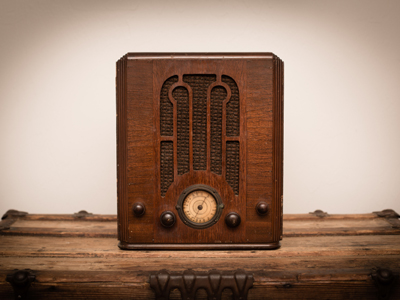
The UK's declaration of war on Germany was announced to the public on national radio.
World War One Aftermath: 1939 - The End Of Appeasement
Find out how appeasement finally collapsed in 1939, as Britain rearmed, stood up to Hitler’s demands and moved from negotiation towards open war in Europe.
1 .
Which Conservative backbencher (a former Home Secretary and Chancellor of the Exchequer) criticised the slow pace of British rearmament following Germany's breach of the Munich Agreement? He used information provided by serving military personnel.
Winston Churchill
Lord Halifax
Anthony Eden
Leslie Hore-Belisha
The government announced increases in defence spending following the events of early 1939. However, there was some doubt about the government's determination to achieve this. Parliamentary critics of the government relied on inside information provided by serving officers, which was at variance with the official version
2 .
Hitler invaded Poland on the 1st of September 1939. On which day did Britain and France formally declare war?
The 2nd of September
The 1st of September
The 4th of September
The 3rd of September
Britain and France were bound by treaty to guarantee Poland's integrity. If they were to follow the etiquette from 1914, they would give Germany a chance to withdraw before war was declared
3 .
Which Soviet foreign commissar urged Stalin in 1939 to conclude an agreement with Germany, arguing that Britain and France could not be relied upon to confront the dictators Hitler and Mussolini?
Litvinov
Molotov
Beria
Voroshilov
Stalin was deeply suspicious of everyone - even of his own close associates. He was expecting to be attacked sooner or later by Germany, but he hoped that he could buy time to enable Russia to be ready for war
4 .
In May and June a joint Anglo-French diplomatic and military mission was visiting a potential ally against Germany. Which state was this?
The Soviet Union
Poland
Sweden
Romania
If the western powers were to go to war against Germany, they would need firm allies in the east
5 .
Britain sent an army across the Channel to fight in France and Belgium. What name was given to this force?
British Expeditionary Force
British Field Force
British Task Force
British Military Contingent
This was a larger force than the one that had landed in France in 1914, but it was still greatly outnumbered by the French army. However volunteers were joining up in large numbers and conscription was re-imposed
6 .
In 1939 Hitler took a formerly German city that had been seized by Lithuania from League of Nations control. What was the German name of this Baltic port?
Danzig
Riga
Memel
Soppot
The town was still mostly populated by ethnic Germans, but the surrounding countryside was inhabited mainly by Lithuanians. Its invasion was a clear breach of the terms of the Treaty of Versailles, which Germany had signed in 1919
7 .
Which politician was re-appointed to his old job as First Lord of the Admiralty on the outbreak of war?
Arthur Henderson
Winston Churchill
Ernest Bevin
Max Aitken
To be political head of the Royal Navy in the Cabinet was a key position, tasked with defending the United Kingdom and the wider British Empire
8 .
Which prime minister announced the declaration of war on Germany in 1939 by radio to the British people?
Winston Churchill
Stanley Baldwin
Neville Chamberlain
Archibald Sinclair
There were hardly any television sets in use in 1939, so major announcements were made on BBC Radio
9 .
Which Nazi minister flew to Moscow on the 23rd of August 1939 to sign the Nazi-Soviet Pact?
Hess
Goering
Von Ribbentrop
Goebbels
German negotiators had been in Moscow for some weeks, hammering out the terms of the deal. Now it only remained for a senior Nazi to sign the treaty
10 .
In March 1939 Hitler seized the provinces of Bohemia and Moravia. To which country had they belonged?
Poland
Hungary
Czechoslovakia
Yugoslavia
These areas were on Hitler's list for invasion, and he now prepared to move further east still



**Unlimited Quizzes Await You! 🚀**
Hey there, quiz champ! 🌟 You've already tackled today's free questions.
Ready for more?
Ready for more?
🔓 Unlock UNLIMITED Quizzes and challenge yourself every day. But that's
not all...
not all...
🔥 As a Subscriber you can join our thrilling "Daily Streak" against other
quizzers. Try to win a coveted spot on our Hall of Fame Page.
quizzers. Try to win a coveted spot on our Hall of Fame Page.
Don't miss out! Join us now and keep the fun rolling. 🎉
**Unlimited Quizzes Await You! 🚀**
Hey there, quiz champ! 🌟 You've already tackled today's free questions. Ready for more?
🔓 Unlock UNLIMITED Quizzes and challenge yourself every day. But that's not all...
🔥 As a Subscriber you can join our thrilling "Daily Streak" against other quizzers. Try to win a coveted spot on our Hall of Fame Page.
Don't miss out! Join us now and keep the fun rolling. 🎉




© Copyright 2016-2026 - Education Quizzes
Work Innovate Ltd - Design | Development |
Marketing
