




Ask the AI Tutor
Need help with World War One Aftermath: League Of Nations - Aims, Structure And Methods? Ask our AI Tutor!
AI Tutor - Lucy
Connecting with Tutor...
Please wait while we establish connection
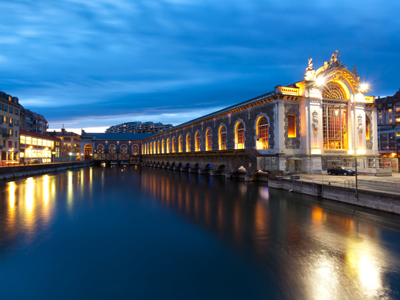
The League of Nations was based in the Swiss city of Geneva.
World War One Aftermath: League Of Nations - Aims, Structure And Methods
Test your GCSE History knowledge of the League of Nations, from its aims and structure to the methods it used to keep peace after the First World War.
1 .
Which of the following states was initially excluded from League membership for poor previous behaviour?
Japan
Italy
The Soviet Union
China
The League's founding fathers believed that League membership was not an automatic right extended to all states, but something that had to be earned
2 .
What name was given to the relatively small group of member states who could authorise action on the League's behalf?
The Commission
The Council
The Directorate
The Committee
This body had permanent and non-permanent members (states who rotated as members)
3 .
What document set out the aims of the League from the beginning?
The Charter
The Covenant
The Constitution
The Convention
This was an early document setting out ideas for the purpose and structure of the new body
4 .
Which state's proposal for an international army received little support from other League members?
France
Britain
Belgium
Denmark
There was provision for military action by members in extreme cases of aggression, but this would depend on members providing military forces at the time. If the League had its own forces, it would be able to react more quickly and effectively
5 .
What was the job title of the international civil servant in charge of the League's Secretariat in Geneva?
Director
President
General Secretary
Chairman
The League had a permanent administration based in Geneva, to oversee its work, including the operations of the various commissions tasked with specific topics
6 .
An agency of the League was set up to adjudicate legally on disputes referred to it. What was its name?
The International Court
The International Legal Commission
The Permanent Court of International Justice
The International Relations Court
The League's founders believed that a high-powered international court could reach fair decisions on disputes between member states and so reduce the risk of armed conflict
7 .
Nansen, a distinguished Norwegian explorer and statesman, controlled which specific League of Nations commission?
Narcotics
Trafficking women
Refugees
Torture
The League enjoyed the services of public-spirited people, who were concerned with serious issues - as well as war - which threatened international order
8 .
Which off-shoot of the League was responsible for monitoring employment issues?
The International Labour Organisation
The International Labour Commission
The International Trade Union Commission
The Labour Standards Agency
The founders of the League believed that poor labour practices contributed to instability within and between states - hence the founding of this body
9 .
One part of the organisation looked after the interests of the former colonies of defeated states. What was this body called?
Colonies Commission
Mandates Commission
Colonial Commission
Imperial Commission
All states defeated in the Great War lost their colonies, which were allotted to several of the victorious states. However, they had to submit annual reports to this body to describe the progress that was being made towards eventual independence
10 .
What name was given to the forum where all League members were entitled to gather to discuss issues in Geneva?
The General Assembly
The Plenum
The Governing Body
The General Meeting
This body was to hold a representative of all members. However, there was a much smaller group, which had greater decision-making powers
You can find more about this topic by visiting BBC Bitesize - Paris Peace Treaties and the League of Nations, to 1933



**Unlimited Quizzes Await You! 🚀**
Hey there, quiz champ! 🌟 You've already tackled today's free questions.
Ready for more?
Ready for more?
🔓 Unlock UNLIMITED Quizzes and challenge yourself every day. But that's
not all...
not all...
🔥 As a Subscriber you can join our thrilling "Daily Streak" against other
quizzers. Try to win a coveted spot on our Hall of Fame Page.
quizzers. Try to win a coveted spot on our Hall of Fame Page.
Don't miss out! Join us now and keep the fun rolling. 🎉
**Unlimited Quizzes Await You! 🚀**
Hey there, quiz champ! 🌟 You've already tackled today's free questions. Ready for more?
🔓 Unlock UNLIMITED Quizzes and challenge yourself every day. But that's not all...
🔥 As a Subscriber you can join our thrilling "Daily Streak" against other quizzers. Try to win a coveted spot on our Hall of Fame Page.
Don't miss out! Join us now and keep the fun rolling. 🎉




© Copyright 2016-2026 - Education Quizzes
Work Innovate Ltd - Design | Development |
Marketing
