




Ask the AI Tutor
Need help with World War One Aftermath: League Of Nations - Success In The 1920s?? Ask our AI Tutor!
AI Tutor - Lucy
Connecting with Tutor...
Please wait while we establish connection
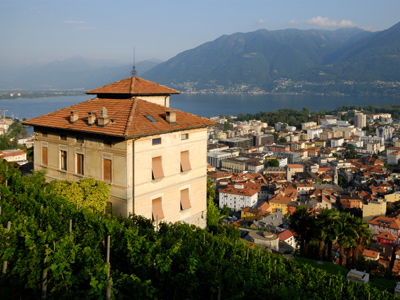
In 1925 the UK, France, Italy and Germany signed a treaty in the Swiss city of Locarno.
World War One Aftermath: League Of Nations - Success In The 1920s?
See how far the League of Nations actually succeeded in the 1920s, settling border disputes, tackling problems and building its early reputation as an international peacemaker.
1 .
Which specialist agency of the League was successful in limiting the abuse of child labour during the 1920s?
The International Employment Agency
The International Trades Union Congress
The International Labour Organisation
The International Employment Council
This agency was extremely successful, partly because it was possible to support its work without being a full member of the wider League. Thus, the United States was happy to become involved in international labour issues
2 .
In 1923 (when Lithuania seized the League-controlled port of Memel) the League did little. Rather it was the Conference of Ambassadors that dealt with the matter. What name did Lithuania give to this German-inhabited port, when the international community failed to prevent the success of this aggression?
Kaliningrad
Tallinn
Klaipeda
Reval
The League proved powerless faced with a diminutive but determined aggressor. Moreover, it was humiliated by the involvement of the Conference of Ambassadors
3 .
In 1925 Britain, France, Italy and Germany signed a treaty that undermined the territorial terms of the Treaty of Versailles, by guaranteeing certain frontiers and ignoring others. The League had no involvement in this. What was the name of the treaty?
Rapallo
The Geneva Protocol
Locarno
Lausanne
Germany was unwilling to sign a treaty that accepted all of the Versailles terms. They were prepared to guarantee their western frontiers, but wanted a free hand in the east, where their greatest land losses had been. The German Chancellor, Gustav Stresemann, wanted to smash Versailles bit by bit - through negotiation
4 .
Which power, formerly excluded from League membership, was allowed to join in 1926 - and indeed to join the League's Council?
Turkey
Austria
Hungary
Germany
By 1926 the world economy was booming, fuelled by ample US loans. In this heady atmosphere the League's Council was willing to widen its membership, and to ignore past transgressions
5 .
The League was successful in running an international port city in the Baltic throughout the 1920s - despite the disgruntled German population of the urban area. This was done by a special commission dedicated to this one task only. What was the port's name?
Stralsund
Rostock
Wismar
Danzig
The League did well in the 1920s in its specialist work. It was less successful during the 1930s as international tensions grew in the wake of the Depression
6 .
In 1924 an American banker was asked to examine the question of German reparations, following a serious currency crisis in Germany. He came up with a plan that worked reasonably well - until the onset of the Great Depression in 1929. Yet once again the League was sidelined. What was the banker's name?
Young
Morgenthau
Rockefeller
Dawes
Americans were sometimes chosen for tasks like this, as they were considered to be objective. The USA was of course anxious to trade with a successful Germany, and to deal effectively with any arrears in reparations payments
7 .
In 1924 the Italian dictator Mussolini bombarded a Greek Mediterranean island in retaliation for the death of an Italian general, while he was demarcating the border between Albania and Greece. The League took no effective action, and Mussolini was emboldened to take more reckless steps elsewhere. What was the name of the island concerned?
Corfu
Crete
Rhodes
Cephallonia
Mussolini's action was widely considered to be disproportionate, but the League was unwilling to try to deal with a Council member of the League
8 .
In 1920 Poland invaded Lithuania to the east, and seized its capital. Poland got away with its aggression, as the League did nothing. What was the name of Lithuania's capital city?
Vilnius
Riga
Kaunas
Kovno
It was always difficult for the League to intervene in cases of aggression. There were no dedicated armed forces at its disposal, and most powers were reluctant to damage their economies by backing sanctions. It was even more difficult to gain support for armed intervention
9 .
In 1921 Sweden and Finland referred a dispute between them about some islands in the Baltic Sea to the League. The dispute was settled amicably as both states accepted the League's ruling. What were these islands called?
The Oland Islands
The Aaland Islands
The Gotland Islands
The Bornholm Islands
Both sides were loth to go to war, and were keen to remain peaceful neighbours
10 .
In 1923 the French seized a German industrial area after Germany had ceased to pay reparations. The League took no action at all. Which area was this?
The Saarland
Silesia
Schleswig-Holstein
The Ruhr
The local German population frustrated French and Belgian efforts to seize coal and iron to the value of what was owed. A general strike was declared, and foreign forces were withdrawn after the failure of their mission
You can find more about this topic by visiting BBC Bitesize - Paris Peace Treaties and the League of Nations, to 1933



**Unlimited Quizzes Await You! 🚀**
Hey there, quiz champ! 🌟 You've already tackled today's free questions.
Ready for more?
Ready for more?
🔓 Unlock UNLIMITED Quizzes and challenge yourself every day. But that's
not all...
not all...
🔥 As a Subscriber you can join our thrilling "Daily Streak" against other
quizzers. Try to win a coveted spot on our Hall of Fame Page.
quizzers. Try to win a coveted spot on our Hall of Fame Page.
Don't miss out! Join us now and keep the fun rolling. 🎉
**Unlimited Quizzes Await You! 🚀**
Hey there, quiz champ! 🌟 You've already tackled today's free questions. Ready for more?
🔓 Unlock UNLIMITED Quizzes and challenge yourself every day. But that's not all...
🔥 As a Subscriber you can join our thrilling "Daily Streak" against other quizzers. Try to win a coveted spot on our Hall of Fame Page.
Don't miss out! Join us now and keep the fun rolling. 🎉




© Copyright 2016-2026 - Education Quizzes
Work Innovate Ltd - Design | Development |
Marketing
