




Ask the AI Tutor
Need help with Physics - Communication with Transverse Waves (AQA)? Ask our AI Tutor!
AI Tutor - Lucy
Connecting with Tutor...
Please wait while we establish connection
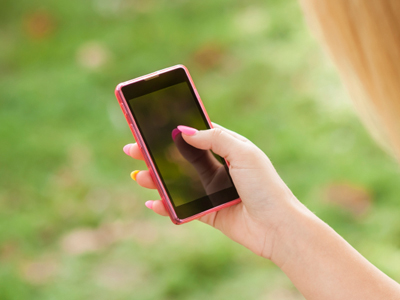
Mobile phones use microwaves to send information.
Physics - Communication with Transverse Waves (AQA)
Transverse waves carry information for radio, TV and mobile phones. Learn how amplitude, frequency and digital pulses are used to send clear signals over long distances.
1 .
Which of the following is used in remote control devices for TV's, radios and similar appliances?
Gamma radiation
X-rays
Infrared radiation
Microwaves
It is effective over short distances but cannot be used for long distance communication through the atmosphere
2 .
Which type of electromagnetic radiation travels the slowest?
They all travel at the same speed
Infrared radiation
Microwaves
Radio waves
All electromagnetic radiation travels at the same speed - the speed of light. The exact figure depends on what it is passing through and it is fastest in a vacuum
3 .
Why do some people object to mobile telephone masts being erected near their homes?
They interfere with TV signals
They make a loud humming noise
They believe that the microwaves are harmful to health
They attract a lot of birds which leave their droppings on their houses and cars
There is concern that microwave radiation from mobile phones and masts may be harmful to health. This is not accepted by everybody because the strength and intensity of the microwaves transmitted from mobile telephone towers is too low to damage tissues by heating and is not ionising radiation which means it not likely to cause cancer
4 .
Why are microwaves used for communicating with satellites?
Microwaves are not refracted by the Earth's atmosphere
Microwaves are refracted by the Earth's atmosphere
Microwaves are the only waves that can travel through space
Other types of wave are not powerful enough to reach that far
There are certain wavelengths of microwave that can pass through the atmosphere without being refracted
5 .
Which of the following is not a disadvantage of wireless communication?
The signals can be blocked by thick walls
Wireless devices must be in range of the transmitter
Wireless devices can be made to be portable
Atmospheric conditions can cause a loss of signal
Wireless communication can be used on almost any scale, from communication with satellites in deep space to a wireless network in the home
6 .
Why do mobile telephone users need to be in line of sight with a transmitter to get a signal?
Radio waves cannot be diffracted
Microwaves have too short a wavelength to be diffracted
Infrared radiation is absorbed by trees, buildings and people
Microwaves are easily bent upwards into space
Firstly, you need to know that microwaves are used for mobile telephone communication. Waves can only be diffracted (travel round corners) if the object they are going round or the gap through which they are passing is comparable in size to their wavelength. Since their wavelengths are less than 1 m, microwaves are not diffracted sufficiently by large objects like hills to reach people not directly in line with the mast
7 .
Which type of electromagnetic radiation can be reflected by the ionosphere, a layer of charged particles in the Earth's atmosphere?
Visible light
Infrared radiation
Microwaves
Radio waves
It is the shorter radio wavelengths that reflect the best
8 .
Which of the following members of the electromagnetic spectrum has the highest frequency?
Gamma radiation
X-rays
Infrared radiation
Microwaves
This form of electromagnetic wave cannot be used for communication because it carries too much energy and is harmful to living things
9 .
Which of the following is not a way that infrared radiation is used to transmit or receive information?
DVD remote control
Radiant heater
Optical fibre broadband Internet
Security lights
For security lights the transmitter is a person's body. All objects above the temperature of absolute zero emit (give out) infrared radiation
10 .
Which of the following members of the electromagnetic spectrum has the longest wavelength?
Visible light
Infrared radiation
Microwaves
Radio waves
The waves used by radio stations usually have wavelengths of between 1 m and 1 km
You can find more about this topic by visiting BBC Bitesize - Transverse and longitudinal waves - AQA



**Unlimited Quizzes Await You! 🚀**
Hey there, quiz champ! 🌟 You've already tackled today's free questions.
Ready for more?
Ready for more?
🔓 Unlock UNLIMITED Quizzes and challenge yourself every day. But that's
not all...
not all...
🔥 As a Subscriber you can join our thrilling "Daily Streak" against other
quizzers. Try to win a coveted spot on our Hall of Fame Page.
quizzers. Try to win a coveted spot on our Hall of Fame Page.
Don't miss out! Join us now and keep the fun rolling. 🎉
**Unlimited Quizzes Await You! 🚀**
Hey there, quiz champ! 🌟 You've already tackled today's free questions. Ready for more?
🔓 Unlock UNLIMITED Quizzes and challenge yourself every day. But that's not all...
🔥 As a Subscriber you can join our thrilling "Daily Streak" against other quizzers. Try to win a coveted spot on our Hall of Fame Page.
Don't miss out! Join us now and keep the fun rolling. 🎉




© Copyright 2016-2026 - Education Quizzes
Work Innovate Ltd - Design | Development |
Marketing
