




Ask the AI Tutor
Need help with Physics - Conventional Power Stations (AQA)? Ask our AI Tutor!
AI Tutor - Lucy
Connecting with Tutor...
Please wait while we establish connection
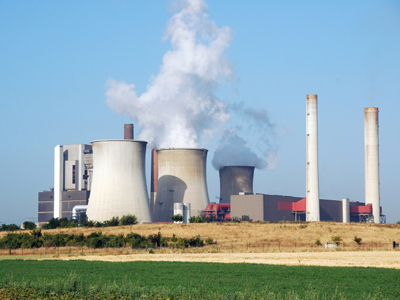
Conventional power stations burn coal, oil or gas.
Physics - Conventional Power Stations (AQA)
Explore how fuel is burned in power stations, how turbines and generators produce electricity, and how that electricity reaches homes safely through the National Grid.
1 .
What is the purpose of the turbine in a power station?
To burn the fuel
To boil the water
To turn the generator
To generate the electricity
The turbine transfers heat energy into kinetic energy
2 .
In a power station using a fossil fuel or biofuel, what is the overall energy transfer?
Chemical to electrical
Nuclear to electrical
Heat to electrical
Kinetic to electrical
Fossil fuels and biofuels contain stored chemical energy which is released as heat when it is burnt. This heat is then transferred to kinetic energy by the turbines, and from kinetic to electrical by the generators
3 .
In a nuclear power station, which of the following represents the sequence of energy transfers in the correct order?
Nuclear → heat → kinetic → electrical
Chemical → nuclear → heat → kinetic → electrical
Chemical → nuclear → heat → electrical
Nuclear → kinetic → electrical
The heat energy is transferred to kinetic energy in the turbine, exactly as with the fuel burning power station
4 .
To which of the following environmental issues does burning fossil fuels to generate electricity contribute?
Acid rain
Global warming
Smog
Ozone depletion
Burning fossil fuels produces a lot of carbon dioxide
5 .
Which of the following is also released when fossil fuels are burnt?
Methane and soot
Nitrogen
Sulfur dioxide and soot
Hydrocarbons
Sulfur dioxide and soot from power stations used to contribute to the problems of acid rain and smog but, in the UK, power stations are now fitted with systems to clean up the gases and solid particles that were responsible. There are some countries in the world where they don't bother to do this
6 .
In a nuclear fuel, where is the energy released from?
From the electrons
From reactions between atoms
From the effects of vibrations of the atoms
From changes in the nucleus
That is why it is called nuclear fuel
7 .
Which of the following power stations has the shortest start up time?
Nuclear
Coal fired
Oil fired
Gas fired
This type of power station is usually used to provide extra electricity at peak times. Nuclear and coal fired have the longest start up times so they are constantly running and used to provide what is termed 'base load' electricity. This means that electricity is always available from the National Grid
8 .
Although nuclear fuel is relatively cheap, electricity from nuclear power stations is relatively expensive. Why?
They need to be built to high safety standards to ensure that no radioactive material escapes
Dealing with the used nuclear fuel requires special reinforced containers
It is very difficult to safely decommission (dismantle) them at the end of their useful life
All of the above
Containing, handling and disposing of radioactive materials needs special equipment and procedures
9 .
What are the two elements used as nuclear fuels?
Uranium and polonium
Uranium and plutonium
Plutonium and krypton
Polonium and neptunium
Plutonium is also used in a destructive capacity in atomic bombs
10 .
What type of nuclear reaction occurs in a nuclear power station?
Oxidation
Combustion
Fission
Fusion
Some scientists are attempting to build nuclear recators that work using fusion reactions. This is proving to be very difficult but would be much better as there would be no nuclear waste to dispose of



**Unlimited Quizzes Await You! 🚀**
Hey there, quiz champ! 🌟 You've already tackled today's free questions.
Ready for more?
Ready for more?
🔓 Unlock UNLIMITED Quizzes and challenge yourself every day. But that's
not all...
not all...
🔥 As a Subscriber you can join our thrilling "Daily Streak" against other
quizzers. Try to win a coveted spot on our Hall of Fame Page.
quizzers. Try to win a coveted spot on our Hall of Fame Page.
Don't miss out! Join us now and keep the fun rolling. 🎉
**Unlimited Quizzes Await You! 🚀**
Hey there, quiz champ! 🌟 You've already tackled today's free questions. Ready for more?
🔓 Unlock UNLIMITED Quizzes and challenge yourself every day. But that's not all...
🔥 As a Subscriber you can join our thrilling "Daily Streak" against other quizzers. Try to win a coveted spot on our Hall of Fame Page.
Don't miss out! Join us now and keep the fun rolling. 🎉




© Copyright 2016-2026 - Education Quizzes
Work Innovate Ltd - Design | Development |
Marketing
