




Ask the AI Tutor
Need help with Art Movements? Ask our AI Tutor!
AI Tutor - Lucy
Connecting with Tutor...
Please wait while we establish connection
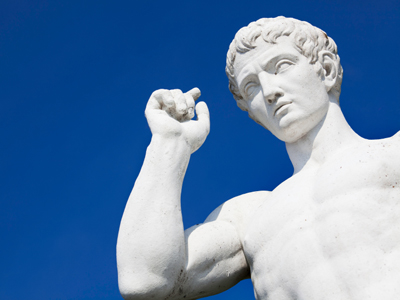
Art in the style of Ancient Greece or Rome is described as classicist.
Art Movements
Learn that artists make pictures in different styles called art movements. Spot shapes, colours and patterns, and see how art can look real, messy, or magical.
1 .
Classicism is a term used to mean mainly art from where?
Any new art gallery
Very young artists
Art produced by teachers
Ancient Greece and Rome
Classicism still has a great deal of influence on art today and is often studied at art colleges
2 .
A movement between the 19th and 20th centuries was called 'Art Nouveau'. What does this mean?
New Art
Movie Art
Moving Art
Our Art
As printing techniques got better more people could access art in magazines, making it very popular
3 .
An art movement in the 1800s took its ideas from very strong emotions, such as fear, awe or horror. What was the movement called?
Funnisim
Romanticism
Emotionism
Feelingism
This was also known as the Romantic Era or the Romantic Period
4 .
Georges Seurat was part of a famous art movement who painted using thousands of tiny dots of colour. What was it called?
Spotillism
Pointillism
Dotillism
Dabillism
When viewed from far away, the dots merge to form a picture!
5 .
Art which is simplified by reducing the number of colours, lines, textures, and shapes is known as what?
Bareness
Minimalism
Simplicity
Boring
The minimalists tried to communicate ideas with only a few marks on the canvas
6 .
An art movement known as cubism focussed heavily on what?
The boxes the art materials came in
The size of the paint brushes
The day the painting was completed
The shapes of the subject
Georges Braque and Pablo Picasso started the movement
7 .
Monet was part of a famous art movement in 19th century France called what?
Pop art
Cubism
Surrealism
Impressionism
The impressionists painted an 'impression' of what they saw using the light and movement
8 .
The Arts and Crafts movement focussed on beautiful handmade art instead of what?
Art made from plastic
Painting by numbers
Art made from nature
Mass-produced items
The movement is famous for beautiful paintings, fabric designs and pottery
9 .
In the 1920s, a group of artists painted strange scenes including melting clocks and elephants on stilts. They were called what?
Surrealists
Unusualists
Strangeists
Bizzareists
Salvador Dali was a famous surrealist
10 .
Contemporary art usually refers to art produced since when?
Since Ancient Egyptian times
Since the end of the Second World War
Since the beginning of the Roman Empire
Since the end of prehistoric times
Contemporary art also includes art produced in our time



**Unlimited Quizzes Await You! 🚀**
Hey there, quiz champ! 🌟 You've already tackled today's free questions.
Ready for more?
Ready for more?
🔓 Unlock UNLIMITED Quizzes and challenge yourself every day. But that's
not all...
not all...
🔥 As a Subscriber you can join our thrilling "Daily Streak" against other
quizzers. Try to win a coveted spot on our Hall of Fame Page.
quizzers. Try to win a coveted spot on our Hall of Fame Page.
Don't miss out! Join us now and keep the fun rolling. 🎉
**Unlimited Quizzes Await You! 🚀**
Hey there, quiz champ! 🌟 You've already tackled today's free questions. Ready for more?
🔓 Unlock UNLIMITED Quizzes and challenge yourself every day. But that's not all...
🔥 As a Subscriber you can join our thrilling "Daily Streak" against other quizzers. Try to win a coveted spot on our Hall of Fame Page.
Don't miss out! Join us now and keep the fun rolling. 🎉




© Copyright 2016-2026 - Education Quizzes
Work Innovate Ltd - Design | Development |
Marketing
