




Ask the AI Tutor
Need help with Colours? Ask our AI Tutor!
AI Tutor - Lucy
Connecting with Tutor...
Please wait while we establish connection
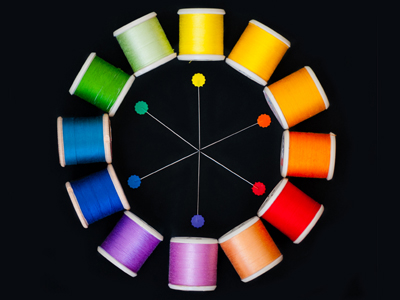
A colour wheel shows the relationships between different colours.
Colours
Colours are everywhere in art. Learn colour names, spot light and dark shades, and see how artists choose colours to make pictures feel happy, calm, or exciting.
1 .
Colours which are opposite each other on the colour wheel are known as what?
Complementary
Companion
Countryside
Comfortable
Complementary colours can be used together and produce a contrast
2 .
Orange, green and violet are known as what?
Secondary colours
Primary colours
High school colours
College colours
Secondary colours are made by mixing two of the primary colours together
3 .
To make a colour darker, you can add which other paint?
White
Orange
Black
Pink
The new colour is then known as a shade of the original
4 .
What are the three primary colours?
Black, white and grey
Red, yellow and blue
Pink, purple and orange
Green, brown and silver
Primary colours are the only colours which cannot be made by mixing two other colours
5 .
How are tertiary colours made?
By putting all the colours in a line
By mixing every colour together
By choosing from a colour chart
By mixing a secondary colour with one of the primary colours it is made from
For example, green can be mixed with one of its primary colours, blue, to give blue-green
6 .
Colours which are next to each other on the colour wheel are described as what?
Harmonious
Argumentative
Clashing
Monochromatic
Harmonious colours go well together, like yellow and orange
7 .
Reds, oranges and yellows are sometimes called what?
Spicy colours
Heated colours
Radiator colours
Warm colours
Blues, violets and greens are often called cool colours
8 .
To make a colour lighter, you can add which other paint?
White
Black
Grey
Blue
The lighter colour is then called a 'tint' of the original
9 .
A set of tints and shades of the same colour is also known as what?
A colour wheel
A paint palette
Monochrome
Quite dull
An example of this would be red, pink and white
10 .
Red, yellow, blue, orange, green and violet are usually arranged on a colour what?
A colour square
A colour cube
A colour wheel
A colour sphere
The colour wheel shows the colours and their relationships to each other



**Unlimited Quizzes Await You! 🚀**
Hey there, quiz champ! 🌟 You've already tackled today's free questions.
Ready for more?
Ready for more?
🔓 Unlock UNLIMITED Quizzes and challenge yourself every day. But that's
not all...
not all...
🔥 As a Subscriber you can join our thrilling "Daily Streak" against other
quizzers. Try to win a coveted spot on our Hall of Fame Page.
quizzers. Try to win a coveted spot on our Hall of Fame Page.
Don't miss out! Join us now and keep the fun rolling. 🎉
**Unlimited Quizzes Await You! 🚀**
Hey there, quiz champ! 🌟 You've already tackled today's free questions. Ready for more?
🔓 Unlock UNLIMITED Quizzes and challenge yourself every day. But that's not all...
🔥 As a Subscriber you can join our thrilling "Daily Streak" against other quizzers. Try to win a coveted spot on our Hall of Fame Page.
Don't miss out! Join us now and keep the fun rolling. 🎉




© Copyright 2016-2026 - Education Quizzes
Work Innovate Ltd - Design | Development |
Marketing
